
Bay windows bring natural light, architectural character and a sense of space into a room. However, their angles and curves can make choosing curtains more complicated than dressing a standard rectangular window.
The best curtains for bay windows are usually made-to-measure designs that work with the shape of the bay, provide suitable privacy and allow the fabric to move smoothly when opened and closed.
Pencil pleat and pinch pleat curtains are versatile choices for many bay windows, while wave curtains can create a clean, contemporary finish when paired with a compatible track system.
The right design also depends on whether the bay is in a living room or bedroom, how much space you have for the curtains to gather and whether you want to retain as much natural light as possible.
This guide explains how to choose curtains for different bay-window shapes, compare curtain headings and hanging systems, and achieve a practical, attractive finish.
What Are the Best Curtains for Bay Windows?
There isn’t one curtain style that works best for every bay window.
A Victorian three-sided bay may suit traditional pinch pleat curtains, while a contemporary curved bay could benefit from a discreet track and flowing fabric.
The most suitable arrangement depends on the shape of the window and how you want the curtains to operate.
| Curtain style | Appearance | Suitable bay-window application |
|---|---|---|
| Pencil pleat | Soft, gathered folds | Traditional and contemporary bays with suitable tracks |
| Pinch pleat | Structured, tailored folds | Period properties and formal living rooms |
| Wave pleat | Smooth, regular folds | Contemporary bays with compatible wave tracks |
| Sheer curtains | Light, translucent appearance | Living rooms where daylight is a priority |
| Blackout curtains | Choice of appearance with light-blocking fabric or lining | Bedrooms requiring greater light control |
| Interlined curtains | Full, substantial drape | Traditional rooms and windows where added insulation is desirable |
The curtain heading, fabric and track should be chosen together.
A beautiful curtain fabric may still be impractical if its heading cannot move around the window’s corners or if there isn’t enough space for the curtains to stack when open.
Understanding the Different Types of Bay Windows
The first step is identifying your bay-window shape.
Angled Bay Windows
Angled bays have several flat window sections joined at defined corners.
Three-sided and five-sided bays are common in traditional British homes.
Because the curtains need to follow changes in direction, the hanging system must be designed for the angles involved.
A suitable shaped track can allow the curtains to travel around the bay, although the system’s bend limits and fitting requirements must be checked.
Box Bay Windows
Box bays typically have a central front section and two side sections that meet at relatively sharp angles.
They can accommodate continuous curtains or separate treatments for each window section.
Sharp corners require particular attention because not all tracks or pole systems can provide uninterrupted curtain movement around them.
Curved or Bow Windows
Curved bays have a rounded shape rather than a series of pronounced corners.
A properly specified curved track can follow the outline of the glazing and help maintain a consistent curtain arrangement.
The curve must be measured accurately, as the suitability of any track depends on its particular construction and permitted bend radius.
1. Full-Length Curtains for Bay Windows
Full-length curtains can create an elegant finish, particularly in living rooms and bedrooms with tall bay windows.
The long vertical folds emphasise the room’s height and allow the fabric to become part of the wider interior scheme.
They’re especially effective when the curtain track follows the shape of the bay rather than cutting straight across the room.
Styling Ideas
For a traditional living room, consider a textured fabric with pinch pleat headings.
For a contemporary bedroom, a plain fabric with wave pleats can create a clean, flowing appearance.
Neutral colours offer an understated finish, while deeper shades can make the bay window a decorative focal point.
What to Check
Before choosing full-length curtains, consider the location of radiators, window seats and furniture.
Fabric should hang without catching on surrounding objects or interfering with the window’s operation.
The finished curtain drop also needs to account for any uneven flooring.
2. Pencil Pleat Curtains for Bay Windows
Pencil pleat curtains are a versatile choice for bay windows.
Their gathered heading is created using adjustable heading tape, allowing the finished width to be set during fitting.
They can work with many compatible curtain tracks, including suitable shaped systems.
Why Choose Pencil Pleats?
- Create a soft, traditional appearance.
- Work with many fabrics and lining options.
- Can be paired with compatible bay-window tracks.
- Suit both living rooms and bedrooms.
- Offer some flexibility in adjusting the heading width.
Pencil pleats are particularly attractive where you want a classic finish without highly structured folds.
They’re also worth considering for irregular bay windows, although the final measurements still need to suit the track and available space.
Explore Zenn Interiors’ pencil pleat curtains.
3. Pinch Pleat Curtains for Bay Windows
Pinch pleat curtains feature groups of permanently stitched folds.
They provide a tailored appearance that works especially well in period properties, traditional sitting rooms and elegant bedrooms.
Double pinch pleats create a neat, structured finish, while triple pinch pleats can provide a more decorative effect.
Why Choose Pinch Pleats?
- Create evenly arranged, permanent pleats.
- Complement traditional architectural details.
- Work with suitable tracks or curtain poles.
- Allow a choice of fabrics, linings and decorative finishes.
Because pinch pleats are constructed to fixed spacing, measuring and planning are particularly important.
The position of the pleats, hooks and track gliders must work together to achieve the intended finished width.
For smaller bays, consider how much fabric will gather at the sides when the curtains are open.
Explore Zenn Interiors’ pinch pleat curtains.
4. Wave Curtains for Bay Windows
Wave curtains create smooth, continuous S-shaped folds.
Their understated appearance suits modern interiors, particularly where the bay is part of a larger glazed area.
However, wave curtains require a compatible track and carrier system to maintain their distinctive shape.
Can Wave Curtains Go Around a Bay Window?
Yes, certain wave-track systems can be configured for angled or curved bays.
However, not every wave track is suitable for every bay-window shape.
The permitted bend radius, track configuration, runner arrangement and curtain fullness all need to be considered.
A system designed for a straight window may not work around tight bay corners.
Zenn Interiors lists compatible wave-track options within its bespoke bay-window track range, making this a style worth discussing for suitable windows.
Explore Zenn Interiors’ wave pleat curtains.
5. Layer Sheer Curtains for Daytime Privacy
Bay windows often face streets, gardens or neighbouring properties, so privacy is an important consideration.
Sheer curtains can soften incoming daylight while providing a degree of daytime screening.
This can be particularly useful in ground-floor London living rooms where you want to retain an open, airy appearance.
Can You See Through Sheer Curtains at Night?
Yes, depending on the fabric and lighting conditions.
When the room is brighter than the outside, sheer curtains may allow people to see into the property.
They’re therefore best treated as a daylight-filtering treatment rather than a guaranteed privacy solution.
For greater evening coverage, consider pairing sheers with lined curtains.
A layered system requires adequate space for both tracks or curtain arrangements, particularly around the bay’s corners.
Explore Zenn Interiors’ sheer curtains.
6. Choose Blackout Curtains for Bedroom Bay Windows
Bedroom bay windows can be challenging when you need to reduce early morning sunlight or street lighting.
The large glazed area and additional corners can create more opportunities for light to enter around the curtains.
Blackout fabrics or linings reduce light passing directly through the material.
However, the fitting arrangement is equally important.
How to Improve Light Control
Consider the following:
- A track that follows the shape of the bay closely.
- Suitable coverage at the sides and centre.
- Enough fabric to cover the window properly.
- The correct heading and hanging height.
- Any light entering around the top and bottom.
Even effective blackout fabric cannot guarantee complete darkness if large gaps remain around the curtains.
For bedrooms where light control is particularly important, individual blinds fitted to the bay’s sections may also be considered alongside curtains.
Explore Zenn Interiors’ blackout curtains.
Should Bay-Window Curtains Use One Continuous Track?
A continuous track is often a practical solution, but it isn’t right for every window.
The best arrangement depends on the bay’s shape, the curtain weight and how you intend to use the space.
Option 1: A Continuous Track Around the Bay
<text omitted></text>
A shaped track follows the bay from one side to the other.
With a suitable system, the curtains can move around the corners and meet at the chosen closing point.
Advantages:
- Creates a coordinated appearance.
- Can allow curtains to travel around the complete bay.
- May help maintain the feeling of space within the bay.
- Can work with appropriate pencil pleat, pinch pleat and specialist wave headings.
Considerations:
- The track must suit the window’s angles or curves.
- Curtain weight and bend resistance matter.
- Enough space is needed for the fabric to gather when open.
Option 2: Separate Curtains for Each Bay Section
Instead of using one continuous curtain arrangement, each section can have its own panel or pair of curtains.
This can work particularly well where individual sections need separate privacy or light control.
Advantages:
- Allows independent coverage of different sections.
- Can suit some box bays or unusual arrangements.
- May simplify certain decorative layouts.
Considerations:
- Fabric may gather at multiple corners.
- Some of the glass may remain partly covered when curtains are open.
- The appearance can feel busier than a continuous design.
Option 3: Curtains Across the Front of the Bay
Another approach is to fit a straight pole or track across the opening in front of the bay.
When drawn, the curtains close off the bay from the rest of the room.
This may be appropriate where the bay forms a window seat or small alcove.
However, it changes how the space is used and can reduce the sense of depth when the curtains are closed.
Which Arrangement Should You Choose?
| Arrangement | Main benefit | Main limitation |
|---|---|---|
| Continuous shaped track | Integrated appearance and potential movement around the bay | Requires compatible bends, fixings and curtain construction |
| Separate section treatments | Independent privacy and light control | More fabric or hardware within the bay |
| Straight track across the front | Simple visual arrangement | Can separate the bay from the room when closed |
The most suitable layout depends on the window’s architecture and your priorities.
Curtain Tracks vs Curtain Poles for Bay Windows
Both tracks and poles can work for bay windows, although they have different practical characteristics.
Bay-Window Curtain Tracks
Shaped curtain tracks can be designed to follow angled or curved windows.
They generally provide a discreet appearance, keeping attention on the curtain fabric rather than the hardware.
Compatible gliders can allow curtains to travel around suitable bends.
Tracks are particularly useful for:
- Contemporary interiors.
- Complex window shapes.
- Discreet ceiling-mounted arrangements.
- Curtains intended to move around several sections.
Bay-Window Curtain Poles
Specialist bay-window poles can create a more decorative appearance.
They may use corner joints and compatible passing rings or brackets to accommodate the bay’s shape.
However, a standard straight curtain pole shouldn’t be assumed to work around corners.
Not all pole-and-ring combinations permit unrestricted movement past supports or joints.
Poles are worth considering where visible decorative hardware is an important part of the design.
For a closer look at suitable hardware, explore Zenn Interiors’ bespoke bay-window curtain tracks.
How to Keep Bay Windows Bright When Curtains Are Open
One of the most common mistakes is overlooking where the curtain fabric will gather when opened.
This is called curtain stacking.
A full pair of lined curtains can occupy a substantial amount of space, especially in a wide bay with several panels.
If the track ends close to the glazing, the gathered curtains may continue to cover part of the window.
Practical Ways to Reduce Obstruction
Allow suitable stacking space. Where possible, extend the track beyond the outer edges of the glazing.
Consider the heading fullness. Fuller headings require more fabric, which can create a larger stack.
Think about the panel arrangement. On some large bays, multiple panels can distribute the fabric more effectively.
Avoid unnecessary bulk. Choose fabric and lining specifications that suit the room and the hanging system.
The goal is to maintain privacy when the curtains are closed while allowing as much useful daylight as possible when they’re open.
Best Curtains for Bay Windows in Living Rooms
Living-room bay windows are often an architectural feature worth emphasising.
The design should complement the room while allowing the window to remain practical.
Traditional Living-Room Bay Windows
For a Victorian or Edwardian-style bay, consider pinch pleat curtains in a textured woven fabric.
Full-length curtains can highlight the proportions of the room, particularly when paired with a discreet shaped track or suitable decorative pole.
Neutral colours create an understated appearance, while richer colours can complement period furnishings.
Contemporary Living-Room Bay Windows
Wave curtains or softly gathered pencil pleats can produce a more minimal finish.
Consider neutral fabrics, clean lines and discreet hardware.
For large modern bays, careful track positioning is particularly important to maintain light and avoid bulky fabric stacks.
Living Rooms That Need Daytime Privacy
Street-facing bays may benefit from sheer curtains or a combination of curtains and blinds.
Sheer fabrics can soften views into the room during the day without completely blocking daylight.
For privacy after dark, include an appropriate opaque treatment.
Best Curtains for Bay Windows in Bedrooms
Bedroom bays often need a different balance of function and appearance.
Privacy, light control and comfort may be more important than maximising daylight at all times.
Choose a Suitable Lining
Blackout linings can help reduce unwanted daylight, while standard linings provide additional coverage.
Interlined curtains may also help improve thermal comfort near windows while creating a fuller drape.
The ideal specification depends on the room’s glazing, orientation and desired appearance.
Plan the Closing Arrangement
Check where the curtains will meet when closed.
The centre overlap and any gaps around the sides can influence both privacy and light control.
On an irregular bay, a carefully planned track arrangement can make a noticeable difference.
Coordinate with Bedroom Furniture
Bay windows often contain window seats, radiators or bedroom furniture.
The curtains need sufficient clearance to open and close without catching.
For more inspiration, read our bedroom curtain ideas.
Choosing Curtain Fabrics for Bay Windows
Fabric affects the appearance, movement and practical performance of the curtains.
Linen and Linen-Blend Fabrics
Linen-look fabrics can create a relaxed appearance, particularly in neutral interiors.
Their texture suits both traditional and contemporary rooms.
However, fabric weight and construction vary, so not all linen blends will drape in the same way.
Velvet and Heavier Woven Fabrics
Velvet and substantial woven fabrics can provide a rich decorative finish.
These materials may be particularly attractive in traditional sitting rooms.
However, heavier curtains require suitable tracks, gliders, brackets and fixings.
The load capacity of the complete system is especially important around bends.
Sheer Fabrics
Sheers are useful when maintaining daylight is a priority.
They can soften the appearance of the glazing and provide light daytime screening.
Lined and Interlined Fabrics
Lining can improve opacity and curtain drape, while interlining adds body and an additional insulating layer.
The complete weight of the finished curtains should be considered before selecting the track.
How to Measure Curtains for Bay Windows
Measuring a bay window is more involved than taking a single width across the front of the glazing.
For curtains that follow the bay, the measurement needs to account for the actual path of the track or pole.
Measurements to Consider
- Width of each bay section.
- Angles between the sections.
- Overall curved or angled track length.
- Available fixing space.
- Desired finished curtain drop.
- Clearance around handles, sills and radiators.
- Space for curtains to stack when opened.
If a shaped track is already installed, measure the usable track length according to its manufacturer’s instructions.
For a new installation, the track design and fixing position may need to be agreed before final curtain measurements can be calculated.
Why Accurate Measurement Matters
Incorrect measurements can lead to:
- Curtains that don’t cover the full bay.
- Excess fabric gathering at corners.
- Poor movement around bends.
- Uneven curtain drops.
- Gaps affecting privacy or light control.
For complex or asymmetrical bays, a professional survey can help determine the most appropriate layout.
Zenn Interiors’ bay-window track service includes professional measurement and fitting.
For general curtain measurement advice, see our how to measure curtains guide.
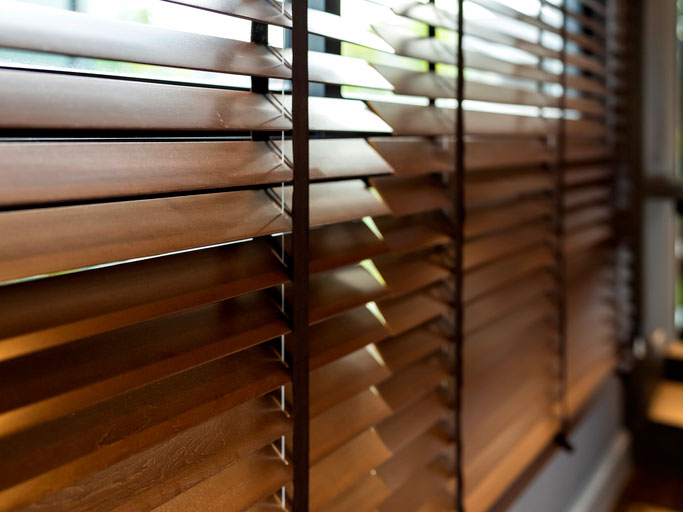
Can You Combine Blinds and Curtains in a Bay Window?
Yes. Layering blinds with curtains can be an effective way to achieve different levels of light control and privacy.
For example, individual blinds can be fitted to the separate window sections, while curtains run around the bay on a shaped track.
This allows the blinds to provide adjustable daytime coverage and the curtains to create a softer finish or greater privacy when closed.
However, the fittings must not interfere with one another.
Make sure there’s enough clearance for the blinds, their headrails, the curtain track and the fabric folds.
Zenn Interiors offers a range of made-to-measure blinds alongside its bespoke curtains.
Common Bay-Window Curtain Mistakes to Avoid
Choosing a Standard Straight Track Without Considering the Bay
A conventional straight track doesn’t follow the shape of an angled or curved bay.
Unless the intention is to close the curtains across the front, a suitable shaped system is usually required.
Ignoring Curtain Stacking Space
Curtains that cover too much glazing when open can reduce daylight and make the bay feel crowded.
Plan where the fabric will gather before choosing the track length.
Choosing the Heading After Installing the Track
Not every curtain heading works with every track.
The heading, fabric weight and hanging system should be specified together.
Assuming Any Wave Track Will Work Around Corners
Specialist wave systems vary in their bend and installation requirements.
Compatibility must be checked for the actual bay geometry.
Overlooking Fabric Weight
Full-length lined and interlined curtains can be heavy.
The track and fixings need to support the completed curtains, including the demands of movement around bends.
Forgetting Radiators and Window Handles
The curtains should clear surrounding fittings and furniture.
A system that looks attractive when closed may be frustrating to use if the fabric catches every time it’s opened.
Expecting Blackout Fabric to Eliminate Every Light Gap
Light can enter around the edges of even highly effective blackout fabric.
The complete installation is important for bedroom light control.
Frequently Asked Questions About Bay-Window Curtains
What curtains are best for bay windows?
Pencil pleat, pinch pleat and compatible wave curtains can all work well. The best option depends on the window shape, track system, fabric and desired appearance.
Can you put curtains on a curved bay window?
Yes. Suitable curved tracks can follow the shape of the bay, allowing compatible curtains to hang around the glazing.
Should curtains follow the shape of a bay window?
Often, yes. Following the bay can preserve its sense of depth and create an integrated appearance. However, a straight track across the front may be appropriate for certain window seats or alcoves.
Can you use eyelet curtains on a bay window?
Eyelet curtains require a compatible pole. Some specialist bay poles may accommodate them, but brackets and corner joints can restrict movement. They aren’t suitable for conventional curtain tracks.
Are wave curtains suitable for bay windows?
They can be, provided the bay geometry and chosen wave-track system are compatible. Not every wave system supports tight corners or curved installations.
Are curtains or blinds better for bay windows?
Both have advantages. Curtains can create a soft, decorative finish, while individual blinds offer flexible coverage for separate window sections. Combining both may provide additional options.
How do you stop bay-window curtains blocking daylight?
Allow sufficient space for the curtains to stack away from the glazing where possible. Fabric choice, heading fullness and the number of panels also affect how much window area remains uncovered.
What curtains suit Victorian bay windows?
Full-length pencil pleat or pinch pleat curtains can complement traditional interiors. The most suitable heading and fabric depend on the size of the bay and the room’s overall design.
Can blackout curtains work on bay windows?
Yes. Blackout curtains can reduce light entering through the fabric, although careful fitting is required to minimise gaps around the bay’s corners and edges.
Do bay windows need made-to-measure curtains?
Not always, but made-to-measure curtains are particularly useful when the window has unusual angles, curved tracks or specific clearance requirements.
Made-to-Measure Curtains for Bay Windows in London
Bay windows deserve a window treatment that complements their distinctive shape.
Whether you’re dressing a traditional Victorian bay or a contemporary curved window, the right combination of fabric, heading and hanging system can make the space more attractive and practical.
At Zenn Interiors, we specialise in bespoke made-to-measure curtains and bay-window curtain tracks for London homes.
Our range includes pencil pleat, pinch pleat and wave curtain styles, with curtain tracks designed for suitable angled and curved bay windows.
We also provide professional measurement and installation services to help achieve the intended fit and finish.
Explore our bay-window curtain tracks and made-to-measure curtains, or contact Zenn Interiors to discuss your window treatment requirements.
Telephone: 020 7871 3082
Email: zenninteriors@gmail.com