Choosing fabric for sofa upholstery involves balancing appearance with everyday practicality. The material must suit the way the sofa is used, the amount of wear it receives and the wider design of the room.
A sofa is usually one of the largest and most frequently used pieces of furniture in a home. Its fabric covers a substantial visual area, so colour, texture and pattern can influence the whole interior. At the same time, the material needs to withstand sitting, movement, sunlight, spills and regular cleaning.
The right upholstery fabric should look appropriate, feel comfortable and remain practical for the household using it. A delicate fabric that suits an occasional chair may not perform well on a family sofa used every day. Equally, the most durable option will not necessarily create the softness, texture or refined finish required for the room.
The best choice comes from considering the sofa, the room and the lifestyle together rather than selecting fabric based on colour alone.
Start with how the sofa is used
Before looking at swatches, consider the role of the sofa.
A sofa in a formal sitting room may be used occasionally, while one in a family living room could be occupied for several hours every day. These two settings place very different demands on the upholstery.
Ask practical questions such as:
- How often is the sofa used?
- How many people regularly sit on it?
- Are there children or pets in the home?
- Is food or drink often consumed nearby?
- Does the room receive strong sunlight?
- Will the cushions be turned regularly?
- Is the sofa mainly decorative or used for everyday relaxation?
A busy family sofa needs a durable, easy-to-maintain material. An occasional sofa may allow greater freedom to use a more delicate weave, a richer texture or a fabric that requires specialist care.
The location also matters. Upholstery in an open-plan kitchen and living area may be exposed to more food residue and airborne grease than upholstery in a separate sitting room.
Which sofa upholstery fabrics are most durable?
Durability depends on the fibre, weave, finish and quality of the fabric.
A material may look substantial but still snag, stretch or wear quickly if its construction is unsuitable for upholstery. Always check that the fabric is specifically intended for furniture use.
Are synthetic fabrics durable?
Synthetic fibres such as polyester, acrylic and nylon are often valued for their strength and resistance to wear.
They may offer:
- Good abrasion resistance
- Reduced creasing
- Better resistance to fading
- Easier cleaning
- A consistent appearance
- A lower tendency to absorb moisture
Polyester is frequently blended with natural fibres to combine durability with a softer texture.
The quality varies considerably. A well-constructed synthetic blend may feel refined and perform extremely well, while a lower-quality fabric may appear flat or develop shine in heavily used areas.
Synthetic does not automatically mean less luxurious. Many modern performance fabrics are designed to resemble linen, wool or velvet while providing additional practicality.
Is cotton suitable for sofa upholstery?
Cotton can feel soft, breathable and comfortable, making it an attractive upholstery choice.
It is available in a wide range of colours, prints and textures. Cotton also takes dye well, which allows for rich shades and detailed patterns.
However, pure cotton can crease, absorb spills and fade in strong sunlight. Its performance depends greatly on the density of the weave and any protective treatment applied.
A tightly woven cotton or cotton-blend fabric can be suitable for moderate to regular use. Loose or lightweight cotton fabrics may be better reserved for decorative cushions or furniture used less frequently.
Cotton blends often provide a useful balance between natural softness and improved resilience.
Is linen practical for a sofa?
Linen has a relaxed, natural character and a distinctive texture. It works well in calm, design-led interiors and can create a refined but informal look.
Pure linen tends to crease and may soften further with use. Some people value this lived-in appearance, while others prefer a fabric that remains smoother and more structured.
Linen can also absorb moisture and may be more difficult to clean if untreated.
A linen blend can improve durability, reduce creasing and make the fabric easier to maintain while preserving much of the natural appearance.
Linen upholstery may be suitable for:
- Adult households
- Formal living rooms
- Sofas used moderately
- Removable loose covers
- Relaxed interior schemes
- Rooms where natural texture is important
For a heavily used family sofa, a performance-treated linen blend may be more practical than pure linen.
Does wool work well for upholstery?
Wool is naturally resilient, warm and comfortable. Its fibres can recover well from compression, helping the fabric retain its appearance.
It can also provide excellent texture and visual depth.
Wool upholstery may suit:
- Traditional interiors
- Contemporary neutral schemes
- Cosy sitting rooms
- Period properties
- Sofas used regularly
- Homes seeking natural materials
Some wool fabrics may feel coarser than cotton or velvet, so comfort should be assessed using a physical sample.
Wool blends can offer improved strength or easier maintenance. The fabric should be checked for pilling resistance, cleaning requirements and suitability for the intended level of use.
Is velvet suitable for an everyday sofa?
Velvet can create a rich, soft and highly tactile finish.
Its surface changes subtly as the pile catches the light, giving the sofa depth and visual movement. Velvet works well in both traditional and contemporary rooms.
Durability depends on the fibre and construction. Cotton velvet can feel luxurious but may mark more readily. Synthetic or blended velvets are often more resistant to crushing and easier to maintain.
Velvet may show:
- Pressure marks
- Shading
- Changes in pile direction
- Dust
- Pet hair
- Finger marks
These characteristics are part of the fabric’s appearance, but they should be considered before selection.
A high-quality performance velvet can be practical for regular family use, while a delicate natural velvet may be better suited to a more formal room.
What is performance upholstery fabric?
Performance fabric is designed to withstand common household demands such as spills, stains, fading and regular use.
The term can cover many different fibre types and treatments. Some materials are inherently resistant, while others have a protective finish.
Performance upholstery can be useful in:
- Family living rooms
- Homes with pets
- Holiday properties
- Open-plan spaces
- Dining areas
- High-use seating
- Homes where easy maintenance is a priority
The appearance no longer needs to feel purely functional. Performance fabrics are available in textured weaves, velvets, patterns and natural-looking finishes.
Ask how the fabric has been tested and whether the protective properties are permanent or may reduce after repeated cleaning.
How can you assess fabric durability?
Upholstery fabrics are often tested for resistance to rubbing and abrasion.
You may see a test result expressed as rubs or cycles. A higher number generally indicates that the material can withstand more repeated friction.
However, this figure should not be used as the only measure of quality.
A durable upholstery fabric should also resist:
- Pilling
- Seam slippage
- Snagging
- Stretching
- Colour transfer
- Fading
- Crushing
- Surface marking
The supplier should be able to explain whether the material is intended for light domestic, general domestic or heavy domestic use.
For a sofa used every day, choose a fabric rated for regular upholstery use rather than one intended only for curtains or occasional furniture.
How should children and pets affect your choice?
Homes with children or pets usually need upholstery that is forgiving, durable and easier to clean.
A very pale, delicate or loosely woven fabric may show marks quickly or catch on claws and toys.
More practical choices may include:
- Tightly woven fabrics
- Performance-treated materials
- Mid-toned colours
- Small-scale patterns
- Textured surfaces
- Removable covers
- Fabrics with strong abrasion resistance
A slight texture or pattern can disguise minor marks better than a completely flat, plain fabric.
For pets, avoid very open weaves that claws can catch. Loop-textured fabrics may also be vulnerable to snagging.
Pet hair is more visible on colours that strongly contrast with the animal’s coat. A mid-tone or subtly patterned material can make routine maintenance easier.
No fabric is completely protected from damage, but careful selection can reduce the visibility of everyday wear.
Should you choose removable or fixed upholstery?
The construction of the sofa affects the fabric choice.
Removable covers can be taken off for professional cleaning and may be replaced in the future. Loose covers also create a softer, more relaxed appearance.
Fixed upholstery tends to look more structured and tailored. It may suit sofas with detailed shapes, buttoning, piping or tightly defined edges.
If the covers are removable, do not assume they are machine washable. The fabric, lining and construction may still require professional cleaning.
A fabric that behaves well when fixed to the frame may not necessarily suit a loose cover. Materials used for removable covers need enough stability to retain their shape without becoming stiff.
Discuss the intended upholstery method before ordering fabric.
How do colour choices affect a sofa?
Because a sofa occupies a large visual area, its colour can establish the direction of the room.
A neutral fabric may create a versatile foundation, allowing colour to be introduced through cushions, artwork, rugs and accessories.
A stronger colour can make the sofa the focal point and give the room greater identity.
Are neutral sofa fabrics always the safest choice?
Neutral colours are flexible, but they are not automatically the most practical.
Very pale cream or off-white fabrics may show dirt and denim transfer more easily. Very dark colours can reveal dust, lint, fading and pet hair.
Mid-toned neutrals are often more forgiving. These may include:
- Warm grey
- Taupe
- Stone
- Oatmeal
- Soft brown
- Muted green
- Blue-grey
A neutral does not need to be plain. Texture can add depth and prevent the sofa from feeling flat.
The undertone should relate to the rest of the room. A cool grey sofa may sit awkwardly beside warm cream walls and golden timber unless the contrast is intentional.
When should you choose a bold sofa colour?
A bold colour can work well when the sofa is intended to anchor the room.
Deep blue, green, rust, burgundy and ochre can create a strong but sophisticated focal point.
Before committing, consider:
- How long you expect to keep the sofa
- Whether the room colour scheme may change
- The amount of natural light
- Existing flooring and curtains
- Whether the shade will dominate the space
- How the colour appears under artificial light
A strong colour on a large sofa will have much more impact than the same shade on a small fabric sample.
View the swatch vertically and horizontally in the room, as light can affect the appearance differently.
Are patterned fabrics practical?
Patterned upholstery can disguise minor marks and wear better than a completely plain fabric.
Patterns can also bring character to a room and connect different colours across the scheme.
Suitable options may include:
- Small geometric designs
- Checks
- Stripes
- Botanical patterns
- Textured multicolour weaves
- Subtle abstract designs
Large patterns require careful placement. The design must be matched across cushions, arms and the sofa frame, which can increase fabric requirements.
A bold pattern may work beautifully on a compact sofa but feel overwhelming across a large corner unit.
Pattern scale should relate to both the size of the furniture and the proportions of the room.
How should fabric texture be chosen?
Texture affects how the sofa looks and feels.
A smooth, tightly woven material creates a cleaner and more tailored appearance. A heavier weave can feel relaxed and tactile. Velvet adds softness and richness, while wool can bring warmth and natural depth.
Texture should be considered alongside other room surfaces.
A room with hard flooring, plain walls and minimal furniture may benefit from a more tactile sofa fabric. A space already containing patterned curtains, textured rugs and decorative wall finishes may need something quieter.
The fabric must also feel comfortable against the skin. A material may look attractive but feel scratchy or overly rough during prolonged use.
Hold the sample against your arm and sit with it nearby before deciding.
How does sunlight affect upholstery fabric?
Direct sunlight can fade and weaken upholstery over time.
The risk is greater in rooms with:
- South-facing windows
- West-facing windows
- Large areas of glazing
- Conservatory-style roofs
- Rooflights
- Unshaded patio doors
Some colours fade more visibly than others. Strong or deep shades may show colour change more clearly, while certain natural fibres are particularly sensitive to ultraviolet light.
Ask about lightfastness when choosing fabric for a bright room.
Window treatments such as blinds or curtains can help manage direct sunlight, but they do not eliminate the risk completely.
If one part of the sofa receives more sunlight than another, rotating removable cushions may help promote more even wear and fading.
Which fabrics are easiest to clean?
Easy-clean performance fabrics are often the most practical where spills are likely.
A tightly woven synthetic or blended material may absorb less moisture than pure natural fibre.
However, cleaning instructions differ. Some fabrics can be spot cleaned with water, while others require a specialist product or professional treatment.
Before selection, ask:
- Can the fabric be spot cleaned?
- Is professional cleaning required?
- Does it have a stain-resistant finish?
- Can water leave marks?
- Is the treatment safe for the household?
- Will cleaning affect colour or texture?
- Can removable covers be cleaned separately?
Never rely on general assumptions about a fibre. Two fabrics that both contain polyester may have completely different cleaning requirements.
What role does the sofa’s shape play?
The shape and construction of the sofa influence how the fabric will look.
A plain fabric can highlight the silhouette, piping and tailored details. A large pattern may distract from a sculptural frame or become distorted across curved sections.
Complex sofas with rounded arms, deep buttoning or multiple panels may require a flexible fabric that can be shaped accurately.
Thick or rigid materials may be unsuitable for tight curves and detailed seams.
Consider whether the sofa includes:
- Loose seat cushions
- Fixed cushions
- Deep buttoning
- Piping
- Curved arms
- Pleated corners
- A skirt or valance
- Removable covers
The upholsterer should confirm whether the shortlisted fabric can be worked successfully around these features.
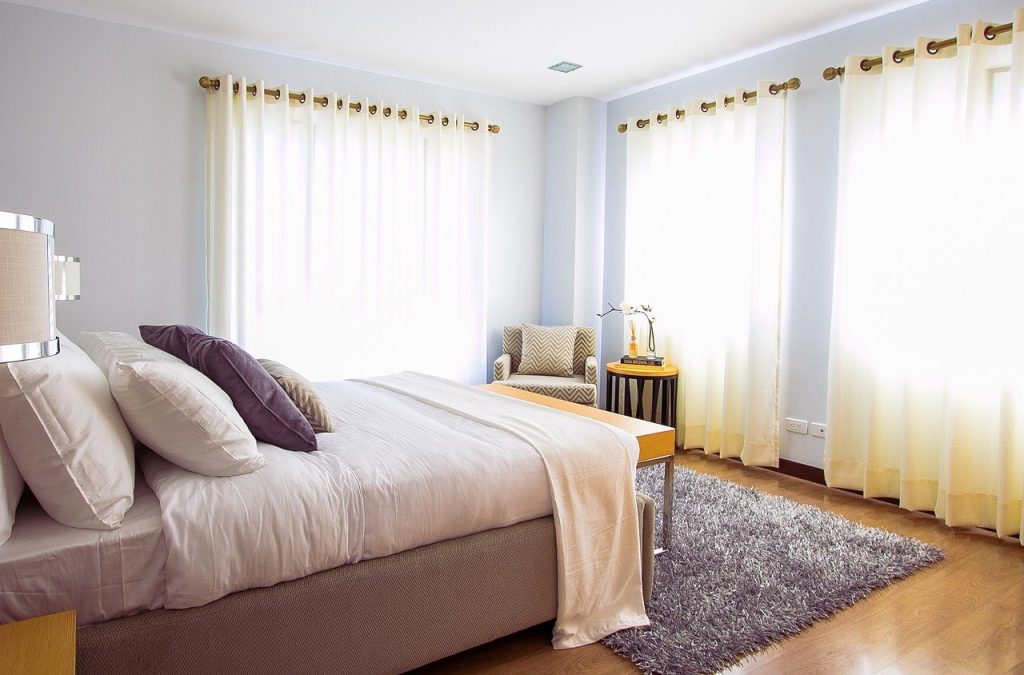
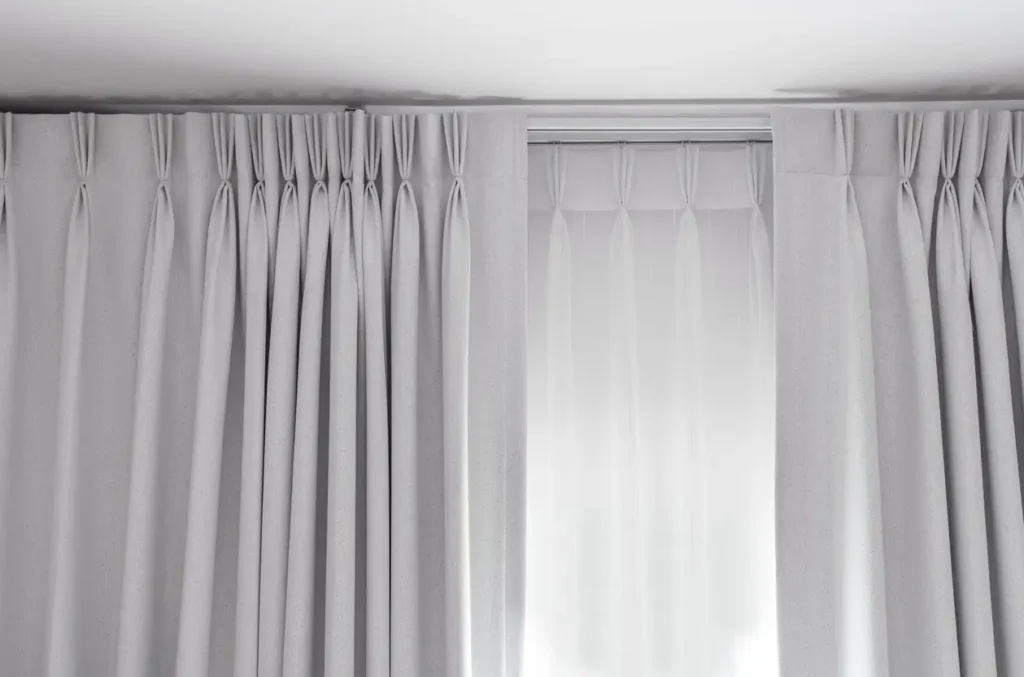
Should the sofa fabric match the curtains?
Sofa upholstery and curtains do not need to match exactly.
Using the same fabric across both can create a highly coordinated scheme, but it may feel visually heavy if the pattern or colour is strong.
A more layered approach is often effective.
For example:
- A plain sofa with patterned curtains
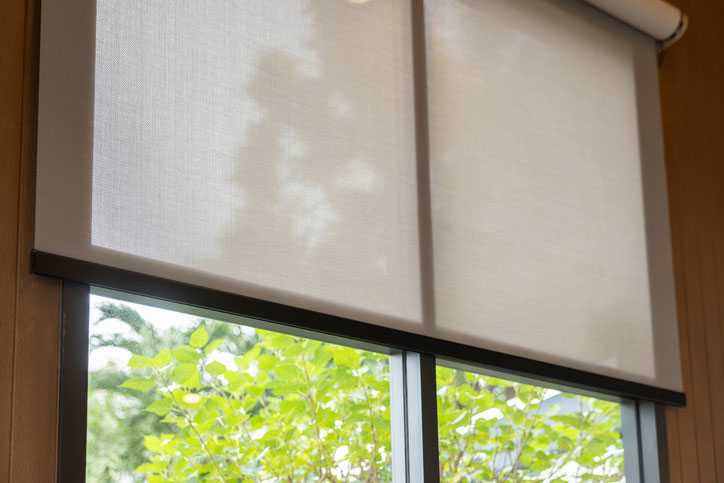
- Textured upholstery with simple linen blinds
- A coloured sofa with neutral window treatments
- Related tones used in different materials
- A curtain pattern repeated through cushions rather than the sofa
The aim is to create connection without making every surface identical.
Consider the colour balance across the entire room. The sofa, curtains, rugs and walls should support one another rather than compete.
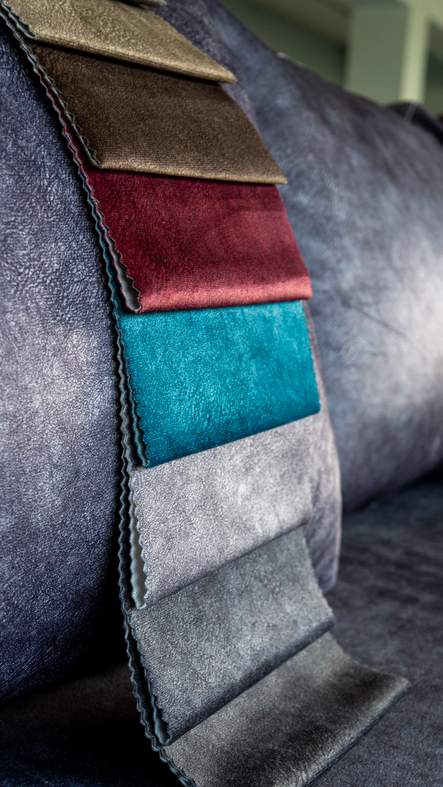
Why should you view fabric samples at home?
Fabric can look very different under showroom lighting, daylight and artificial light.
A sample should be viewed in the room at different times of day.
Check it:
- In morning and afternoon light
- With lamps switched on
- Beside the flooring
- Against the wall colour
- Near the curtains or blinds
- Next to timber and metal finishes
- Horizontally and vertically
Colours may appear warmer, cooler, lighter or duller depending on their surroundings.
A small swatch also makes it difficult to judge pattern scale. Where possible, request a larger sample or view the fabric on a piece of furniture.
Take time with the decision. Upholstery is a significant investment and usually remains in place for many years.
How much fabric is needed for sofa upholstery?
The amount depends on the size, shape and design of the sofa.
A large sofa with loose cushions, wide arms and a skirt will require more material than a compact, simple frame.
Patterned fabrics also need additional allowance for matching.
The upholsterer will consider:
- Total sofa dimensions
- Number of cushions
- Fabric width
- Pattern repeat
- Direction of the design
- Piping requirements
- Arm and back construction
- Whether the material has a pile
Velvet and other directional fabrics must usually be cut in the same direction. This may increase the required quantity.
Do not estimate fabric based only on the external width of the sofa. A professional assessment is needed before ordering.
What should you check before approving a fabric?
Before making the final decision, confirm that the fabric meets both practical and design requirements.
Is it rated for upholstery?
Curtain fabric is not always strong enough for seating.
Is the durability suitable?
Check whether it is intended for occasional, general or heavy domestic use.
Does it feel comfortable?
Consider how the surface feels during prolonged sitting.
Can it be maintained realistically?
Make sure the cleaning instructions suit your household.
Will it resist the main risks?
Think about sunlight, children, pets, spills and regular use.
Does the colour work in the room?
View the sample beside existing finishes in natural and artificial light.
Is the pattern suitable for the sofa?
Check scale, direction and the amount of matching required.
Can the upholsterer work with it?
Confirm that the weight, stretch and construction suit the shape of the furniture.
Frequently Asked Questions
What is the best fabric for a family sofa?
A tightly woven performance fabric or durable synthetic blend is often practical for a family sofa. Look for good abrasion resistance, stain protection and straightforward cleaning instructions.
Is velvet too delicate for sofa upholstery?
Not always. Performance velvets and high-quality synthetic blends can be durable enough for regular use. Natural velvets may require more careful handling.
Which sofa colours hide marks best?
Mid-toned colours, textured weaves and small patterns generally conceal minor marks better than very pale, very dark or completely flat fabrics.
Should sofa fabric be fire resistant?
Upholstered furniture and materials supplied for domestic use in the UK must meet relevant fire safety requirements. Your upholsterer or supplier should confirm that the complete specification is suitable.
Can curtain fabric be used to upholster a sofa?
Only if the fabric is also rated for upholstery. Many decorative curtain fabrics are not designed to withstand repeated sitting, friction and movement.
Choosing upholstery fabric with confidence
The best sofa upholstery fabric is one that suits the way the furniture is actually used.
Durability, cleaning requirements, sunlight and household activity should be considered before colour and pattern are finalised. Once the practical requirements are clear, the material can be chosen to support the wider interior design.
Natural fibres offer softness and character, while synthetic and blended fabrics can provide additional resilience. Performance fabrics can be particularly useful in busy homes without requiring a compromise on texture or appearance.
View samples in the room, check the technical information and discuss the sofa’s construction with an experienced upholsterer. A thoughtful choice will help the finished piece feel comfortable, cohesive and appropriate for everyday life.
For advice on choosing fabric for sofa upholstery and creating a coordinated interior scheme, contact Zenn Interiors for a personalised consultation.
Phone: 020 7871 3082
Email: zenninteriors@gmail.com
Find out more: https://zenninteriors.co.uk/