Duette blinds and roller blinds can both create a clean, contemporary finish, but they are designed quite differently and suit different priorities.
The main difference is construction. A roller blind uses a single sheet of fabric that rolls around a tube, while a Duette blind uses a cellular, or honeycomb, fabric structure that folds into pleats. That difference affects everything from thermal performance and appearance to the amount of space the blind occupies when open.
If your priority is simplicity, a wide choice of fabrics and an understated finish, roller blinds are often a strong option. If insulation, a softer pleated appearance and thermal comfort matter more, Duette blinds may be better suited.
Neither is automatically the better blind. The right choice depends on what you need the window treatment to do.
What is the main difference between Duette and roller blinds?
The simplest distinction is how each blind is built.
A roller blind consists of fabric attached to a roller mechanism. When raised, the fabric winds around the tube. When lowered, it forms a flat surface across the window.
This creates a particularly simple appearance. Roller blinds work well where the intention is to keep the window treatment visually restrained or where the fabric itself is intended to provide colour, pattern or texture.
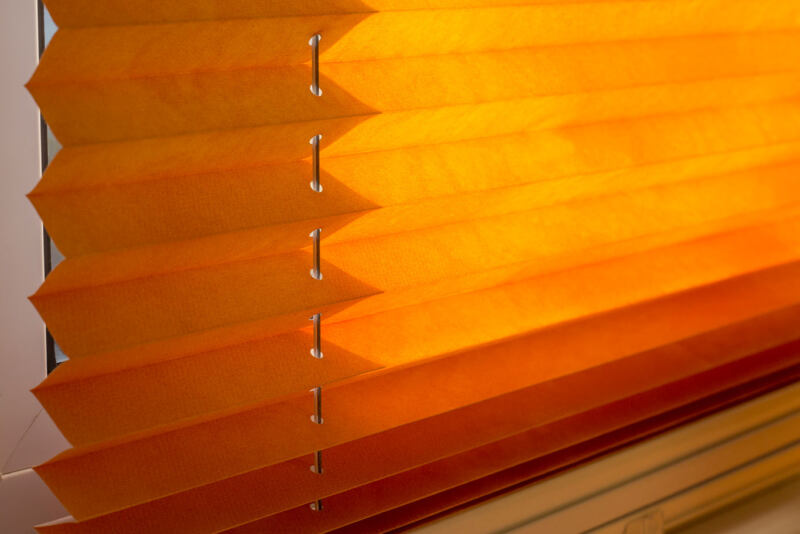
Duette blinds use two layers of fabric joined to form individual cells. Seen from the side, these cells resemble a honeycomb.
The blind raises by folding into horizontal pleats rather than rolling around a tube.
This structure creates a softer, more dimensional appearance than a roller blind, but its practical importance is that the cells contain pockets of air.
These two constructions therefore solve similar window-covering problems in different ways.
Which blind offers better insulation?
If thermal performance is an important factor, Duette blinds generally have the stronger advantage.
The cellular construction traps air inside the blind. That air layer creates an additional barrier between the room and the window.
In colder weather, this can help reduce the sensation of heat being lost through the glazing. During warmer conditions, the blind can also help reduce some of the effect of solar heat entering through the window.
This does not mean a Duette blind should be treated as a replacement for efficient glazing, proper insulation or appropriate ventilation. However, the blind itself contributes more thermally than a conventional single-layer roller fabric.
A standard roller blind can still provide some separation between the room and the glass when closed, but its flat construction does not create the same cellular air pockets.
For homeowners choosing between the two specifically because a room feels cold beside large windows, or excessively warm in strong sunshine, Duette blinds are therefore worth serious consideration.
Are roller blinds better for a minimalist interior?
Roller blinds are particularly well suited to interiors where visual simplicity is important.
When fully lowered, the fabric forms a flat plane. When raised, most of it disappears neatly around the headrail.
That can complement spaces with:
- clean architectural lines
- modern kitchen cabinetry
- large areas of glazing
- simple furniture
- restrained colour palettes
- contemporary extensions
Because roller blinds are visually uncomplicated, the fabric can either blend quietly into the room or become a more deliberate decorative feature.
For example, a neutral roller blind may almost disappear into a pale wall scheme, while a strongly textured or patterned material can turn the same simple mechanism into a much more prominent design element.
Duette blinds can also work extremely well in contemporary interiors, but their pleated construction gives them slightly more texture.
The question is therefore not whether one looks modern and the other does not. It is whether you prefer the flat, graphic simplicity of a roller blind or the softer repetition of Duette pleats.
Which gives better control over light?
Both blind types can provide effective light control, but much depends on the fabric specification.
Roller blinds
Roller blinds can be produced using materials with different levels of transparency.
Depending on the required result, the fabric may:
- softly filter daylight
- reduce glare
- provide privacy
- create a stronger room-darkening effect
- use blackout material where suitable
This flexibility is one of the reasons roller blinds work across many different rooms.
A lighter fabric may suit a living area where natural light is important, while a more opaque material may work better in a bedroom or media room.
Duette blinds
Duette blinds are also available in different opacity levels.
Because the blind itself has a structured cellular design, it can provide a softer overall appearance when daylight passes through certain fabrics.
The pleated form also makes the blind feel less like a single flat panel across the window.
The deciding factor is therefore often not simply Duette versus roller, but which particular fabric and opacity level is chosen within that system.
Which works better in a bedroom?
Either can work in a bedroom, although different priorities may shift the balance.
If the main concern is achieving a simple blackout treatment, a suitably specified roller blind can be an effective solution.
Its flat fabric construction means it can provide a very straightforward way to cover the glazing.
However, remember that blackout fabric does not always mean a completely blacked-out room.
Light can still enter around the sides of a blind depending on how it is fitted. The dimensions of the window recess, mounting position and gap around the fabric all affect the final result.
Duette blinds can also be suitable for bedrooms, particularly where temperature and comfort matter alongside light control.
A bedroom with large glazing or a window that feels particularly cold in winter may benefit from the cellular structure.
The correct decision therefore depends on whether darkness, thermal performance, appearance or a combination of these is the greater priority.
Which is better for large windows?
Large windows require more thought because size affects both appearance and operation.
Roller blinds often suit wide glazing because their design remains visually simple even across a substantial opening.
A series of matching roller blinds can also work well where a large elevation is divided into several glazed panels.
However, very wide or heavy blinds need to be specified appropriately. The larger the blind, the more important the mechanism and fabric behaviour become.
Duette blinds can also work on larger windows, particularly where the glazing creates concerns around temperature or glare.
The repeated pleats can add visual softness to a large area of glass without introducing the heavier appearance of curtains.
For very large or multiple blinds, electric operation may also be worth considering. This can make frequent adjustment much easier, particularly in open-plan extensions where several blinds may need to move together.
Which option works better on awkward windows?
The answer depends on exactly what makes the window awkward.
A straightforward roller system works best where there is enough space for a conventional headrail and the blind can travel freely down the window.
Problems can arise where handles, deep frames or unusual shapes interfere with the blind.
Duette systems can sometimes offer useful alternatives because their pleated fabric can be incorporated into different types of fitting systems.
That does not mean every unusual window is automatically suited to Duette blinds, but their construction can make them worth investigating where conventional roller blinds are difficult to accommodate.
For any non-standard glazing, accurate measurement is especially important.
A small difference in clearance can determine whether the blind operates smoothly or catches on the window furniture.
Are Duette blinds more noticeable when open?
Both types become relatively compact when raised, but they look different.
A roller blind wraps around a tube, creating a neat roll at the top of the window.
A Duette blind compresses into a pleated stack.
The amount of visible fabric depends on the overall blind size and system.
For windows where preserving as much glass as possible is a priority, such as a garden-facing picture window, the size of the blind when fully raised is worth considering before making a final choice.
This is particularly important if several blinds sit side by side.
A treatment that appears discreet on one standard window may become more visually prominent when repeated across a full elevation.
Which is easier to maintain?
Roller blinds generally have the advantage of a simple, flat surface.
Dust can be easier to remove because there are no individual pleats.
Maintenance requirements still depend heavily on the fabric itself, however. Some materials can be lightly wiped, while others require more careful cleaning.
Duette blinds contain multiple folds, so dust can settle differently across the surface.
Regular light cleaning can help prevent a build-up, but the correct method should always be appropriate to the material.
Neither option should be chosen solely because it is described as low maintenance.
Consider where the blind will be installed.
A blind in a quiet bedroom has very different maintenance requirements from one fitted close to a kitchen sink or cooking area.
Do roller blinds offer more fabric choice?
Roller blinds are particularly flexible when it comes to decorative choice.
Their simple structure means the fabric forms a large, uninterrupted surface when closed. This lends itself well to:
- plain colours
- bold colours
- patterns
- textured finishes
- light-filtering materials
- more opaque fabrics
This can make a roller blind particularly effective where the window treatment is intended to contribute to the colour scheme.
Duette blinds have a more characteristic appearance because the pleated cellular construction remains visible regardless of colour.
They can still complement a wide variety of interiors, but the design impact tends to come from the combination of colour and repeated pleat rather than a completely flat expanse of fabric.
If you are choosing the blind around a very particular patterned material, roller blinds may therefore offer greater decorative flexibility.
What are the practical trade-offs?
The decision becomes clearer when the priorities are considered side by side.
Choose Duette blinds when:
- improving thermal comfort is important
- you like a soft, pleated appearance
- large areas of glazing influence room temperature
- you want a contemporary treatment with additional structure
- the window arrangement suits a cellular blind system
Choose roller blinds when:
- you prefer a particularly clean and simple finish
- a wide variety of fabric designs is important
- you want an unobtrusive blind for contemporary glazing
- ease of maintenance is a key consideration
- you want the fabric itself to make a decorative statement
There will also be homes where both work better than choosing one throughout.
For example, Duette blinds might be used on a large glazed elevation where insulation matters, while a roller blind could be fitted to a smaller kitchen window where simplicity and easy care are more important.
That can be particularly effective in open-plan spaces, provided the colours and overall design language remain coordinated.
How should you decide between Duette and roller blinds?
Instead of starting with the product name, start with the room.
Ask what problem the blind needs to solve.
If you are mainly looking for a simple way to control privacy and light while keeping the window visually clean, roller blinds are an obvious option to explore.
If the window affects how warm or comfortable the room feels, Duette blinds deserve greater consideration.
Also look at the window when the blind is both open and closed.
A fabric sample may look attractive in isolation, but the final result needs to work across the full area of the window.
Consider:
- window size
- direction of sunlight
- required privacy
- thermal comfort
- available fitting space
- interior style
- maintenance
- frequency of use
- whether manual or electric operation is preferable
The best blind is the one that solves the most important practical requirements while also contributing appropriately to the interior.
Frequently Asked Questions
Are Duette blinds the same as pleated blinds?
Not exactly. Duette blinds use a cellular honeycomb construction, while a conventional pleated blind generally uses a single pleated layer of fabric. The cell structure is one of the main reasons Duette blinds are associated with improved insulation.
Are roller blinds cheaper than Duette blinds?
Cost varies according to fabric, dimensions, operating system and specification. Roller blinds are mechanically simple, but it is not sensible to assume a final price without comparing like-for-like made-to-measure specifications.
Can Duette blinds be motorised?
Motorised options may be available depending on the chosen system and installation. This can be particularly useful for large, high or frequently adjusted blinds.
Can roller blinds help reduce glare?
Yes. Appropriate roller-blind fabrics can soften incoming daylight and reduce glare, although the effectiveness depends on the material, colour, openness and position of the window.
Can Duette and roller blinds be used in the same room?
Yes. There is no requirement to use one type throughout. Different blinds can be coordinated through colour, tone and hardware where individual windows have different practical requirements.
Duette and roller blinds are both versatile options, but they solve the same window-treatment challenge in different ways.
Roller blinds excel when simplicity, fabric choice and a clean appearance are priorities. Duette blinds become especially appealing where insulation, thermal comfort and a softer cellular design are more important.
Rather than asking which blind is universally better, consider what matters most at the particular window. The direction of sunlight, amount of glazing, privacy requirement, interior style and way the room is used will usually make the decision much clearer.
Zenn Interiors offers made-to-measure Duette and roller blinds alongside a wider range of bespoke window treatments, allowing the specification to be considered alongside the rest of the room.
Phone: 020 7871 3082
Email: zenninteriors@gmail.com
Find out more: https://zenninteriors.co.uk/