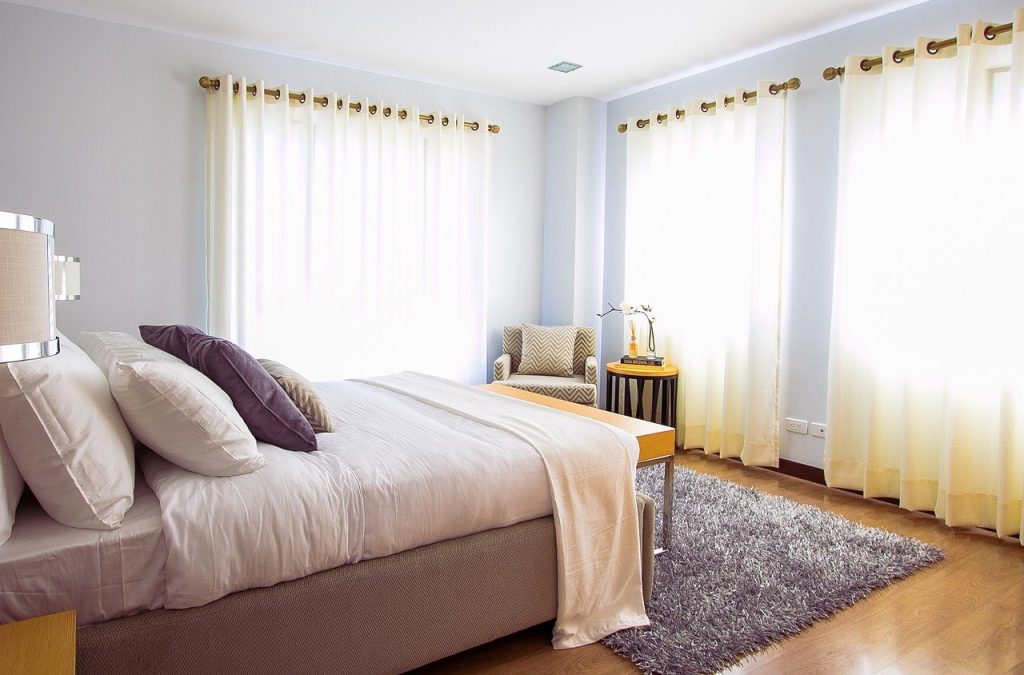
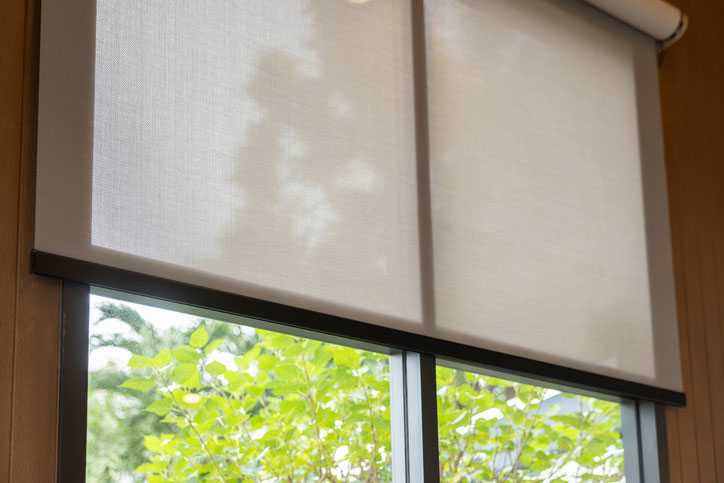
Sheer blinds can be very effective for daytime privacy because they soften the view through a window while allowing natural light to enter the room. They are particularly useful in living rooms, dining areas and ground-floor spaces where homeowners want to reduce visibility from outside without making the interior feel dark or enclosed.
However, sheer blinds do not provide the same level of privacy in every situation. Their performance depends on the fabric, the direction of the light, the distance between the window and neighbouring properties, and whether the interior is brighter than the exterior.
During the day, the brighter outdoor conditions usually make it more difficult for people to see clearly into a room through sheer fabric. After dark, this balance reverses. When lights are switched on indoors, silhouettes and room details may become visible from outside.
Sheer blinds are therefore best understood as a daytime privacy treatment rather than a complete privacy solution for every hour.
What are sheer blinds?
The term sheer blinds can describe several window treatments made from translucent or semi-transparent fabric.
Unlike blackout or opaque blinds, sheer blinds are designed to allow some daylight to pass through the material. They soften the brightness, reduce glare and partially obscure the view through the window.
Depending on the design, sheer blinds may include:
- Sheer roller blinds
- Sheer vertical blinds
- Sheer pleated blinds
- Layered or day-and-night blinds
- Fabric blinds with alternating sheer and opaque sections
- Soft vanes suspended between sheer fabric panels
Each design behaves slightly differently. Some provide a continuous layer of translucent fabric, while others allow the user to alternate between more open and more private positions.
The amount of visibility depends on the density of the weave, the colour of the material and the way the blind is positioned.
How do sheer blinds provide daytime privacy?
Sheer blinds provide privacy by diffusing the view through the glazing.
Instead of creating a solid barrier, the material interrupts clear sightlines. People outside may be able to detect movement, colour or general shapes, but fine details are usually less visible than they would be through an uncovered window.
The effect is strongest when the outside environment is brighter than the room. During a typical daytime period, natural light reflects from the external surface of the fabric and makes it harder to see through from outside.
From inside the room, the view out may remain partially visible because your eyes are looking towards the brighter exterior.
This creates the appealing effect of increased privacy without losing all connection to the garden, street or surrounding area.
However, sheer fabric does not make a window completely one-way. The level of screening can change according to weather, time of day and the position of the viewer.
Can people see through sheer blinds from outside?
People may be able to see through sheer blinds to some degree, particularly if they are standing close to the window or if the room is brightly lit.
During a bright day, the fabric will usually obscure most internal detail. Someone passing on the pavement may see only vague shadows or movement.
Visibility may increase when:
- The sky is overcast and the room is relatively bright
- Interior lights are switched on
- A person stands directly beside the window
- The blind uses a very open or lightweight weave
- Dark furniture contrasts strongly with a pale background
- The viewer outside is close to the glass
- There is little distance between neighbouring windows
A fabric sample should ideally be assessed against the actual window rather than judged only in a showroom or from a photograph.
A sheer material that appears sufficiently private in one room may feel too transparent in another because the lighting and surroundings are different.
What happens to privacy after dark?
Privacy is significantly reduced after dark when the room is illuminated.
During the day, the brighter side is usually outside. At night, the brighter side is inside. This makes the room easier to see from the darker exterior.
Depending on the fabric, people outside may be able to see:
- Silhouettes
- Movement
- Furniture shapes
- Colours
- Screen light
- Details close to the window
Sheer blinds should therefore not be relied upon as the only evening window treatment in rooms where full privacy is important.
A second layer can be added for use after dark. This may include curtains, an opaque roller blind or a layered blind system with both sheer and solid sections.
The sheer treatment can remain in place during the day, while the more opaque layer is closed in the evening.
Are layered sheer blinds more private than simple sheer fabric?
Layered blinds can offer greater control because they combine translucent and opaque sections within one system.
One common design uses alternating bands of sheer and solid fabric. By adjusting the position of the layers, the user can line up the sheer sections to admit light or overlap the opaque sections for increased privacy.
Other designs use soft fabric vanes between two sheer panels. The vanes can be tilted to control visibility and sunlight while maintaining a softer appearance than conventional horizontal slats.
These systems can offer a useful middle ground between a standard sheer blind and a fully opaque treatment.
However, even layered sheer blinds may not provide complete blackout or eliminate all side gaps. The final result depends on the design, fabric and fit.
Which rooms are best suited to sheer blinds?
Sheer blinds work best in rooms where daylight is valuable and full daytime screening is not essential.
Are sheer blinds suitable for living rooms?
Living rooms are often very well suited to sheer blinds.
They can soften direct sunlight, reduce glare and help prevent the room from feeling exposed to passers-by. At the same time, they preserve a bright and open atmosphere.
This is especially useful in a front living room facing a road or footpath. Closing heavy curtains throughout the day may make the room feel dark, while leaving the window uncovered can feel uncomfortable.
A sheer blind provides a softer boundary between the interior and the outside world.
In the evening, curtains can be drawn for fuller privacy and a warmer, more layered appearance.
Do sheer blinds work in dining rooms?
Sheer blinds can create a calm and elegant atmosphere in a dining room. They soften the light without preventing the room from feeling connected to the outdoors.
A textured sheer fabric can also add visual interest to an otherwise simple window.
Where the dining room is used mainly during the evening, an additional opaque treatment may be needed. Curtains or a second blind can provide privacy once the interior lights are on.
Are sheer blinds suitable for bedrooms?
Sheer blinds can be used in bedrooms, but they are rarely sufficient as the only window treatment.
Bedrooms generally need stronger privacy, particularly at night, as well as greater control over early morning light.
A sheer blind may be combined with:
- Blackout curtains
- An opaque roller blind
- A Roman blind
- A second blind within a dual system
- Lined curtains
This combination allows the sheer layer to be used during the day while the more substantial treatment is closed at night.
In a bedroom that is not overlooked, the sheer blind may be used more freely. However, the visibility of silhouettes after dark should still be considered.
Can sheer blinds be used in bathrooms?
Bathrooms require dependable privacy, so sheer blinds need careful consideration.
A dense sheer fabric may obscure detail during the day, but it may not provide enough coverage after dark. Silhouettes can become visible when the room is lit.
For a bathroom, a sheer blind should usually be paired with a more opaque treatment or used only on glazing that already provides privacy, such as frosted glass.
The fabric and mechanism must also be suitable for humid conditions. Not every sheer material is designed for regular exposure to steam or condensation.
A specialist should assess both privacy and moisture resistance before the blind is selected.
Do sheer blinds suit kitchens?
Sheer blinds can work well in kitchen-diners and at windows positioned away from sinks and hobs.
They help soften bright light across worktops and dining areas while maintaining an airy feel.
In a kitchen overlooking a private garden, they may provide sufficient screening during the day without completely blocking the view.
The fabric should be chosen with maintenance in mind. A very delicate material may collect grease or become marked if placed close to the cooking area.
Good ventilation and careful positioning will help preserve the appearance of the blind.
Are sheer blinds useful in home offices?
Home offices often benefit from sheer blinds because they reduce harsh contrast and screen glare without removing natural light.
Direct sunlight can make a computer monitor difficult to view. A sheer fabric diffuses the light and creates a softer working environment.
They may also provide a more consistent background for video calls, particularly if the window is visible behind the desk.
For a ground-floor office, the level of daytime privacy should be assessed carefully. If confidential documents or valuable equipment are visible close to the window, a more opaque treatment may be preferable.
How do sheer blinds control glare?
Sheer blinds filter incoming light rather than blocking it completely.
The fabric breaks up direct sunlight and reduces the intensity of bright areas. This can make a room more comfortable without creating the sudden darkness associated with closing a blackout blind.
Glare control can be especially useful around:
- Televisions
- Computer screens
- Dining tables
- Reading areas
- Polished worktops
- Pale floors
- Large glazed doors
The effectiveness depends on the density and colour of the material. A more open weave may preserve a clearer view but provide less glare reduction.
A denser weave can offer greater screening, although it may also reduce more daylight.
Do sheer blinds protect furniture from sunlight?
Sheer blinds can reduce the intensity of direct sunlight reaching furniture and interior finishes.
They may help limit the exposure of:
- Upholstery
- Curtains
- Rugs
- Timber flooring
- Artwork
- Painted surfaces
However, a sheer blind does not block all ultraviolet light or prevent fading entirely.
The level of protection depends on the fabric specification and how consistently the blind is used. Rooms with strong direct sunlight may require a specialist solar fabric or a more substantial blind for greater protection.
Sheer blinds should therefore be viewed as part of a wider light-management approach rather than a guarantee against fading.
Does the colour of a sheer blind affect privacy?
Colour can influence both privacy and the way the blind interacts with light.
Lighter fabrics tend to reflect more daylight and can make a room feel bright and spacious. They often create a soft, understated appearance.
Darker sheers may provide stronger visual contrast and can sometimes make the outward view appear clearer from inside. However, their appearance and privacy performance vary according to the weave and surrounding lighting.
The best colour should be chosen based on:
- Wall colour
- Window frame finish
- Flooring
- Upholstery
- The direction of the room
- The desired level of contrast
- The amount of natural light
A sample should be viewed at the window during both bright and overcast conditions. It is also useful to check the material from outside.
How does fabric density affect privacy?
Fabric density is one of the most important factors.
A tightly woven sheer provides more screening but reduces the clarity of the outward view. A more open weave retains a stronger visual connection to the outdoors but offers less privacy.
The right balance depends on the room.
A living room overlooking a quiet garden may suit a more open fabric. A front room facing a busy pavement may need a denser weave.
Privacy should not be judged only by whether someone can identify a face. Consider whether movement, silhouettes, possessions or room layouts remain visible.
Does the fitting method affect privacy?
A well-fitted blind provides better privacy than one with unnecessary gaps.
A blind fitted inside the window recess creates a neat finish, but small gaps are usually required at the sides to allow the blind to operate.
An outside-recess blind can overlap the window opening more fully, reducing sightlines around the edges.
The best fitting method depends on:
- The depth of the recess
- Window handles
- Opening sections
- The surrounding wall space
- The width of the fabric
- The desired visual finish
Made-to-measure blinds help minimise excessive gaps and ensure that the proportions suit the window.
For windows that are heavily overlooked from an angle, side gaps may matter as much as the transparency of the fabric itself.
Can sheer blinds be combined with curtains?
Combining sheer blinds with curtains is one of the most effective ways to balance daylight, daytime privacy and evening coverage.
During the day, the sheer blind can be lowered to soften views into the room while retaining natural light.
In the evening, the curtains can be closed to provide fuller privacy and greater visual warmth.
This layered approach also allows different fabrics to play separate roles.
The sheer blind may be kept neutral and understated, while the curtains introduce:
- Colour
- Pattern
- Texture
- Insulation
- Decorative fullness
The two treatments should be coordinated rather than competing for attention. A subtle sheer blind often works well with more decorative curtains.
Can you combine sheer and blackout blinds?
A dual-blind arrangement can pair a sheer fabric with a blackout blind at the same window.
The sheer layer is used during the day, while the blackout layer is lowered when stronger privacy or darkness is required.
This can be useful in:
- Bedrooms
- Media rooms
- Home offices
- Guest rooms
- Street-facing living spaces
The installation requires enough space for both mechanisms. The depth of the recess and the position of handles should be checked carefully.
A coordinated system can create a cleaner result than fitting two unrelated blinds without considering how they interact.
How do sheer blinds compare with net curtains?
Both sheer blinds and net curtains provide daytime screening while allowing light into the room, but their appearance and operation are different.
Net curtains hang permanently across the window and usually remain in place throughout the day. They create a soft and traditional effect but offer limited adjustment.
Sheer blinds can be raised, lowered or adjusted according to the system. This provides more flexibility when the user wants a completely open window or stronger control over the view.
Blinds also tend to create a more structured and contemporary appearance.
Net curtains may suit period interiors or rooms where continuous screening is preferred. Sheer blinds may be better where clean lines and adjustable control are priorities.
How do sheer blinds compare with Venetian blinds?
Venetian blinds use adjustable slats that can be tilted to redirect light and restrict the view.
They can provide more precise privacy control because the angle of the slats can block direct sightlines while still admitting daylight.
Sheer blinds create a softer visual effect. They diffuse the entire window rather than using individual solid slats.
A Venetian blind may be preferable where directional control is the main priority. A sheer blind may be better where the room needs softness, filtered light and a less technical appearance.
What should you consider before choosing sheer blinds?
Sheer blinds should be selected according to the specific conditions of the room.
How close are people to the window?
A window beside a public footpath needs stronger screening than an upstairs window set back from neighbouring properties.
Will the room be used after dark?
If full evening privacy is required, plan an additional opaque treatment.
How bright is the interior during the day?
A brightly lit room can be easier to see into, even during daylight. Consider artificial lighting as well as sunlight.
What level of outward view do you want?
A more open weave preserves the view but reduces privacy. A denser weave provides stronger screening.
Does the fabric suit the room?
Kitchens and bathrooms may require materials designed for moisture and easier maintenance.
Are side views a concern?
A person approaching the window from an angle may see through gaps around the blind. The fitting and overlap should be planned carefully.
Frequently Asked Questions
Can neighbours see through sheer blinds during the day?
They may be able to see vague movement or shapes, but clear detail is usually reduced when it is brighter outside than inside. Visibility depends on the fabric, lighting and distance from the window.
Do sheer blinds provide privacy at night?
They provide limited privacy at night. When interior lights are on, silhouettes and room details may become visible from outside. An opaque blind or curtains should be added where evening privacy is important.
Are darker sheer blinds more private?
Not necessarily. Privacy depends mainly on the density and construction of the fabric, although colour can affect contrast and visibility. Samples should be tested at the actual window.
Can sheer blinds reduce television glare?
Yes. They can soften direct sunlight and reduce bright reflections while maintaining more natural light than an opaque blind.
Are sheer blinds suitable for street-facing windows?
They can be suitable for daytime use, particularly if the fabric has a sufficiently dense weave. A second treatment is recommended for evening privacy.
Are sheer blinds the right choice for daytime privacy?
Sheer blinds are a strong option when you want to make a room feel less exposed without sacrificing natural light. They can obscure clear views into the home, soften glare and retain a connection to the outdoors.
They work especially well in living rooms, dining spaces, home offices and kitchen-diners. In bedrooms and bathrooms, they are usually best combined with a more opaque window treatment.
The most important limitation is the change in privacy after dark. Sheer fabric responds to the balance of light, so a blind that provides effective screening in daylight may become much more transparent when the room is illuminated.
By selecting the right fabric density, fitting method and secondary treatment, sheer blinds can form part of a practical and refined privacy solution.
For advice on choosing made-to-measure sheer blinds and coordinated window treatments for your home, contact Zenn Interiors for a personalised consultation.
Phone: 020 7871 3082
Email: zenninteriors@gmail.com
Find out more: https://zenninteriors.co.uk/