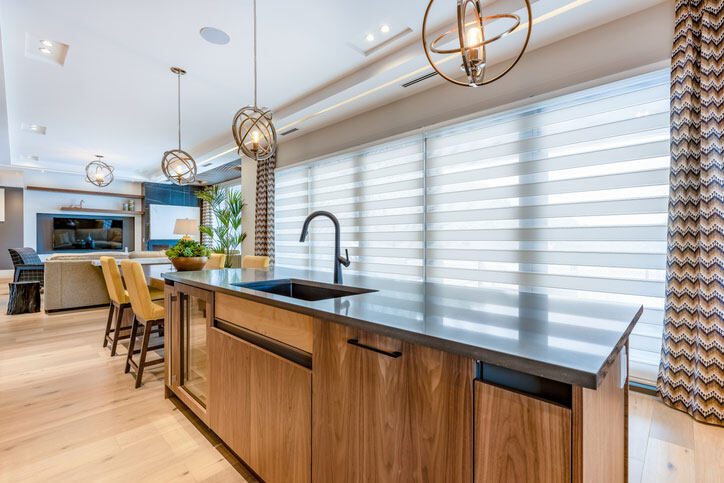
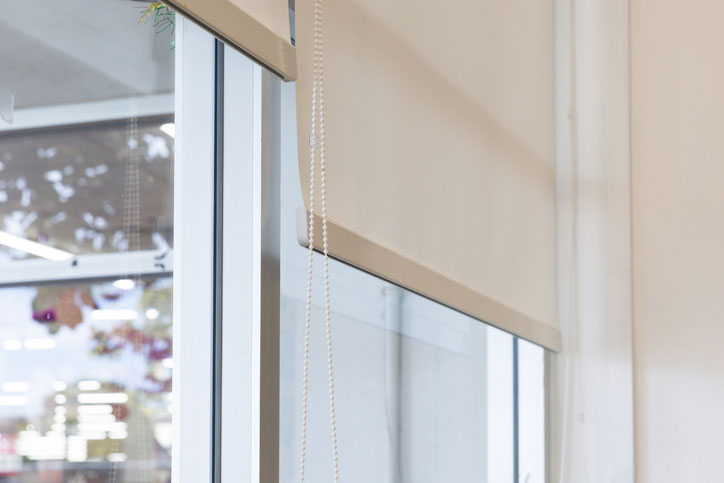
Roller blinds remain one of the most practical blind options because they are simple to operate, compact, versatile and suitable for a wide range of rooms. Their straightforward design allows one piece of fabric to roll neatly around a tube, creating an uncluttered window treatment that can provide privacy, control daylight and complement many different interior styles.
Although there are now numerous specialist blind systems available, the roller blind continues to be widely used in homes because it performs its main purpose efficiently. It does not require a large amount of space around the window, it can be made in many different fabrics and it can be tailored to suit both decorative and functional requirements.
The practical value of a roller blind depends on selecting the right fabric, fit and operating system. A carefully measured blind can become a discreet part of the room or a stronger design feature, while still remaining easy to use every day.
What makes roller blinds so easy to use?
One of the main reasons roller blinds remain popular is their uncomplicated operation. The blind can be raised or lowered to almost any position, allowing the user to adjust the amount of visible glass according to the time of day.
This simplicity can be useful in busy households where window coverings are opened and closed regularly. There are no folds to arrange, slats to align or fabric panels to draw evenly across the window.
Depending on the system chosen, a roller blind may be operated using:
- A side chain
- A spring-assisted mechanism
- A cordless control
- A motorised system
- A remote control or compatible smart-home control
The right method will depend on the window size, its position and who will use the blind. An easily accessible kitchen window may only require a straightforward manual control, while a large or high-level window could benefit from motorisation.
A well-made roller blind should move smoothly and stop securely at the chosen height. The quality of the mechanism is important because the blind may be used several times each day over many years.
Why does the compact design matter?
Roller blinds use relatively little visual and physical space. When fully raised, the fabric rolls neatly around the tube at the top of the window rather than gathering into a large stack.
This makes roller blinds particularly useful in smaller rooms or around windows where curtains might feel too heavy. They can also be positioned within a window recess, leaving the surrounding wall area clear.
A compact window treatment may be valuable where there are:
- Radiators beneath the window
- Desks or worktops close to the glazing
- Furniture positioned beside the window
- Narrow walkways
- Shelves or storage near the window
- Limited room for curtain poles and fabric
The blind can provide the necessary privacy and shading without interfering with the layout of the room. This is especially helpful where space planning is a priority.
The simple shape also allows other elements, such as furniture, artwork or a feature wall, to remain the main focus of the interior.
Which rooms are best suited to roller blinds?
Roller blinds can be used in most areas of the home, although the chosen fabric should reflect the conditions within each room.
Their versatility comes from the broad range of available materials. Some fabrics are designed to filter light, while others provide blackout performance, greater privacy or resistance to moisture.
Are roller blinds suitable for living rooms?
Roller blinds can provide a calm and minimal finish in a living room. They are especially effective in contemporary interiors where clean lines and an uncluttered appearance are important.
A light-filtering fabric can reduce the intensity of bright daylight without completely darkening the room. This may help create a softer atmosphere and reduce glare across televisions or other screens.
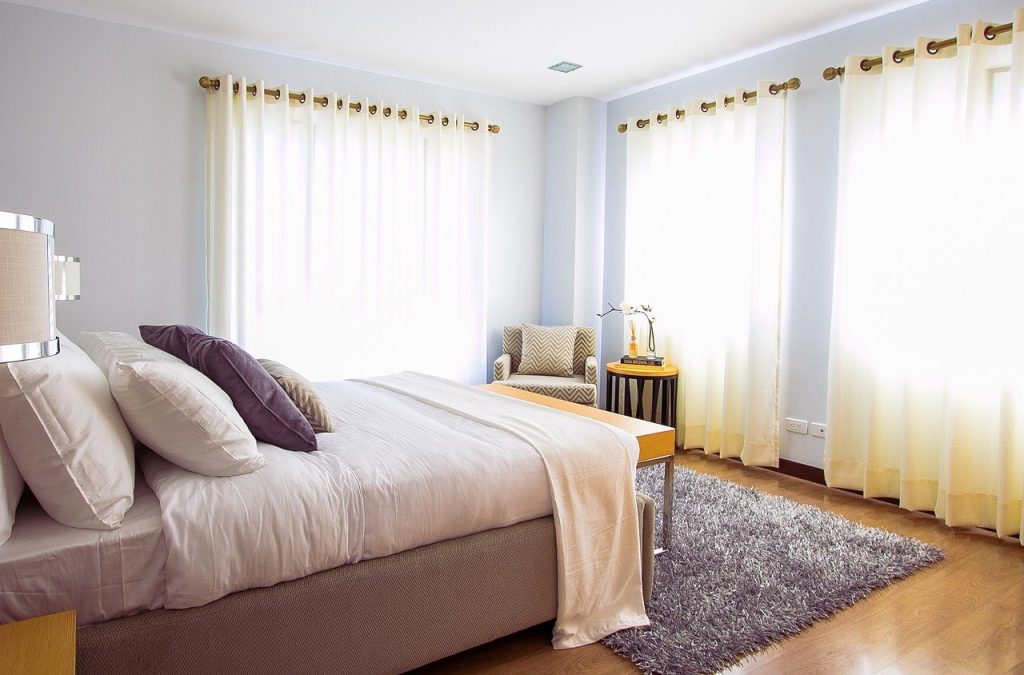
The blind can also be combined with curtains. In this arrangement, the roller blind manages everyday privacy and light, while the curtains add texture, warmth and a more decorative frame around the window.
This layered approach can provide greater flexibility. The roller blind may be lowered during the day when sunlight becomes uncomfortable, while the curtains can be closed in the evening for additional privacy and softness.
Do roller blinds work well in bedrooms?
Roller blinds are a practical bedroom option, particularly when made using blackout fabric. A blackout blind can reduce early morning light, street lighting and other external brightness that may disturb sleep.
However, the fabric itself is only one part of the installation. Even a blackout material may allow some light to enter around the edges of the blind. The amount of light leakage will depend on whether the blind is fitted inside or outside the recess and how closely it covers the window.
A blind fitted outside the recess may overlap the opening more fully, while a blind inside the recess can create a neater, more integrated appearance. The most appropriate option will depend on the window, the room design and the desired level of darkness.
Roller blinds can also work well in guest bedrooms and children’s rooms because they are easy to coordinate with changing bedding, wall colours and accessories.
Child-safe operation should always be considered. Cordless, tensioned or motorised systems may be appropriate where loose chains could present a risk.
Why are roller blinds useful in kitchens?
Kitchens require window treatments that are practical, compact and relatively easy to care for. Roller blinds can be a strong option because they do not take up worktop space and can be raised completely when the window needs to be opened.
The fabric should be selected according to the blind’s position. A window close to a sink or food preparation area may require a moisture-resistant or wipeable material.
A standard decorative fabric may be more suitable for a dining area or a kitchen window located away from splashes, steam and cooking residue.
It is also worth considering ventilation. A blind positioned close to a hob can collect grease and odours more quickly, so a specialist may recommend a more easily maintained material or a different blind style.
The simple form of a roller blind often complements modern kitchens, where flat cabinet fronts, clean worktops and streamlined fittings create a restrained interior.
Can roller blinds be used in bathrooms?
Roller blinds can be suitable for bathrooms when made from an appropriate moisture-resistant fabric. The material and components should be selected for a humid environment, particularly where condensation is common.
The blind should not be positioned where it will receive regular direct splashes from a shower or bath. Good ventilation is also important to reduce prolonged moisture exposure.
Privacy is usually a major consideration in bathrooms. An opaque fabric can screen the window effectively, although it may also reduce natural light when fully lowered.
Where privacy is needed throughout the day, a translucent fabric may provide a softer balance. However, the level of privacy can change after dark when the lights are on inside, so the fabric should be assessed carefully rather than chosen based only on its daytime appearance.
Are roller blinds practical for home offices?
A roller blind can help reduce screen glare in a home office without occupying valuable space around the window. It can be lowered to the height needed as the sun moves across the room.
This is useful when the desk is positioned near a window or when direct light falls across a computer monitor during part of the day.
A light-filtering or screen-style fabric can soften brightness while preserving some outward visibility. A more opaque fabric may be preferable if strong shading or privacy is the priority.
The restrained design can also create a professional background for video calls. A neutral roller blind may appear calmer and less distracting than a heavily patterned curtain or elaborate window treatment.
How much light control do roller blinds provide?
The level of light control depends primarily on the fabric. Roller blinds are available in several broad categories, each suited to a different requirement.
Light-filtering fabrics
Light-filtering fabrics soften daylight while allowing some brightness to remain in the room. They can reduce glare and create a more diffused atmosphere.
These fabrics are often suitable for living rooms, dining rooms and other areas where complete darkness is unnecessary.
Blackout fabrics
Blackout fabrics are designed to prevent light from passing through the main surface of the blind. They are commonly used in bedrooms, nurseries and media rooms.
As with any blind, the overall result will depend on the fitting. Small gaps around the edges can still allow light to enter.
Screen and solar fabrics
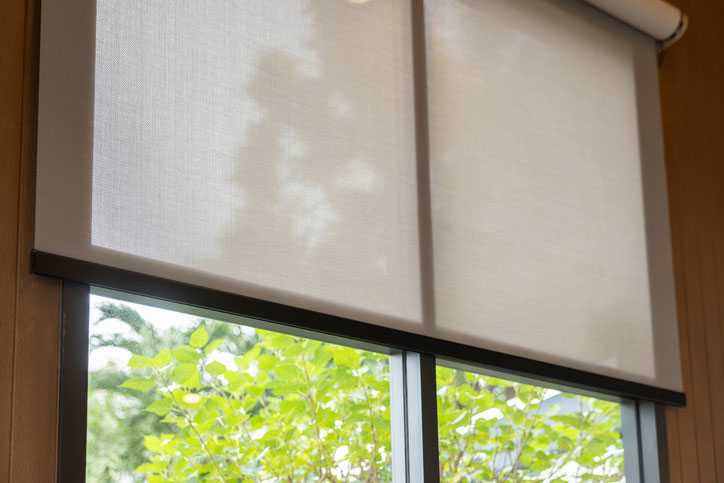
Screen fabrics are designed to reduce glare and the intensity of sunlight while retaining a degree of outward view. They may be appropriate for home offices, highly glazed living areas and windows exposed to strong direct sun.
The amount of visibility and privacy varies according to the openness of the weave and the lighting conditions.
Sheer or translucent fabrics
Translucent roller blind fabrics can create a softer visual effect and may provide limited daytime privacy. They are not usually the best choice where complete screening is needed, especially after dark.
A fabric sample should ideally be viewed against the actual window because colour and transparency can appear different when natural light passes through it.
Do roller blinds provide good privacy?
Roller blinds can provide excellent privacy when made from an opaque fabric and lowered fully. They create a continuous screen across the window without the small gaps found between slats in some other blind styles.
However, privacy depends on the fabric density and the difference between indoor and outdoor lighting.
During the day, some lighter fabrics may obscure the view into the room while allowing daylight to pass through. At night, when the interior is illuminated, silhouettes or shapes may become more visible from outside.
An opaque or blackout fabric is usually a more dependable choice for bedrooms, bathrooms and ground-floor rooms facing a street.
The fit also affects privacy. A blind that is too narrow for the opening can leave visible gaps at the sides. Made-to-measure production helps ensure the blind is properly proportioned for the window.
Are roller blinds easy to clean and maintain?
Roller blinds are generally straightforward to maintain because the fabric hangs as one flat surface. There are no individual slats or deep folds that require regular detailed cleaning.
For many fabrics, routine care may involve:
- Removing loose dust with a soft brush or vacuum attachment
- Wiping suitable materials with a lightly damp cloth
- Avoiding harsh chemicals
- Keeping the fabric dry unless it is designed for moisture
- Raising the blind carefully to prevent creasing
Cleaning instructions vary, so the supplier’s guidance should always be followed. Some decorative fabrics may only tolerate gentle dusting, while certain specialist materials can be wiped more thoroughly.
The mechanism should also be treated carefully. Pulling the chain at an angle or using excessive force can place unnecessary strain on the components.
A blind that begins to roll unevenly may need its position or mechanism checked. Continuing to operate it while the fabric is tracking incorrectly can cause fraying or creasing at the edges.
How versatile are roller blinds as a design feature?
Roller blinds are sometimes viewed as purely functional, but the range of available colours, patterns and textures means they can contribute significantly to a room’s appearance.
A plain neutral fabric can blend with the wall colour and create a quiet, cohesive background. This approach works well in calm, design-led interiors where the window treatment should not dominate.
A patterned or strongly coloured fabric can turn the blind into a feature. Since the fabric is displayed as a flat panel when lowered, larger patterns can often be seen clearly.
The design should be considered in both the raised and lowered positions. A bold blind may have a strong visual impact in the evening but almost disappear when rolled up during the day.
The finish of the bottom bar, cassette and operating mechanism can also affect the overall result. Coordinated hardware creates a more considered appearance than a blind chosen solely for its fabric.
Can roller blinds be fitted to large windows and doors?
Roller blinds can be made for many large windows and glazed doors, but size and weight limitations should be considered.
A wide blind places more pressure on the roller tube and operating mechanism. If the system is not strong enough, the tube may deflect or the blind may become difficult to operate.
For very wide openings, it may be more practical to use several blinds rather than one large blind. This can provide more flexible control because each section can be adjusted independently.
On bi-fold or sliding doors, the blinds must be planned around handles, frames and the movement of the door panels. The depth of the headrail or cassette should not obstruct the operation of the doors.
Motorisation can be especially useful for larger blinds because it provides smooth, consistent movement and reduces the effort required to raise heavy fabric.
What are the limitations of roller blinds?
Roller blinds are practical, but they do not suit every requirement.
Because the fabric forms a flat panel, the blind does not provide the same level of adjustable view-through as Venetian or vertical blinds. It is generally either raised, lowered or positioned somewhere between the two.
A standard roller blind also cannot provide simultaneous screening at the bottom of the window and openness at the top in the way that some top-down blind systems can.
Other potential limitations include:
- Light entering around the edges
- Limited insulation compared with cellular blinds
- Fabric movement near open windows
- Potential marking in very busy or humid rooms
- Size restrictions on extremely wide windows
- Less decorative softness than curtains or Roman blinds
These limitations do not make roller blinds unsuitable. They simply mean that the window treatment should be matched to the priorities of the room.
How do roller blinds compare with other blind styles?
The best blind depends on the type of control and appearance required.
Roller blinds compared with Roman blinds
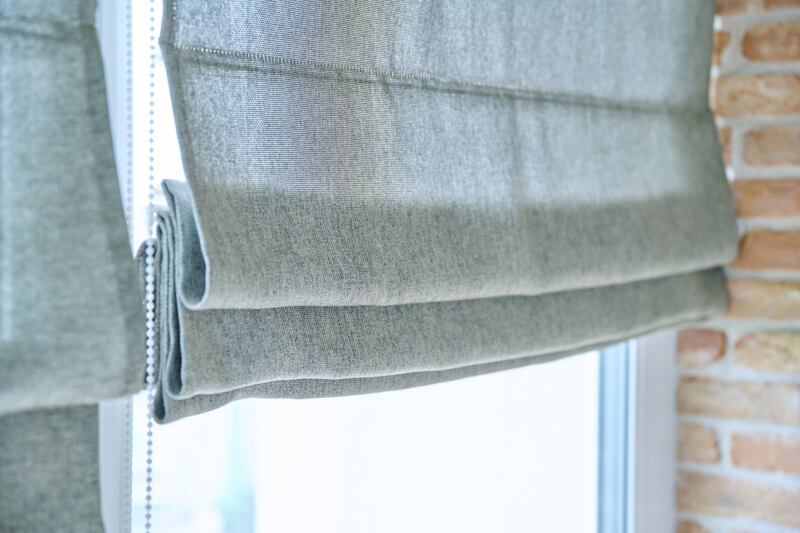
Roman blinds create soft horizontal folds when raised and have a more decorative, fabric-led appearance. Roller blinds are flatter, simpler and more compact.
A roller blind may be preferable where practicality and minimalism are the main priorities. A Roman blind may be more suitable where texture and a softer interior finish are important.
Roller blinds compared with Venetian blinds
Venetian blinds use adjustable horizontal slats, allowing more precise control over the direction of light and visibility.
Roller blinds provide a continuous fabric screen and may be quicker to clean, depending on the material. They also create a less detailed and more streamlined appearance.
Roller blinds compared with curtains
Curtains can add greater softness, insulation and decorative impact. However, they require more space around the window and may interfere with radiators or furniture.
Roller blinds are often more compact and easier to adjust during the day. Combining the two can provide the benefits of both.
Why does made-to-measure fitting improve practicality?
A roller blind is most practical when it fits the window accurately. A blind that is too wide may catch on the recess, while one that is too narrow can leave excessive gaps and reduce privacy.
Professional measuring should account for:
- Whether the blind will sit inside or outside the recess
- Window handles and projecting fittings
- The depth of the recess
- Uneven walls or window frames
- The direction in which the fabric rolls
- The required overlap around the opening
- Access to the operating control
Made-to-measure blinds also allow the fabric, hardware and control system to be selected as a complete solution.
The result should look proportionate to the window and operate without interfering with surrounding furniture, doors or fittings.
What should you consider when choosing roller blind fabric?
The fabric is central to both the appearance and performance of the blind.
Think about the room’s purpose
A bedroom may need blackout material, while a living room may benefit from light filtering. A kitchen or bathroom may require greater resistance to moisture and marking.
Consider the direction of the window
A sunny, south-facing window may need stronger glare and heat control than a north-facing window that receives softer daylight.
Check privacy in different conditions
A fabric that appears private during the day may behave differently after dark. Samples should be assessed against the light where possible.
Coordinate with the wider interior
Consider wall colour, flooring, upholstery and other window treatments. The blind should feel connected to the room rather than selected in isolation.
Choose suitable hardware
The cassette, brackets, chain and bottom bar can be visible. Their finish should complement the window frame and nearby fittings.
Frequently Asked Questions
Are roller blinds suitable for every room?
Roller blinds can be used in most rooms, but the fabric must suit the conditions. Moisture-resistant materials may be needed in bathrooms and kitchens, while blackout fabric is often preferable in bedrooms.
Do roller blinds block out all light?
A blackout fabric blocks light through the material, but small amounts may still enter around the edges. The fitting method and window shape affect the overall result.
Can roller blinds be motorised?
Yes. Motorised roller blinds can be controlled using a remote, wall switch or compatible smart-home system, depending on the product selected.
Are roller blinds cheaper than curtains?
Roller blinds can sometimes require less fabric and fewer fittings than curtains, but the cost depends on the size, fabric, mechanism and whether motorisation is included. Price should be considered alongside quality and expected lifespan.
Can roller blinds be fitted outside the window recess?
Yes. An outside-recess fitting can provide greater coverage around the window and may help reduce side gaps. It also allows the full window opening to remain visible when the blind is raised.
Why roller blinds remain a practical choice
Roller blinds continue to be one of the most practical window treatments because they offer simple operation, efficient use of space and a wide choice of fabrics. They can provide light control, privacy and a clean visual finish without making the window area feel crowded.
Their versatility allows them to work in bedrooms, living rooms, home offices, kitchens and bathrooms when the correct material is selected. They can also be combined with curtains or adapted with motorised controls for greater convenience.
The key is to choose the blind according to the room rather than treating every roller blind as the same. Fabric opacity, moisture resistance, fit, hardware and control method all influence how well the blind will perform.
For advice on choosing made-to-measure roller blinds that suit the practical and visual requirements of your home, contact Zenn Interiors for a personalised consultation.
Phone: 020 7871 3082
Email: zenninteriors@gmail.com
Find out more: https://zenninteriors.co.uk/