
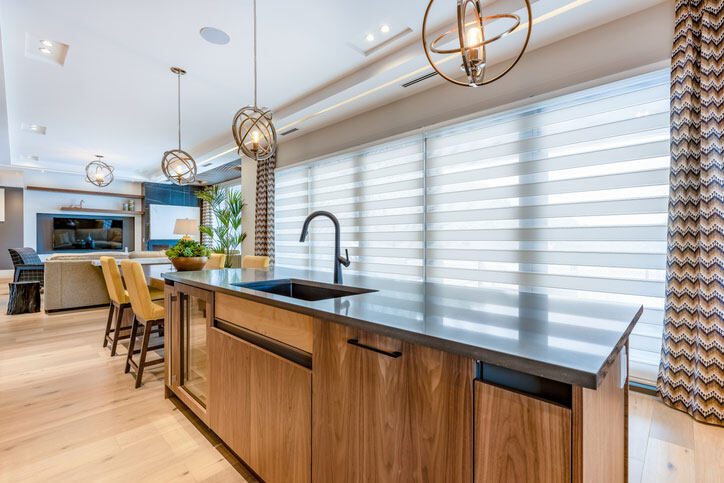
Electric blinds improve comfort and convenience by making it easier to control light, privacy and atmosphere without manually adjusting each blind. Instead of using cords, chains or handles, electric blinds can be operated by a remote control, wall switch, app or smart home system, depending on the chosen setup. This can make a noticeable difference in everyday living, especially in rooms with large windows, multiple blinds or hard-to-reach glazing.
For many homeowners, blinds are used several times a day. They may be opened in the morning, adjusted during bright sunlight, lowered for privacy in the evening and closed fully at night. When this involves several windows or awkward positions, the process can become inconvenient. Electric blinds simplify this routine and make the room easier to use.
They are also valuable from a design perspective. Because electric blinds can reduce or remove visible cords and chains, they create a cleaner and more refined finish. This is particularly useful in modern interiors, bedrooms, open-plan living areas and homes where small details make a big difference to the overall feel of the space.
What Are Electric Blinds?
Electric blinds are window blinds fitted with a motorised operating system. The motor raises, lowers or adjusts the blind without manual pulling. Depending on the blind style, the motor may roll fabric up and down, tilt slats or move blinds into a selected position.
Electric blinds can be used with several blind types, including roller blinds, cassette blinds, Roman blinds, Venetian blinds and some specialist systems. The most suitable option depends on the window, the fabric, the room and the level of control required.
The power source may vary. Some electric blinds are wired into the property’s electrical system, while others use rechargeable battery motors. Battery-powered options can be useful where wiring is not practical or where the installation needs to be less disruptive. Wired systems may be more suitable for larger projects, new builds, renovations or interiors where several blinds are being planned at once.
The control method can also vary. Some homeowners prefer a simple remote control, while others may want blinds connected to a smart home setup. The right approach depends on how you want to use the room and how much automation you need.
How Do Electric Blinds Make Daily Life Easier?
The main convenience of electric blinds is that they remove the need to adjust each blind manually. This may sound like a small change, but it can have a significant impact in rooms where blinds are used frequently.
In an open-plan kitchen and living area, there may be several windows or glazed doors. Manually adjusting each blind can become repetitive, particularly when the sun moves across the room during the day. Electric blinds allow you to change the light level quickly and consistently.
In a bedroom, electric blinds can make mornings and evenings more comfortable. You can open the blinds from bed, close them without walking around the room or set them to move at certain times if the system allows. This can support a gentler start to the day and a more relaxed bedtime routine.
In a home office, electric blinds can help manage glare on screens without interrupting work. If sunlight suddenly hits a desk or monitor, the blind can be adjusted quickly rather than leaving the workspace.
This convenience is especially valuable when a room has:
- Several windows
- Tall glazing
- Rooflights
- Wide bi-fold or sliding doors
- Furniture placed in front of windows
- Blinds behind a bath, sink, desk or sofa
- Windows that are difficult to access safely
Electric blinds make window control feel effortless rather than like a task.
How Electric Blinds Improve Comfort
Comfort in a room is shaped by light, heat, privacy and how easy the space is to use. Electric blinds can improve all of these areas when chosen well.
Light control has a direct effect on comfort. Too much direct sunlight can make a room feel harsh, hot or uncomfortable. It can also cause glare on televisions, laptops and work surfaces. Electric blinds make it easier to respond to changing light throughout the day.
In summer, blinds can help reduce direct sun entering the room. This may help the space feel cooler and more comfortable, particularly in south-facing rooms or properties with large areas of glass. In cooler months, blinds can add a layer at the window, helping the room feel more enclosed and cosy in the evening.
Privacy is another important part of comfort. Many homes are overlooked by neighbouring properties, pavements, gardens or nearby buildings. Electric blinds make it easier to adjust privacy quickly, especially at dusk when interior lights make rooms more visible from outside.
A room feels more comfortable when it supports the way you naturally live. Electric blinds can help create that sense of ease by making light and privacy simple to manage.
Are Electric Blinds Good for Bedrooms?
Electric blinds can be particularly useful in bedrooms because comfort, privacy and light control are all important in this space. A bedroom should feel restful, private and easy to use at the beginning and end of the day.
Electric blackout blinds can help create a darker sleeping environment. This may be useful for people who are sensitive to early morning light, children who go to bed before sunset in summer, shift workers or anyone who wants a more controlled bedroom atmosphere.
The convenience is also noticeable. Being able to close the blinds from bed can make the evening routine feel smoother. In the morning, opening the blinds without getting up can make the room feel brighter and more welcoming.
Electric blinds can also work well when layered with curtains. The blind provides practical light control and privacy, while the curtains add softness, warmth and a more decorative finish. This combination can create a bedroom that feels both functional and luxurious.
For a calm bedroom scheme, the operating system should feel discreet. A quiet motor, neat cassette or carefully chosen fabric can help the blind support the room rather than dominate it.
Are Electric Blinds Useful for Living Rooms?
Electric blinds can make living rooms more comfortable because this is often where daylight changes most noticeably throughout the day. A living room may be used for relaxing, watching television, reading, entertaining or spending time with family, so flexible light control is important.
If sunlight causes glare on a television, electric blinds can be adjusted without interrupting the room’s use. If the room becomes overlooked in the evening, the blinds can be lowered quickly. If the space has large windows or doors onto a garden, several blinds can be moved together for a neater and more coordinated effect.
Electric blinds can also help create different moods. A bright room during the day can feel open and energising, while lowered blinds in the evening can make the same room feel calmer and more intimate. This flexibility helps the living room adapt to different times and uses.
From a design perspective, electric blinds can create a streamlined look. Without visible chains or cords, the window treatment can feel cleaner and more considered. This is especially helpful in refined interiors where the finish matters as much as the function.
How Do Electric Blinds Help With Large Windows?
Large windows can be beautiful, but they often create practical challenges. They can let in a lot of light, make rooms warmer, reduce privacy and require bigger window treatments. Manual blinds on large windows may also be heavier or less convenient to operate.
Electric blinds help solve these problems by making large blinds easier to control. Instead of pulling a chain or adjusting several blinds by hand, the user can move them with a simple control. This is useful for wide glazing, tall windows, bi-fold doors, sliding doors and full-height window designs.
For very wide areas, multiple electric blinds can sometimes be grouped together. This allows them to move at the same time, creating a consistent appearance. Alternatively, they can be controlled individually so different parts of the room receive different levels of light.
Large windows are often a major feature in modern homes. Electric blinds allow the window treatment to feel appropriate to the scale of the space. They support the design without making everyday operation feel difficult.
Can Electric Blinds Improve Safety?
Electric blinds can improve safety by reducing the need for cords and chains. Traditional blind cords can look untidy and may also create concerns in homes with young children or pets. Electric systems can remove or minimise these hanging controls, creating a cleaner and safer finish.
They can also reduce the need to reach awkward windows manually. This is useful for rooflights, high windows, stairwell glazing or windows behind furniture. Instead of standing on a chair or stretching across a surface, the blind can be operated safely from ground level.
Safety can also include comfort and control. For example, if a room becomes too bright or exposed, the blinds can be adjusted quickly without walking around the space. This may be particularly helpful for people with reduced mobility or anyone who wants their home to be easier to manage.
When choosing electric blinds, it is still important to consider the correct system, installation and control method. A well-planned setup should feel simple, safe and reliable.
Do Electric Blinds Work With Smart Homes?
Many electric blinds can be connected to smart home systems, although this depends on the motor and control setup selected. Some systems can be controlled through an app, voice assistant or home automation platform. Others may use a remote control or wall switch only.
Smart control can be useful when you want blinds to move at set times. For example, bedroom blinds may open gradually in the morning or living room blinds may close in the evening. In rooms with strong sunlight, blinds may be scheduled to lower during the brightest part of the day.
This can improve both convenience and comfort. It can also help create a consistent routine, particularly in busy households. However, not every home needs full smart integration. For many people, a simple remote control is enough.
The right level of technology depends on lifestyle. A minimal setup may suit one room, while a more integrated system may be better for a whole-home project or a property with several large glazed areas.
Are Electric Blinds Reliable?
Electric blinds can be reliable when the correct system is chosen and installed properly. As with any interior product, quality matters. The blind size, fabric weight, motor strength and power source all need to work together.
A lightweight blind may not require the same motor as a large blackout blind. A single bedroom blind may suit a rechargeable battery motor, while several large blinds in a new extension may benefit from a more planned electrical setup. The specification should suit the room rather than being chosen purely on appearance.
Maintenance is usually straightforward, but the blind should be used sensibly. Fabric should be kept clean according to its care guidance, and rechargeable systems need to be charged when required. If blinds are connected to a smart system, the controls should be set up clearly so they remain easy to use.
A reliable electric blind should feel smooth, controlled and appropriate for the window. If the blind struggles, moves unevenly or feels noisy, it may not have been correctly specified.
How Do Electric Blinds Affect the Look of a Room?
Electric blinds can improve the look of a room by creating a neater, more seamless window finish. Without loose cords or chains, the blind can appear more refined. This is especially valuable in spaces where the window is a focal point.
In a contemporary interior, electric roller or cassette blinds can support a clean architectural look. In a bedroom, electric Roman blinds can offer softness with added convenience. In an open-plan living space, matching electric blinds across several windows can create visual consistency.
Electric blinds can also reduce clutter. When window treatments operate smoothly and discreetly, the room feels more considered. The eye is drawn to the fabric, shape and proportion rather than the mechanics of the blind.
The fabric choice still matters. A motorised blind will only feel luxurious if the material, colour and fit are right for the space. Electric operation adds convenience, but the overall design still depends on careful specification.
What Should You Consider Before Choosing Electric Blinds?
Before choosing electric blinds, think about how the room is used and what you need the blinds to do. Start with the practical requirements. Do you need blackout, privacy, glare control, heat reduction or a softer decorative finish?
Then consider the window size and access. Large or high windows may benefit most from motorisation, while smaller windows may only need it if convenience or safety is a priority. If the blinds will be used frequently, electric operation may be more worthwhile.
You should also think about the control method. A remote control is simple and practical. A wall switch can feel integrated. App or smart home control may be useful for scheduling and automation. The best option depends on the household and how comfortable everyone is with technology.
Other considerations include:
- Whether a wired or rechargeable system is best
- How many blinds need to be controlled
- Whether blinds should move together or separately
- How visible the hardware will be
- Whether the blinds will be layered with curtains
- What fabric best suits the room’s light and privacy needs
A thoughtful approach ensures the blinds feel natural to use, not overcomplicated.
Frequently Asked Questions
Are electric blinds worth it?
Electric blinds can be worth it if you want easier light control, a cleaner finish and more convenient operation. They are especially useful for large windows, bedrooms, open-plan spaces, rooflights and rooms with several blinds.
Do electric blinds need wiring?
Not always. Some electric blinds are hardwired, while others use rechargeable battery motors. The best option depends on the room, window size, project stage and how often the blinds will be used.
Can electric blinds be used with curtains?
Yes, electric blinds can work very well with curtains. The blinds provide practical light control and privacy, while curtains add softness, warmth and a more decorative finish.
Are electric blinds noisy?
Good quality electric blinds should operate smoothly and quietly. Some sound from the motor is normal, but it should not feel disruptive. The noise level depends on the system, motor quality and blind size.
Can electric blinds help with privacy?
Yes, electric blinds can make privacy easier to manage because they can be adjusted quickly. This is particularly helpful in overlooked homes, bedrooms, street-facing rooms and living spaces used in the evening.
Summary
Electric blinds improve comfort and convenience by making light, privacy and atmosphere easier to control. They are particularly useful in bedrooms, living rooms, home offices, open-plan spaces and rooms with large or hard-to-reach windows.
Their value comes from more than technology. Electric blinds can support a cleaner design, safer operation, smoother routines and a more comfortable home environment. When paired with the right fabric, fit and control method, they can feel discreet, practical and beautifully integrated.
For tailored advice on electric blinds, luxury window treatments and bespoke interior design details, Zenn Interiors can help you choose a solution that suits your room, your lifestyle and your wider interior scheme.
Phone: 020 7871 3082
Email: zenninteriors@gmail.com
Find out more: https://zenninteriors.co.uk/