
Types of Curtain Hooks: Which Hooks Are Best for Your Curtains?
Choosing the right curtain hooks is essential for achieving a neat finish and ensuring your curtains hang and move correctly.
The main types of curtain hooks include pin hooks, standard plastic or metal hooks, sew-on hooks, S-hooks and clip rings. The best option depends on your curtain heading, the weight of the fabric and whether your curtains hang from a pole or track.
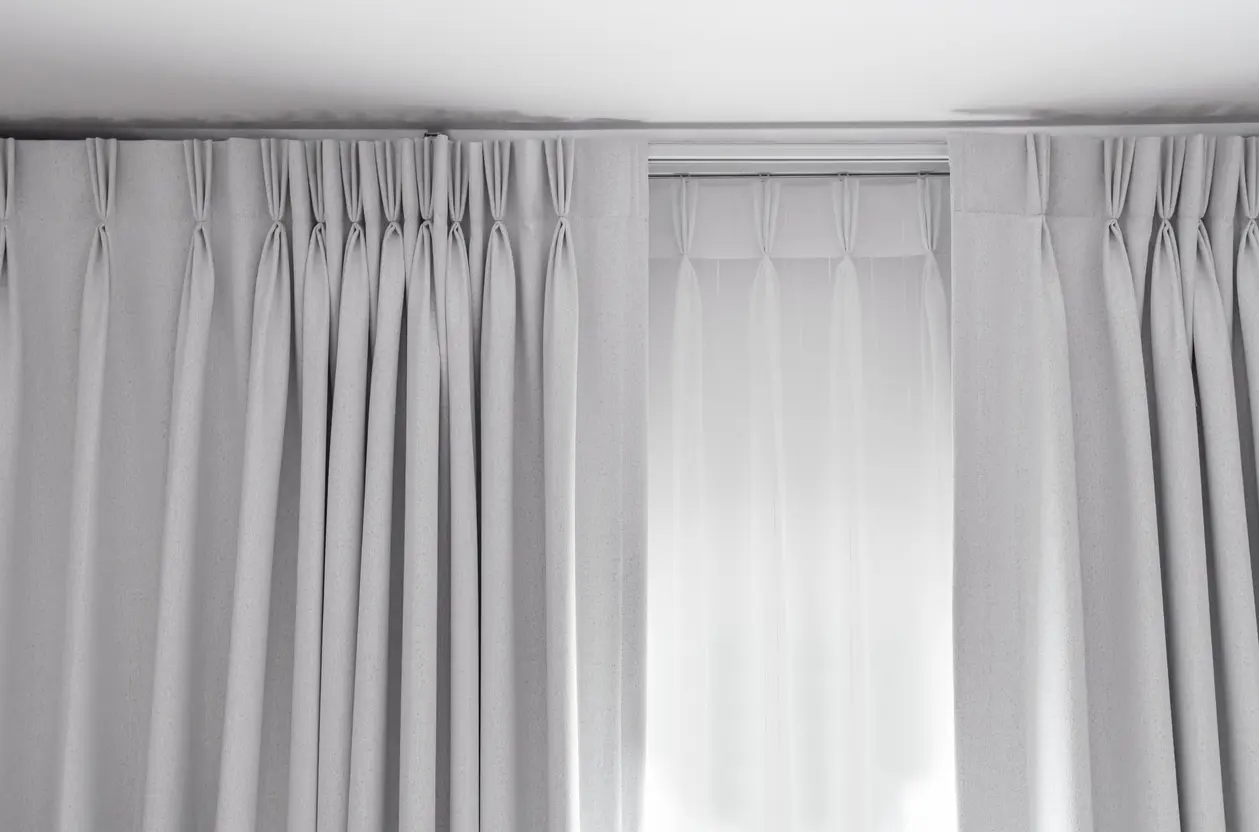
For example, pencil pleat curtains usually use standard hooks inserted into heading tape, while traditional pinch pleat curtains often use pin hooks. Other curtain styles, such as wave curtains, may require specialist track fittings rather than conventional hooks.
This guide explains the different types of curtain hooks, how they work and which are most suitable for common curtain headings.
Different Types of Curtain Hooks Explained
Although curtain hooks are small fittings, they play an important role in how curtains look and function.
Some are designed to remain hidden behind the curtain heading, while others become part of the decorative appearance.
1. Pin Hooks
Pin hooks are commonly used with traditionally constructed pinch pleat curtains.
A pin hook consists of a sharp metal pin and a curved hook. The pin is carefully inserted into the reinforced fabric or heading material at the back of the curtain, while the curved section attaches to a curtain ring or track glider.
Best suited to: Hand-sewn pinch pleat curtains and other compatible structured headings.
Advantages:
- Creates a discreet attachment behind the heading.
- Helps maintain a neat, structured curtain appearance.
- Can be used with compatible curtain tracks or pole rings.
Pin hooks must be fitted carefully. If the pin passes through the front of the fabric, it can damage the curtain or leave a visible mark.
They’re also different from multi-prong pleater hooks, which are designed to create pleats using specialist heading tape.
For a more formal appearance, explore Zenn Interiors’ pinch pleat curtains.
2. Standard Plastic Curtain Hooks
Plastic curtain hooks are among the most familiar fittings used with gathered curtains.
They’re commonly inserted into the woven pockets of curtain heading tape, with the curved section attaching to a track glider or curtain ring.
Best suited to: Pencil pleat curtains and other compatible tape-headed curtains.
Advantages:
- Lightweight and generally inexpensive.
- Easy to insert and reposition.
- Suitable for many standard curtain tracks and poles with rings.
- Usually hidden behind the curtain heading.
The correct hook position helps control the height at which the curtain hangs.
For example, some heading tapes have several rows of pockets, allowing the curtain to sit slightly higher or lower in relation to the pole or track.
Plastic hooks should be selected with the fabric weight in mind, particularly for heavy lined or interlined curtains.
3. Metal Curtain Hooks
Metal curtain hooks perform a similar function to standard plastic hooks but are generally more rigid.
They’re available in different shapes and sizes, including versions designed for heading tape and reinforced curtain headings.
Best suited to: Compatible tape-headed curtains, particularly where a stronger fitting is required.
Advantages:
- Rigid construction.
- Available in several sizes and designs.
- Can be suitable for heavier curtains when correctly specified.
Not all metal hooks are interchangeable, so it’s important to check that the fitting works with the curtain heading and suspension system.
The weight of the finished curtain should also be considered alongside the capacity of the track or pole.
4. Sew-On Curtain Hooks
Sew-on hooks are attached directly to the back of the curtain heading using stitching.
Unlike pin hooks, which are inserted into the heading material, sew-on fittings are secured in a fixed position.
Best suited to: Specialist or bespoke curtain constructions that require a permanent attachment point.
Advantages:
- Provides a fixed attachment position.
- Can be discreet when properly installed.
- Suitable for certain specialist heading arrangements.
Because the hooks are stitched into place, adjusting their position is less straightforward than moving hooks between pockets in standard heading tape.
For most domestic pencil pleat curtains, removable tape hooks are generally the more convenient choice.
5. S-Hooks
S-hooks have a curved shape resembling the letter S.
One end attaches to the curtain or a suitable attachment point, while the other connects to a rod, ring or compatible fitting.
They’re commonly associated with shower curtains and certain decorative hanging arrangements.
Best suited to: Shower curtains and selected lightweight or specialist curtain applications.
Advantages:
- Simple design.
- Easy to attach and remove.
- Available in a range of materials and finishes.
However, S-hooks aren’t the standard fitting for most made-to-measure living-room or bedroom curtains.
For tailored curtains, the heading and track system will usually determine which hook is appropriate.
6. Clip Rings
Clip rings combine a curtain ring with a small clip that grips the fabric.
Instead of using a hook inserted into heading tape, the clip attaches directly to the top edge of the curtain.
The ring then slides along a compatible curtain pole.
Best suited to: Lightweight decorative curtains and flat fabric panels designed for clip-ring hanging.
Advantages:
- Straightforward to attach and remove.
- Creates an informal, decorative appearance.
- Can be useful for lightweight fabric panels.
However, clip rings may not provide the same structured finish as a purpose-made pleated heading.
They should also be selected carefully for heavier curtains, as the clips must be capable of securely supporting the fabric.
7. Curtain Rings and Track Gliders
Curtain rings and gliders are not technically curtain hooks, but they’re closely connected to how hooks work.
Curtain rings slide along a compatible pole. Some have a small eye underneath where the curtain hook attaches.
Track gliders are small runners that move inside a curtain track. The hook connects the curtain heading to the glider.
This distinction matters because choosing the right hook alone isn’t enough. It must also be compatible with the pole or track.
Zenn Interiors offers a range of curtain poles and tracks to suit different curtain styles and window arrangements.
Curtain Hook Types at a Glance
| Hook or fitting | Common application | Main consideration |
|---|---|---|
| Pin hooks | Hand-sewn pinch pleat headings | Must be positioned carefully in reinforced heading material |
| Plastic tape hooks | Pencil pleat curtains | Check heading tape and fabric weight |
| Metal tape hooks | Gathered curtains requiring a rigid hook | Check compatibility with tape, rings or gliders |
| Sew-on hooks | Specialist bespoke headings | Attachment position is fixed |
| S-hooks | Shower curtains and selected decorative uses | Not normally used for traditional pleated curtains |
| Clip rings | Lightweight decorative curtain panels | Grip strength and fabric weight matter |
| Curtain rings | Hooked curtains on compatible poles | Require suitable rings and hooks |
| Track gliders | Hooked curtains on tracks | Must match the track system |
Which Curtain Hooks Do You Need for Different Curtain Headings?
The curtain heading is usually the most important consideration when selecting hooks.
Different headings create different folds and may require different attachment systems.
Pencil Pleat Curtains
Pencil pleat curtains feature a gathered heading formed by pulling cords through sewn-in heading tape.
They typically use standard plastic or metal curtain hooks inserted into pockets along the tape.
These hooks then attach to track gliders or curtain pole rings.
Pencil pleat headings are versatile because they can work with both suitable poles and tracks.
Discover Zenn Interiors’ made-to-measure pencil pleat curtains.
Pinch Pleat Curtains
Pinch pleat curtains have permanently formed groups of folds, creating a tailored and structured appearance.
Traditionally constructed pinch pleat curtains often use pin hooks inserted into the reinforced heading.
Some manufactured headings instead use specialist multi-prong hooks and pleating tape.
The correct fitting depends on how the heading has been made.
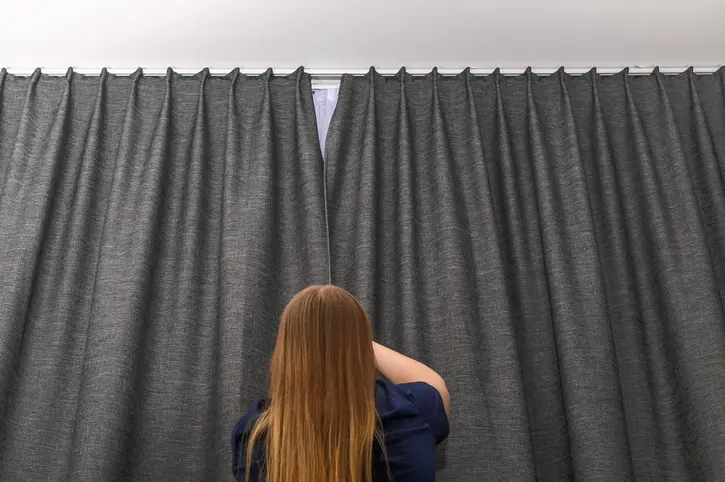
Wave Pleat Curtains
Wave curtains are designed to form smooth, evenly spaced folds across the window.
They generally use a compatible wave track and a coordinated carrier system to maintain consistent spacing.
This is different from hanging conventional pencil pleat curtains using standard loose hooks and gliders.
The exact attachment method depends on the wave system.
Find out more about Zenn Interiors’ wave pleat curtains.
Cartridge and Tailored Pleat Curtains
Cartridge and tailored pleat curtains use structured headings to create a distinctive, regular appearance.
The fittings depend on how each heading is constructed. Some use pin hooks or other concealed attachments secured at the back of the heading.
For bespoke curtains, the heading and hanging system should be specified together to achieve the intended finish.
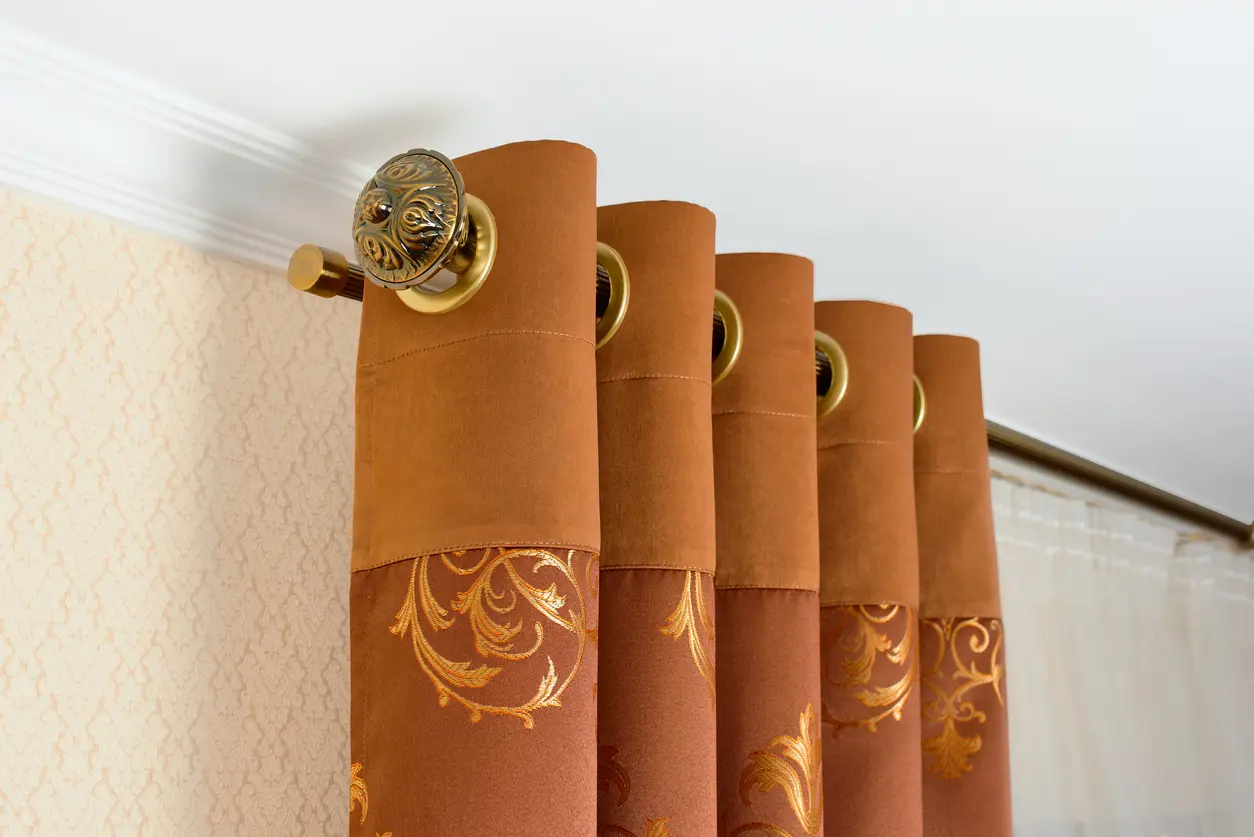
Eyelet Curtains
Eyelet curtains don’t normally require curtain hooks.
Instead, the curtain pole passes directly through the reinforced eyelets along the top of the fabric.
This creates broad, regular folds and allows the curtain to slide directly along the pole.
Eyelet curtains generally aren’t suitable for conventional curtain tracks.
How Many Curtain Hooks Do You Need?
The number of hooks depends on the curtain width, heading style and spacing required.
For standard pencil pleat curtains, hooks are often positioned approximately 10–15 cm apart, although the manufacturer’s heading-tape guidance should take priority.
For example, a curtain panel with a gathered width of 150 cm might require approximately 11–16 hooks, depending on the chosen spacing and end positions.
For a pair of curtains, calculate the number of hooks for each panel separately.
Pinch pleat curtains are different because hooks are normally positioned in relation to the sewn pleats.
Wave curtains use a coordinated carrier system, so the required number of fittings depends on the track and wave specification.
Avoid placing hooks too far apart, as this can lead to uneven support and an untidy heading.
How to Attach Curtain Hooks Correctly
The process varies between heading styles, but these general steps apply to conventional tape-headed curtains.
- Identify the curtain heading. Check whether the curtain uses pencil pleat tape, a structured pinch pleat or another fitting system.
- Choose compatible hooks. Make sure they’re suitable for the heading and the pole rings or track gliders.
- Prepare the heading. For pencil pleat curtains, gather the tape to the required width and secure the cords without cutting them.
- Insert the hooks evenly. Use the appropriate pocket row and maintain consistent spacing.
- Attach the curtains. Connect each hook to its corresponding ring or glider.
- Check the finished drop. Ensure both panels hang at the correct height and clear the floor or windowsill as intended.
- Test the movement. Open and close the curtains carefully to check that the fittings move smoothly.
For heavy or specialist curtains, professional installation can help ensure the heading is properly supported.
Common Curtain Hook Problems and How to Avoid Them
Curtains Hanging Unevenly
If one section hangs lower than another, check that the hooks are inserted into the same row of heading-tape pockets.
Inconsistent hook positions can cause uneven drops.
Curtains Sagging Between Hooks
Hooks positioned too far apart may allow sections of the heading to droop.
Adding correctly spaced fittings can improve support, provided the heading and track are suitable.
Hooks Slipping Out
Check that the hooks are the correct size and fully engaged with the heading tape, pole ring or track glider.
Worn or unsuitable fittings may need replacing.
Curtains Difficult to Open
Poor movement may result from incompatible or damaged gliders, overcrowded pole rings or excessive curtain weight.
The problem isn’t always caused by the hooks themselves.
Visible Hooks Above the Curtain
If the hooks are showing when they shouldn’t, the heading position or fitting arrangement may need adjusting.
Some decorative systems deliberately expose their rings and fittings, while traditional tailored headings are usually designed to conceal them.
Are Plastic or Metal Curtain Hooks Better?
Neither material is automatically better for every curtain.
Plastic hooks are lightweight, convenient and suitable for many everyday tape-headed curtains.
Metal hooks can provide a more rigid fitting and may be appropriate for heavier or specialist headings.
However, the correct choice depends on the design and load capacity of the individual fitting, rather than its material alone.
For heavy lined or interlined curtains, the complete hanging system should be assessed, including the heading, hooks, gliders, track or pole and wall fixings.
Frequently Asked Questions About Curtain Hooks
What are the most common types of curtain hooks?
Standard plastic and metal tape hooks, pin hooks and sew-on hooks are common types used in different curtain constructions. Clip rings and S-hooks are also used for particular hanging styles.
What hooks should I use for pencil pleat curtains?
Pencil pleat curtains usually use standard plastic or metal hooks inserted into pockets in the heading tape. The hooks attach to curtain pole rings or compatible track gliders.
Do pinch pleat curtains need special hooks?
Traditionally made pinch pleat curtains often use pin hooks, although some heading systems use multi-prong pleater hooks. The correct fitting depends on how the pleats are constructed.
Can I hang curtains without hooks?
Yes. Eyelet, tab-top and slot-top curtains generally hang directly from a suitable pole without conventional hooks.
Can I use curtain hooks on both poles and tracks?
Many hooks can be used with either system, provided they’re compatible with the pole rings or track gliders. The correct attachment depends on the heading and hardware.
How far apart should curtain hooks be?
For standard pencil pleat curtains, spacing of approximately 10–15 cm is common. Other headings, particularly pinch pleat and wave styles, have different fitting requirements.
Are metal curtain hooks stronger than plastic hooks?
Metal hooks are generally more rigid, but the actual load capacity depends on their design and construction. Always choose fittings suitable for the finished curtain weight.
Choosing the Right Curtains and Hanging System
The best curtain hooks depend on the heading, fabric weight and hanging system.
For pencil pleat curtains, standard tape hooks are often the practical choice. Traditional pinch pleat curtains may need pin hooks, while wave curtains require a compatible track and carrier arrangement.
Getting these details right helps curtains hang neatly, move smoothly and maintain their intended shape.
At Zenn Interiors, we specialise in bespoke made-to-measure curtains and curtain hanging systems for homes across London.
Whether you’re considering traditional pinch pleats, contemporary wave curtains or a tailored pole-and-track arrangement, choosing the right components is an important part of achieving the finished look.
Explore our luxury curtains and curtain poles and tracks, or contact Zenn Interiors to discuss a bespoke window treatment.
Telephone: 020 7871 3082
Email: zenninteriors@gmail.com