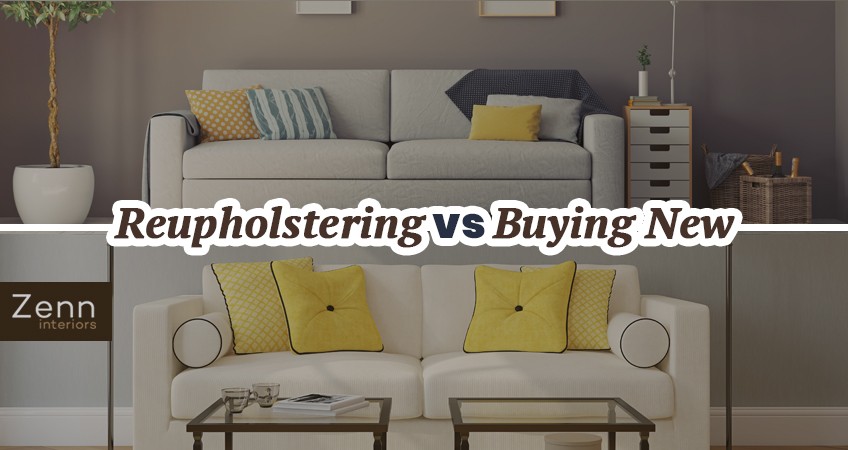
Should you reupholster your sofa or buy a new one? If your existing sofa has a sturdy frame, comfortable proportions and a design you still love, reupholstery can be a worthwhile investment. However, if it’s structurally damaged, no longer suits your space or would be expensive to restore, replacing it may be the better option.
The decision isn’t simply about which option costs less. It’s also about furniture quality, comfort, durability and how much you value the sofa you already own.
In this guide, we’ll compare the cost of reupholstering a sofa versus buying new, explain how to assess your existing furniture and help you decide which option offers better long-term value.
Reupholster or Buy New Sofa: Quick Comparison
Both options have advantages depending on your budget, furniture condition and priorities.
| Factor | Reupholster Existing Sofa | Buy a New Sofa |
|---|---|---|
| Cost | Depends on fabric, labour and repairs | Ranges from budget to premium |
| Frame quality | Retains and, where necessary, repairs the existing frame | Depends on the construction of the new sofa |
| Fabric choice | Wide range of bespoke upholstery options | Usually limited to the manufacturer’s available finishes |
| Comfort | Existing cushioning and support may be restored | Provides a different seating experience |
| Design | Retains the original size and shape | Allows you to choose a completely different design |
| Environmental considerations | Can extend the life of existing furniture | Requires manufacturing and transporting a replacement |
| Best suited to | Well-made, comfortable or sentimental furniture | Unsuitable, extensively damaged or impractical furniture |
The simplest rule: Reupholstery makes sense when the existing sofa is worth preserving. Replacement makes sense when the furniture no longer meets your needs or the restoration costs are difficult to justify.
How Much Does It Cost to Reupholster a Sofa vs Buy New?
Price is often the deciding factor.
Professional sofa reupholstery involves removing old fabric, preparing the furniture, cutting and fitting new upholstery and completing any necessary repairs.
As a result, reupholstering a sofa can cost considerably more than simply buying replacement fabric.
Typical UK Sofa Reupholstery Costs
| Sofa type | Indicative reupholstery cost |
|---|---|
| Two-seater sofa | Approximately £1,000–£2,000 |
| Three-seater sofa | Approximately £1,400–£2,800 |
| Large or corner sofa | Approximately £2,500–£4,500+ |
These are broad UK market estimates, not fixed prices or quotations from Zenn Interiors. Fabric, repair work, delivery and other inclusions can affect the final price.
New sofas are available across an equally wide range of prices. Budget models may cost less than professional reupholstery, while premium, bespoke or traditionally constructed furniture can cost several thousand pounds.
Example: Reupholstering vs Replacing a Three-Seater Sofa
Imagine you own a well-made three-seater sofa that’s structurally sound but has faded fabric and flattened cushions.
You receive a hypothetical reupholstery quotation of £1,800, including your chosen fabric and replacement cushioning.
Now consider two possible replacements:
- A new sofa costing £900.
- A higher-specification sofa costing £2,800.
Reupholstery is more expensive than the first option but cheaper than the second.
However, the comparison is only meaningful if you consider the construction, comfort, materials and expected suitability of each sofa.
A cheaper replacement isn’t automatically better value, just as an expensive restoration isn’t automatically worthwhile.
For more detailed pricing information, read our guide to sofa upholstery costs.
5 Signs Your Sofa Is Worth Reupholstering
Before deciding to replace your sofa, consider whether the underlying furniture is still in good condition.
1. The Frame Is Strong and Stable
A sturdy frame is one of the most important indicators that a sofa may be worth restoring.
A well-made frame should remain stable under normal use, without excessive movement, twisting or creaking from loose joints.
Timber frames can offer excellent durability when properly constructed, but material alone doesn’t determine quality.
The design of the joints, workmanship and condition of the frame are equally important.
Don’t judge frame quality by weight alone. A heavy sofa isn’t necessarily well made, and a lighter sofa isn’t automatically poor quality.
If you notice movement, cracking or instability, have the frame assessed before investing in new upholstery.
2. The Springs and Internal Supports Are Repairable
Sofas use different suspension systems, including springs and webbing.
Both can provide good support when appropriately designed and maintained.
If your sofa has developed an uneven seat or makes noises when you sit down, the internal supports may need attention.
This doesn’t necessarily mean the sofa should be replaced.
In many cases, worn springs, webbing or other supporting components can be repaired or replaced during restoration.
The important question is whether the overall structure remains suitable for the work.
3. The Cushions Have Lost Their Comfort
Flattened or uncomfortable cushions are a common reason homeowners consider replacing their sofas.
However, worn cushion fillings don’t always mean the furniture itself has reached the end of its useful life.
Depending on the construction, replacing deteriorated foam, padding or other fillings can restore support and improve comfort.
Zenn Interiors offers sofa re-cushioning and replacement filling options, including foam and down.
If you still like the overall shape and seating position of your sofa, refreshing the cushions may be preferable to replacing the entire piece.
4. You Love the Sofa’s Size and Design
Finding furniture with the right proportions isn’t always straightforward.
Your existing sofa may fit perfectly into an alcove, suit your room layout or provide exactly the seating depth you prefer.
Reupholstery allows you to retain those characteristics while changing the appearance.
You can choose a different fabric, colour or decorative finish without having to find an entirely new sofa with similar dimensions.
This is particularly valuable for unusual, vintage or bespoke furniture.
5. The Sofa Has Sentimental or Design Value
Some furniture is worth preserving for reasons beyond its resale value.
An inherited sofa, a vintage piece or furniture associated with family memories may have personal significance.
Reupholstery can preserve the original frame and character while making the piece more suitable for everyday use.
The same applies to distinctive furniture that would be difficult or expensive to replace with something comparable.
When Is It Better to Buy a New Sofa?
Reupholstery isn’t always the right solution.
Replacing your sofa may make more sense in the following circumstances.
The Frame Is Extensively Damaged
A sofa with major structural damage may require extensive repairs before it can be safely and comfortably used.
While some frame problems are repairable, the cost may make restoration impractical.
A professional assessment can help establish whether the furniture is a sensible candidate for reupholstery.
You Want a Completely Different Size or Shape
Reupholstery can transform a sofa’s appearance, but it generally retains the existing proportions.
If you need a larger sofa, a corner configuration or a different seating height, buying new may be more suitable.
Restoration Would Cost More Than a Suitable Replacement
If a sofa has a relatively low replacement value and needs extensive repairs, reupholstery may not be economical.
Compare the full restoration quotation with the cost of a new sofa that meets your requirements.
It’s worth comparing quality and specifications, rather than choosing solely on price.
The Sofa No Longer Suits Your Lifestyle
Your requirements may have changed.
For example, you may need a more compact sofa, additional seating or a design with different accessibility features.
If the existing furniture can’t meet those needs, replacing it may be the most practical choice.
Is an Old Sofa Better Quality Than a New One?
Not necessarily.
Some older sofas were built using durable timber frames and traditional construction techniques, making them excellent candidates for restoration.
However, age alone isn’t proof of quality.
Older furniture can also suffer from weakened joints, deteriorated supports or previous repairs.
Similarly, modern sofas range from inexpensive mass-produced designs to carefully constructed premium furniture.
The best approach is to assess the actual sofa, rather than assuming that furniture made before a particular year is better.
Look at the stability of the frame, the condition of the supports and the overall workmanship.
Can Reupholstering Make an Old Sofa More Comfortable?
Yes. Reupholstery can involve more than replacing the visible fabric.
Depending on the sofa’s condition, the work may include:
- Replacing flattened cushion fillings
- Renewing worn foam or padding
- Repairing internal supports
- Addressing frame defects
- Adjusting the upholstery finish
These improvements can make a noticeable difference to comfort.
However, reupholstery won’t necessarily change the fundamental seating dimensions or proportions of the sofa.
If the sofa has always felt too deep, too low or otherwise unsuitable, a new design may be the better solution.
What Are the Environmental Benefits of Reupholstering?
Reupholstery can help reduce unnecessary furniture waste by keeping a usable sofa in service for longer.
Instead of disposing of a structurally sound frame simply because the fabric is worn, restoration allows much of the existing furniture to be reused.
This may reduce the need for some new materials and avoid the immediate disposal of a large item of furniture.
However, reupholstery still requires new fabric, padding, transport and specialist work, so its environmental impact depends on the project.
Choosing durable materials and a design you’ll be happy with for years can help make the restoration more worthwhile.
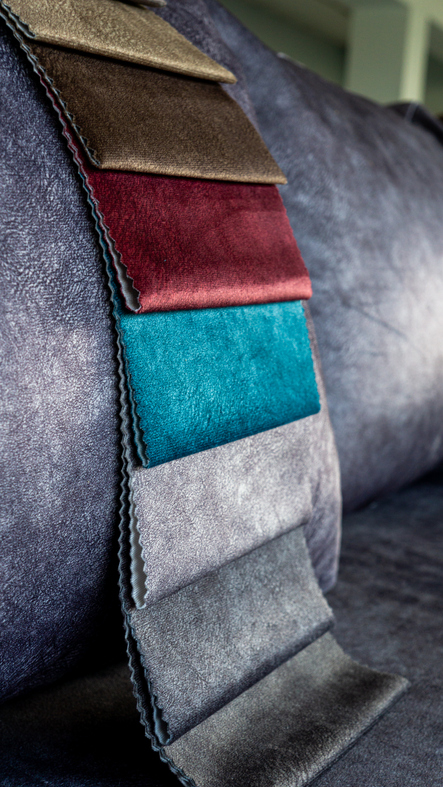
Choosing the Right Fabric for a Reupholstered Sofa
If you decide to reupholster, fabric selection is one of the most important decisions.
The best material depends on how often you use the sofa, your preferred appearance and how much maintenance you’re comfortable with.
For Everyday Family Use
Look for upholstery fabrics intended for frequent use, with suitable durability and practical cleaning requirements.
Textured weaves and certain performance fabrics may be worth considering.
For a Luxurious Finish
Velvet can provide a rich colour and soft texture.
Different types of velvet vary in durability and maintenance, so it’s important to select one designed for upholstery.
For a Natural, Relaxed Appearance
Linen and linen-blend fabrics can create an understated look.
Their suitability depends on the fabric construction, treatment and intended level of use.
For a Bold Design Statement
Patterned upholstery, contrast piping and decorative details can help transform the appearance of an existing sofa.
Consider the furniture’s proportions and the surrounding room when choosing colours and patterns.
Zenn Interiors offers bespoke fabric selection and finishing options, helping customers create upholstery that complements their interiors.
What About Loose Sofa Covers?
If your sofa is structurally sound and you don’t want a complete upholstery replacement, loose covers may be another option.
Made-to-measure loose covers can refresh the appearance of compatible furniture while allowing the original upholstery to remain underneath.
They’re particularly useful if you want a removable covering or a different look without permanently changing the existing fabric.
However, loose covers won’t repair damaged frames, springs or deteriorated cushions.
Zenn Interiors also offers bespoke loose covers for suitable furniture.
How Long Does Sofa Reupholstery Take?
The time required depends on the sofa’s condition, the fabric selected, the extent of any repairs and the upholstery workshop’s schedule.
A straightforward fabric replacement may be completed sooner than a project involving substantial structural restoration or complex decorative work.
Fabric availability and collection arrangements can also influence the timescale.
For an accurate estimate, ask for a completion timeframe based on your individual sofa rather than assuming that all reupholstery projects take the same number of days.
Reupholster or Buy New Sofa: Decision Checklist
Before making your decision, ask yourself:
- Is the frame structurally sound?
- Can any worn springs, padding or cushions be repaired?
- Do I still like the sofa’s dimensions and seating comfort?
- Would replacing it with furniture of comparable quality cost more?
- Do I want a particular fabric or bespoke finish?
- Does the sofa have sentimental or design value?
- Would the total restoration cost fit my budget?
If most answers favour keeping your existing sofa, reupholstery is worth investigating.
If the furniture is structurally unsuitable, doesn’t meet your needs or would cost more to restore than a suitable replacement, buying new may be the better option.
Frequently Asked Questions
Is it cheaper to reupholster a sofa or buy new?
It depends on the sofa. Budget replacements can cost less than professional reupholstery, while restoring a well-made sofa may be more economical than buying a comparable premium replacement.
Is it worth reupholstering a 20-year-old sofa?
It can be. The deciding factors are the frame condition, comfort, construction and restoration cost, not the sofa’s age alone.
Can you reupholster a sofa with broken springs?
In many cases, damaged springs or other internal supports can be repaired or replaced as part of a restoration. The overall condition of the furniture should be assessed first.
Can sofa cushions be replaced without reupholstering the entire sofa?
Often, yes. Depending on the cushion construction, replacement fillings may be possible without renewing the complete upholstery.
Does reupholstering a sofa make it last longer?
Reupholstery can extend a sofa’s useful life by replacing worn materials and addressing repairable problems. The eventual lifespan depends on the furniture’s construction, the work completed and subsequent use.
Is reupholstering a sofa environmentally friendly?
It can help reduce waste by extending the life of existing furniture, although the overall environmental benefit depends on the materials and work involved.
Professional Sofa Reupholstery in London
If you’re unsure whether to reupholster your sofa or buy new, a professional assessment can help you make an informed decision.
At Zenn Interiors, we provide bespoke sofa upholstery services in London, including fabric replacement, frame repairs, re-cushioning and decorative finishing.
Whether you want to refresh a contemporary sofa, restore a traditional piece or preserve furniture with sentimental value, we can discuss the options available for your existing sofa.
Contact Zenn Interiors to arrange a consultation and discuss your upholstery requirements.
Telephone: 020 7871 3082
Email: zenninteriors@gmail.com