
The right bedroom curtains do more than frame your windows. They can bring warmth and texture to a room, complement your furniture, provide privacy and help control unwanted daylight.
Some of the best bedroom curtain ideas include floor-to-ceiling curtains, soft linen fabrics, luxurious velvet, layered sheers and blackout curtains. For something more decorative, consider floral prints, bold geometric patterns or elegant pinch pleat headings.
The best choice depends on your bedroom’s size, colour scheme, window arrangement and how much light you want to block.
Whether you’re updating a compact bedroom or redesigning a spacious master bedroom, these 15 ideas will help you find a look that balances style with everyday practicality.

1. Choose Floor-to-Ceiling Curtains for an Elegant Finish
Floor-to-ceiling curtains can create a striking appearance, especially in bedrooms with relatively high ceilings.
By extending the fabric from near the ceiling to the floor, you can create long vertical lines that make the window feel more prominent.
This approach works particularly well with plain or subtly textured fabrics.
How to Achieve the Look
Consider fitting the curtain pole or track above the window opening, provided the wall or ceiling arrangement allows.
Allowing the curtains to extend beyond the window at either side can also provide space for the fabric to stack when open.
For a neat finish, floor-skimming curtains are a practical choice. A more decorative puddled style can be attractive, although it may be less convenient for everyday use.
Best for: Contemporary bedrooms, high ceilings and rooms where you want to emphasise the window’s proportions.

2. Create a Calm Bedroom with Neutral Curtains
Neutral curtains are a timeless choice for bedrooms.
Shades such as ivory, oatmeal, beige, stone and warm grey can help create an understated appearance that complements a wide variety of interiors.
They work particularly well alongside natural wood furniture, soft bedding and textured rugs.
Make Neutrals More Interesting
Rather than relying on colour contrast, use fabric texture to add depth.
For example, a woven linen-blend curtain can introduce subtle variation, while a fuller fabric with a structured heading can create a more tailored look.
Neutral curtains can also act as a backdrop for colourful cushions, artwork or an upholstered headboard.
Best for: Minimalist bedrooms, warm neutral schemes and interiors where a restful visual atmosphere is the priority.

3. Add Luxury with Velvet Bedroom Curtains
Velvet curtains bring softness, texture and depth of colour to a bedroom.
Their distinctive surface reflects light differently depending on the direction of the pile, creating a rich appearance.
Deep navy, forest green, burgundy and charcoal are particularly effective for a dramatic scheme.
For something softer, consider muted rose, taupe or warm grey.
Styling Velvet Curtains
Velvet pairs beautifully with upholstered headboards, decorative lighting and traditional furniture.
For a tailored finish, consider double or triple pinch pleat headings.
However, velvet is available in many different constructions and weights. The suitability of a specific fabric depends on its composition, lining and maintenance requirements.
Best for: Traditional bedrooms, luxurious interiors and rooms where texture plays an important decorative role.
4. Use Blackout Curtains for Better Light Control
For bedrooms exposed to street lighting, early morning sunshine or bright summer evenings, blackout curtains can be a particularly practical choice.
Blackout curtains use specially designed fabric or lining to reduce light passing through the material.
They can be incorporated into different decorative styles, so choosing blackout curtains doesn’t mean sacrificing the appearance you want.
How to Improve Room Darkening
For effective light control, consider more than the fabric itself.
Light may still enter around the top, sides, bottom or centre of the curtains.
A suitable track, generous fabric coverage and carefully planned fitting arrangement can help reduce these gaps.
For example, extending the curtain treatment beyond the edges of the window may provide better coverage than curtains fitted exactly to the glazing width.
Best for: Light-sensitive sleepers, shift workers, nurseries and east-facing bedrooms.
Zenn Interiors offers made-to-measure blackout curtains in a selection of bespoke designs.

5. Layer Sheer Curtains with Heavier Drapes
Layering window treatments is an attractive way to combine privacy, light control and texture.
A sheer curtain can soften daylight while allowing the bedroom to remain bright.
A second, more opaque curtain can then provide greater coverage in the evening.
Why Layered Curtains Work Well
Layering gives you greater flexibility throughout the day.
You can keep the sheers closed when you want some privacy from neighbouring properties, then draw the heavier curtains when darkness or additional privacy is required.
However, sheer fabric doesn’t provide guaranteed privacy at night.
When indoor lights are on and it’s dark outside, people may be able to see through it.
Best for: Street-facing bedrooms, overlooked windows and rooms where you want to retain daylight without leaving the glazing completely uncovered.
Explore Zenn Interiors’ sheer curtains and lined curtains for possible layering arrangements.

6. Try Linen Curtains for a Relaxed, Natural Look
Linen and linen-blend curtains can create a soft, effortless appearance.
Their woven texture works particularly well in bedrooms with natural materials, muted colours and relaxed furnishings.
Cream, flax, warm beige and muted blue are versatile options.
Styling Linen Curtains
For a contemporary bedroom, pair neutral linen-look curtains with simple bedding and timber furniture.
For a more traditional setting, consider a softly gathered heading that complements the relaxed appearance of the fabric.
Remember that pure linen may crease, while linen blends can offer different draping and maintenance characteristics.
Best for: Scandinavian-inspired bedrooms, relaxed country interiors and contemporary spaces with natural textures.

7. Make a Statement with Navy or Deep Blue Curtains
Blue curtains can work with both understated and dramatic bedroom schemes.
Pale blue provides a softer appearance, while navy creates a stronger contrast against lighter walls.
Deep blue curtains can be particularly effective alongside warm wood, brass-coloured fittings and neutral bedding.
Colour Pairing Ideas
- Navy curtains with off-white walls and warm timber furniture.
- Dusty blue curtains with cream bedding and textured rugs.
- Dark blue curtains with grey walls and understated metal fittings.
For smaller rooms, deep colours can still work beautifully. The key is balancing them with the surrounding finishes and lighting.
Best for: Contemporary bedrooms, traditional interiors and rooms where the curtains are intended to be a focal point.
8. Bring Personality with Floral Curtains
Floral bedroom curtains can create a romantic, traditional or contemporary appearance depending on the scale and style of the pattern.
Small floral prints often feel delicate and understated.
Large botanical designs create a bolder statement.
Muted blue, sage green, blush pink and cream are especially versatile combinations.
How to Use Floral Curtains
If the curtains have a detailed pattern, consider keeping the bedding and larger furniture relatively simple.
You can then repeat one or two colours from the print in cushions or accessories to connect the room.
For a traditional bedroom, floral curtains work well with timber furniture and soft upholstery.
For a contemporary scheme, try a large-scale botanical print alongside plain walls.
Best for: Country bedrooms, traditional interiors and rooms needing a decorative focal point.
9. Use Geometric Patterns for a Modern Bedroom
Geometric curtains can bring structure and visual interest to a simple bedroom.
Stripes, chevrons, repeated shapes and abstract patterns can all provide a contemporary finish.
The effect depends on the pattern’s scale and colour contrast.
Choosing the Right Pattern
Large patterns tend to become a focal point, while subtle geometric designs can provide texture without dominating the room.
For a balanced scheme, choose one colour from the curtain pattern and repeat it elsewhere.
For example, charcoal-and-cream geometric curtains could be paired with plain cream bedding and charcoal accessories.
Best for: Modern bedrooms, minimalist spaces and interiors with relatively simple furniture.
10. Choose Soft Pink, Peach or Lavender Curtains
Soft colours can create a gentle, welcoming bedroom scheme.
Blush pink, pale peach, lavender and dusty rose can work particularly well with warm neutrals and light timber furniture.
These colours don’t have to feel overly traditional or decorative.
The finished appearance depends on the fabric, curtain heading and surrounding materials.
Styling Pastel Bedroom Curtains
Try pairing dusty pink curtains with off-white walls and natural textures.
Lavender curtains can complement warm grey, cream or muted green.
For a contemporary look, choose a simple fabric with a clean heading rather than elaborate decorative details.
Best for: Soft contemporary interiors, guest bedrooms and rooms where a light colour palette is preferred.
11. Create Warmth with Mustard or Terracotta Curtains
Warm-toned curtains can bring energy and character to a bedroom.
Mustard, rust, terracotta and earthy orange shades work particularly well with natural textures and muted wall colours.
These colours can also complement deep blue, sage green and cream.
A Balanced Colour Scheme
For example, terracotta curtains can add warmth to a bedroom with off-white walls, oak furniture and neutral bedding.
Mustard curtains can provide an attractive contrast against muted blue or grey-green walls.
If you’re using a strong curtain colour, allow the rest of the scheme to provide some visual breathing space.
Best for: Colourful contemporary bedrooms, earthy interiors and spaces inspired by warm natural tones.
12. Add Traditional Character with Ticking Stripes or Toile
Ticking stripes and toile patterns can introduce classic country-house character.
Ticking stripes typically feature narrow, repeated lines, while toile fabrics often depict decorative scenes or detailed motifs.
Both can work well in bedrooms with traditional furniture and natural materials.
Styling Ideas
For a subtle look, choose ticking stripes in muted blue, sage or beige.
For a more decorative effect, consider toile curtains paired with plain bedding and traditional wooden furniture.
A carefully chosen curtain heading can help bring the scheme together without making it feel overly formal.
Best for: Cottage bedrooms, period properties and classic British interiors.

13. Create a Sleek Finish with Wave Curtains
Wave curtains create smooth, consistent folds using a specialist compatible hanging system.
Their flowing appearance makes them a popular choice for contemporary bedrooms.
They can be particularly effective across wide windows or glazed doors.
Why Wave Curtains Suit Modern Bedrooms
The regular folds create a clean appearance without the more decorative structure of traditional pinch pleats.
Plain fabrics, soft textures and neutral colours often work well with this heading.
However, wave curtains require suitable hardware. An ordinary curtain pole or track won’t necessarily provide the required fold spacing.
Best for: Contemporary bedrooms, large windows and minimalist interiors.
Zenn Interiors offers bespoke wave pleat curtains with compatible hanging systems.
14. Make a Traditional Bedroom Feel Luxurious with Pinch Pleats
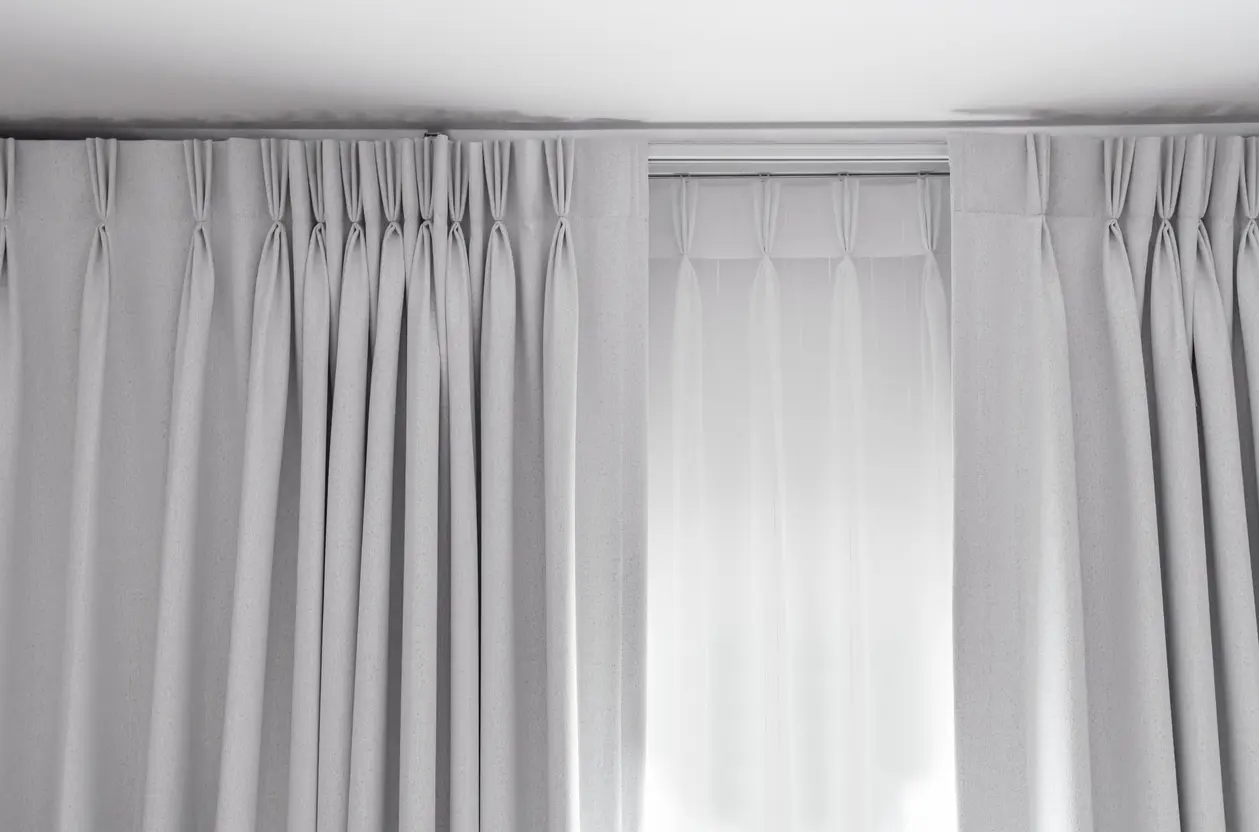
Pinch pleat curtains provide a tailored appearance through permanently stitched folds.
Double pinch pleats offer a structured, elegant finish, while triple pinch pleats create a more decorative look.
They work particularly well with floor-length curtains and substantial fabrics.
Complete the Look
Consider pairing pinch pleat curtains with a textured fabric and suitable lining.
Neutral colours can create understated elegance, while rich tones can produce a more dramatic result.
For period properties, a carefully selected pole or track can complement the room’s architectural features.
Best for: Traditional bedrooms, period homes and interiors where a refined, structured finish is important.
Explore Zenn Interiors’ pinch pleat curtains.
15. Consider Interlined Curtains for Added Comfort
Interlined curtains have an additional layer of soft material between the face fabric and lining.
This gives the curtains more body and can help reduce heat transfer at windows.
They can be particularly attractive in bedrooms where a fuller curtain appearance is desired.
Are Interlined Curtains Warmer?
Suitable interlined curtains can contribute to improved thermal comfort when closed.
The degree of improvement depends on the fabric, window glazing and installation.
They’re not a replacement for effective glazing or draught-proofing, and their benefits shouldn’t be expressed as a guaranteed percentage reduction in heating bills.
Interlined curtains are also heavier than comparable non-interlined designs, so the pole or track must be suitable for their weight.
Best for: Traditional bedrooms, homes with colder windows and schemes where a substantial curtain finish is desired.
Zenn Interiors offers bespoke interlined curtains.
How to Choose the Best Bedroom Curtains
The most attractive design isn’t always the most suitable option for your bedroom.
Consider how the window treatment will function before making a final decision.
| Your priority | Curtain options worth considering |
|---|---|
| Reducing morning daylight | Blackout curtains with carefully planned coverage |
| Greater evening privacy | Lined or blackout curtains |
| Maintaining natural daylight | Sheer curtains or a layered arrangement |
| Creating a luxurious finish | Velvet, pinch pleats or interlined curtains |
| A relaxed, contemporary appearance | Linen-look fabrics or wave headings |
| Improving comfort near windows | Suitable lined or interlined curtains |
| Making windows appear taller | High-mounted, floor-length curtains where appropriate |
| A distinctive decorative scheme | Floral, geometric, striped or colourful fabrics |
Consider the Direction Your Bedroom Faces
East-facing bedrooms may receive strong morning sunlight.
South-facing rooms can experience prolonged periods of sun, particularly in summer.
West-facing bedrooms may become warmer later in the day.
These factors can influence your choice of lining, colour and window coverage.
Closing curtains when direct sunlight reaches the window can help reduce summer heat gain. During colder weather, closing suitable curtains at night can help limit heat loss.
Think About the Curtain Heading
The heading affects how the curtain folds and which hardware it needs.
Pencil pleat curtains offer a versatile gathered finish.
Pinch pleats create more structured folds.
Wave curtains provide a flowing, contemporary appearance.
For a wider comparison, read our guide to different types of curtains.
Check the Measurements
Bedroom curtains should suit both the size of the window and the position of surrounding furniture.
Before ordering, consider the available space beside the window, the desired finished length and whether any radiators or other fittings could interfere with the curtains.
Read our guide to measuring curtains for more detailed guidance.
What Colour Curtains Are Best for a Bedroom?
There isn’t a single colour that works best in every bedroom.
The right choice depends on the room’s natural light, furniture and overall design.
Light colours can create an airy appearance, but they don’t automatically block less light if a suitable blackout lining is used.
Similarly, dark curtains aren’t necessarily blackout unless their fabric or lining is designed for that purpose.
The most useful approach is to choose the colour for its appearance and the lining for the required light control.
Should Bedroom Curtains Touch the Floor?
Floor-length curtains are a popular choice because they create a neat, considered finish.
For everyday use, curtains that stop just above the floor can be particularly practical.
If you prefer a more decorative look, you can allow extra fabric to rest on the floor.
However, puddled curtains may collect dust and can be more difficult to maintain.
The ideal drop depends on the fabric, room design and how frequently the curtains will be opened and closed.

Bedroom Curtain Ideas for Small Rooms
Small bedrooms can benefit from carefully chosen curtain proportions.
Consider:
- Using a pole or track that allows curtains to stack beside the window.
- Choosing floor-length curtains to create vertical lines.
- Selecting colours that complement the walls and furniture.
- Avoiding unnecessarily bulky decorative details where space is limited.
- Using suitable linings to achieve the required light control without relying on very heavy face fabrics.
A small bedroom doesn’t have to use pale curtains. Dark or boldly coloured curtains can also work when the overall scheme is balanced.
Frequently Asked Questions About Bedroom Curtains
What type of curtains is best for a bedroom?
Blackout curtains are useful where strong light control is important. Lined and interlined curtains offer other benefits, while sheers can be effective as part of a layered design.
What curtains make a bedroom look luxurious?
Velvet fabrics, full-length designs and tailored headings such as pinch pleats can create an elegant appearance. Good measurements, suitable hardware and careful fabric selection are equally important.
Are blackout curtains worth it for bedrooms?
They can be particularly beneficial where streetlights or early morning daylight cause disturbance. Their effectiveness depends on both the material and installation.
Can you have sheer curtains in a bedroom?
Yes. Sheer curtains work well where you want softened daylight and a light appearance. For greater privacy at night, they can be layered with lined or blackout curtains.
Do dark curtains make a bedroom feel smaller?
Not necessarily. Dark curtains can create depth and contrast. The overall effect depends on lighting, wall colours, furniture and curtain proportions.
What colour curtains go with grey bedroom walls?
Warm neutrals, ivory, blush pink, navy and muted greens can all complement grey walls. Consider whether your grey has warm or cool undertones when comparing fabric samples.
Are floor-to-ceiling curtains suitable for small bedrooms?
Yes. Full-length curtains can create long vertical lines and help emphasise the room’s height, provided there is enough space for suitable fittings.
Can bedroom curtains help keep a room warm?
Suitable lined and interlined curtains can help reduce heat loss at windows when closed. Actual performance varies with the glazing, fabric and fitting arrangement.
Made-to-Measure Bedroom Curtains in London
Beautiful bedroom curtains should complement your interior while providing the privacy, light control and comfort you need.
At Zenn Interiors, we create bespoke made-to-measure curtains for London homes, with a choice of fabrics, linings, headings and hanging systems.
Whether you’re looking for blackout curtains to reduce unwanted daylight, soft sheers for a layered design or luxurious full-length curtains with tailored pleats, our range offers options for different bedroom styles.
Explore our made-to-measure curtains or contact Zenn Interiors to discuss your bedroom window treatment requirements.
Telephone: 020 7871 3082
Email: zenninteriors@gmail.com