Blackout curtains improve sleep quality by reducing unwanted light, helping the bedroom feel calmer, more private and more restful. They are designed to block or significantly reduce light entering through the window, which can make it easier to fall asleep, stay asleep and wake at a more suitable time. For many homes, they are especially useful in bedrooms affected by streetlights, early summer sun, passing car headlights or neighbouring properties.
Sleep is influenced by many factors, including routine, temperature, noise, stress and light exposure. Curtains cannot solve every sleep issue, but they can make the bedroom environment more supportive. A darker, softer room often feels more comfortable and less visually stimulating, which can help the body and mind settle more easily at night.
Blackout curtains are not only practical. When designed well, they can also improve the look and feel of a bedroom. They add softness, warmth and a more finished appearance, while their lining provides the functional light-blocking element. This means a bedroom can feel both elegant and restful without looking purely practical.
How Does Light Affect Sleep?
Light plays an important role in the body’s natural sleep and wake cycle. Bright light signals to the brain that it is time to be alert, while darkness supports the conditions associated with rest. This is why unwanted light in a bedroom can feel disruptive, even if it seems minor at first.
In the UK, changing daylight hours can make this more noticeable. During summer, early sunrise can brighten a bedroom long before you want to wake. In winter, artificial light from streetlamps, neighbouring homes and passing vehicles may be more obvious because evenings are longer and darker.
Even small amounts of light can affect how restful a bedroom feels. A glow around the window, a bright streetlamp outside or a gap in a curtain can draw the eye and make the space feel less settled. For some people, this may lead to lighter sleep or earlier waking.
Blackout curtains help by creating a darker sleep environment. They reduce the amount of outside light entering the room, making the space feel more enclosed and calm. This can be particularly helpful when the bedroom faces a road, garden lighting, communal areas or east-facing morning sun.
What Makes Blackout Curtains Different From Standard Curtains?
The main difference between blackout curtains and standard curtains is the lining. Standard curtains may provide privacy and some light reduction, but they are not usually designed to block light effectively. Blackout curtains use a specialist lining or fabric layer that helps prevent light passing through.
The face fabric can still be decorative. A blackout curtain does not need to look heavy, plain or clinical. Velvet, linen blends, cotton blends, textured weaves and other curtain fabrics can all be paired with blackout lining, depending on the desired style.
The effectiveness of blackout curtains depends on several details:
- The quality of the blackout lining
- The fullness of the curtains
- How far the curtains extend beyond the window
- The heading style and track or pole position
- Whether light can escape around the top, sides or bottom
- The shape and depth of the window recess
A well-lined curtain may still let light in around the edges if it is not measured or fitted properly. This is why the design and installation are just as important as the fabric choice.
Blackout curtains are best understood as a complete window treatment rather than just a fabric selection. The lining, measurements, heading and fitting position all work together to improve darkness.
Can Blackout Curtains Help You Fall Asleep More Easily?
Blackout curtains can help some people fall asleep more easily by creating a bedroom that feels darker and less stimulating. A bright or unevenly lit room can keep the mind alert, especially if light comes from streetlamps, security lights or late evening daylight in summer.
A darker room can support a clearer transition between daytime activity and night-time rest. When the curtains are drawn, the bedroom feels more separate from the outside world. This can be especially helpful for people who need a calm evening routine or who are sensitive to visual distractions.
Blackout curtains may also reduce the temptation to keep checking outside light levels. In summer, it can feel harder to settle when the room still looks bright late in the evening. Curtains that darken the space can make bedtime feel more natural, particularly for children.
They can also support consistency. If a bedroom looks and feels similar each night, regardless of the season or outside lighting, it may be easier to maintain a regular routine. This is one reason blackout curtains are often used in nurseries, children’s bedrooms and rooms used by shift workers.
Do Blackout Curtains Help You Stay Asleep?
Blackout curtains can help reduce the chance of being disturbed by sudden or gradual changes in light. Passing headlights, motion-activated security lights, sunrise and communal lighting can all interrupt the sense of darkness in a bedroom.
For light sleepers, these changes can be more noticeable. A flash of brightness through a window or a gradual increase in early morning light may be enough to trigger waking. Blackout curtains reduce this exposure and help the room remain more consistent overnight.
They can be especially beneficial in rooms that face:
- Roads or driveways
- Streetlights
- Car parks
- Shared paths or communal gardens
- East-facing sunrise
- Neighbouring buildings
- Security lights
The benefit is not only physical darkness but visual calm. When a room remains evenly dark, there is less for the eye to register during the night. This can help the bedroom feel more settled.
However, blackout curtains should be part of a broader sleep-friendly room design. Temperature, noise, bedding, screen use and routine all matter too. The curtains create a better environment, but they work best alongside good sleep habits.
Are Blackout Curtains Good for Children’s Bedrooms?
Blackout curtains are often useful in children’s bedrooms because children can be particularly sensitive to daylight changes. In summer, long evenings and early mornings can make bedtime and wake-up times more difficult. A darker room can help reinforce that it is time to sleep.
For younger children, blackout curtains can also support daytime naps. A bright room may feel playful or energising, while a darker room can feel calmer and more restful. This can be helpful for babies, toddlers and children who still nap during the day.
They can also help during seasonal changes. When clocks change or daylight hours shift, a consistent bedroom environment may make routines easier to maintain. Parents often find that controlling light helps create clearer boundaries around sleep time.
The design of children’s blackout curtains should still feel comfortable and appropriate. The fabric can be soft, playful, neutral or more grown-up depending on the room. Safety is also important, particularly with cords, chains and curtain lengths. The window treatment should be practical, secure and suitable for daily use.
Blackout curtains can be paired with blinds if extra light control is needed. A layered solution may be useful in rooms where light enters around the curtain edges.
Are Blackout Curtains Useful for Shift Workers?
Blackout curtains can be very useful for shift workers because they allow a bedroom to feel darker during the day. Sleeping after night shifts can be difficult when daylight enters the room, especially during bright mornings or summer months.
A darker room helps create a night-time feeling even when it is daytime outside. This can make the bedroom feel more restful and reduce visual cues that encourage wakefulness. For shift workers, this can be one of the most practical ways to improve the sleep environment.
Blackout curtains may also help with privacy during unusual sleep hours. If the curtains are closed during the day, the room feels more protected from outside views and activity.
For best results, shift workers may need a more complete approach than standard blackout lining alone. This could include curtains that overlap the window generously, careful track placement, pelmets, cassette blinds or layered blinds and curtains. The aim is to reduce light gaps as much as possible.
Noise may also be a factor for daytime sleep, so thicker curtains or interlined curtains may contribute to a softer room feel. They will not soundproof the room, but they can help reduce the hard, echoing quality of a space.
Do Blackout Curtains Improve Bedroom Comfort?
Blackout curtains can improve bedroom comfort in several ways beyond darkness. Their thicker lining can make the window area feel softer and more insulated. This can help the room feel cosier in the evening and more settled overall.
Windows are often one of the areas where a room feels visually and physically exposed. Curtains add a soft layer between the room and outside. Blackout lining increases this feeling of enclosure, particularly at night.
Depending on the fabric and lining, blackout curtains may also help reduce draught perception around windows. They are not a replacement for proper glazing or insulation, but they can make the room feel more comfortable, especially in older homes or rooms with large windows.
They can also help protect furnishings from sunlight when closed during the day. Strong sun can fade bedding, flooring, upholstered furniture and decorative fabrics over time. Blackout curtains can reduce exposure, although they need to be used carefully to avoid making the room feel too dark during normal daytime use.
Comfort is also emotional. A bedroom that feels private, soft and visually calm is often more inviting. Blackout curtains can contribute to that sense of sanctuary.
Can Blackout Curtains Look Stylish?
Blackout curtains can look very stylish when the face fabric, heading and proportions are chosen carefully. The blackout function is usually provided by the lining, so the visible fabric can still be elegant, textured and design-led.
Many people imagine blackout curtains as plain, heavy or hotel-like, but this does not have to be the case. A linen-look fabric with blackout lining can feel calm and contemporary. Velvet blackout curtains can feel rich and luxurious. A textured weave can add depth without looking too formal. A soft neutral cotton blend can create a relaxed bedroom finish.
The style also depends on how the curtains are made and fitted. Full-length curtains often feel more luxurious than short curtains, particularly in bedrooms. Generous fullness helps the curtains hang in soft folds and prevents them from looking flat. A well-positioned track or pole can make the window appear taller and the room more refined.
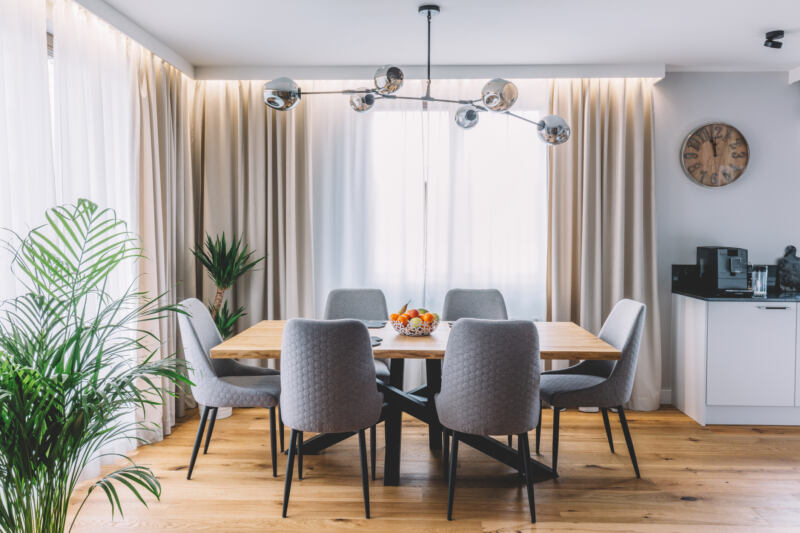
Blackout curtains can also be layered with sheers or blinds. This allows the room to have privacy and softness during the day, then stronger darkness at night. Layering is especially useful in bedrooms where both daylight and night-time comfort matter.
How Should Blackout Curtains Be Fitted?
Fitting has a major impact on how well blackout curtains perform. Even high-quality blackout lining will not be as effective if the curtains are too narrow, too short or positioned too close to the window.
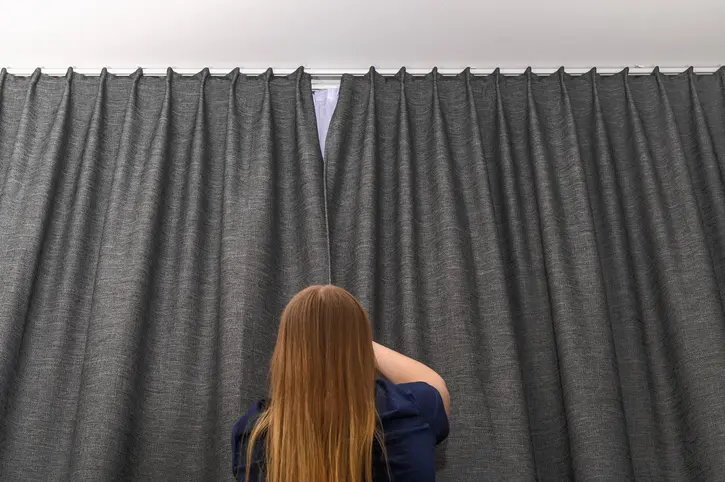
To reduce light gaps, curtains often need to extend beyond the window frame on both sides and above the top of the window. This overlap helps prevent light from escaping around the edges. Floor-length curtains can also create a more complete and elegant finish.
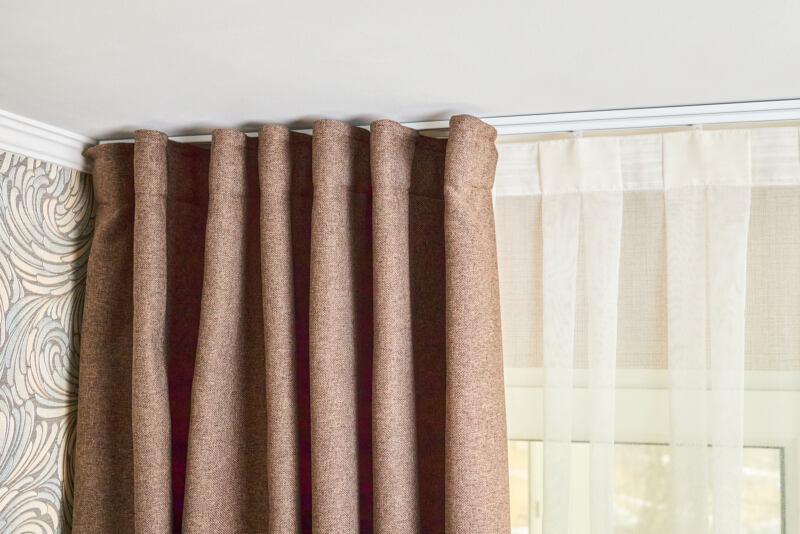
A ceiling-mounted or carefully positioned track may provide better coverage than a pole in some rooms. Tracks can allow curtains to sit closer to the wall or ceiling, which may reduce light leakage at the top. In other rooms, a decorative pole may suit the design better, but it should still be placed with coverage in mind.
If the window is recessed, the fitting choice becomes even more important. Deep recesses, radiators, window seats and furniture can affect how the curtains hang. A made-to-measure approach helps account for these details.
For maximum darkness, blackout curtains may be combined with blackout blinds. The blind controls light close to the glass, while the curtains add softness, coverage and style.
How to Choose the Right Fabric for Blackout Curtains
The right fabric depends on the look you want and how the room is used. Because the blackout lining handles much of the light control, the face fabric can be chosen for appearance, texture and atmosphere.
For a calm bedroom, consider soft neutrals, warm whites, taupe, stone, pale grey, muted blue or gentle green. These colours create a restful backdrop and work well with many bedding and wall finishes.
For a richer look, velvet or heavier textured fabric can add depth and warmth. Deeper colours such as navy, forest green, charcoal or chocolate can create a cocooning effect, especially in larger bedrooms.
For a relaxed scheme, linen blends or textured woven fabrics can feel soft and natural. These work well in contemporary homes, period properties and rooms where the design aims to feel elegant but not overly formal.
When choosing fabric, consider:
- How much natural light the bedroom receives
- Whether the room is small or spacious
- The wall colour and flooring
- Existing furniture and soft furnishings
- Whether curtains will be full length
- Whether the room should feel light, cosy, dramatic or calm
Fabric samples should always be viewed in the room if possible. The same material can look very different in morning light, evening light and artificial light.
Blackout Curtains Versus Blackout Blinds
Blackout curtains and blackout blinds both reduce light, but they do so in different ways. Curtains add softness, warmth and a decorative finish. Blinds sit closer to the window and can be more compact.
Blackout curtains are often better when you want the room to feel furnished and luxurious. They can frame the window, add texture and improve the overall atmosphere. Blackout blinds are often better when space is limited or when a more minimal look is preferred.
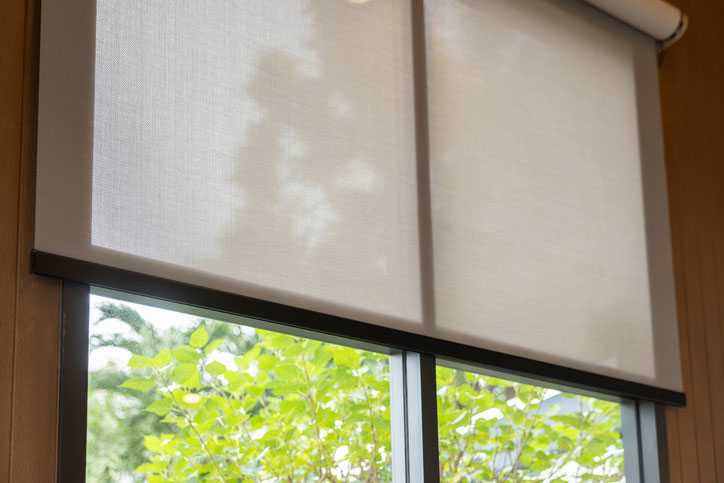
For the strongest light control, using both can be effective. A blackout blind can reduce light at the glass, while curtains cover the wider window area and soften the room. This layered approach is useful for bedrooms, nurseries and shift-worker rooms.
The choice depends on priorities. If the main concern is compact practicality, blinds may be suitable. If the goal is comfort, softness and a more finished bedroom, curtains can be the better option. If darkness is critical, a combination may be worth considering.
Frequently Asked Questions
Do blackout curtains make a room completely dark?
Blackout curtains can significantly reduce light, but complete darkness depends on the fabric, lining and fitting. Light may still enter around the sides, top or bottom if the curtains do not overlap the window enough.
Are blackout curtains only for bedrooms?
No, blackout curtains can also be useful in nurseries, media rooms, guest rooms, snug rooms and spaces where glare or privacy is a concern. However, they are most commonly used in bedrooms because of their sleep benefits.
Can blackout curtains help babies sleep?
Blackout curtains can help create a darker, calmer environment for babies and young children, especially during daytime naps or bright summer evenings. They work best as part of a consistent sleep routine.
Do blackout curtains keep heat out?
Blackout curtains can help reduce direct sunlight entering a room, which may help the space feel cooler during hot, sunny periods. Their lining can also make the window area feel more insulated, but they are not a replacement for proper insulation or ventilation.
What is the best colour for blackout curtains?
The best colour depends on the room design. Darker colours can feel cosy and dramatic, while lighter colours can create a calm, softer look. The blackout effect comes mainly from the lining, not just the colour of the visible fabric.
Summary
Blackout curtains improve sleep quality by creating a darker, calmer and more private bedroom environment. They can help reduce early morning light, streetlight glow, passing headlights and other visual disturbances that make a room feel less restful.
Their benefits go beyond darkness. They add softness, warmth and a more complete finish to the room, helping the bedroom feel more comfortable and carefully designed. When the fabric, lining and fitting are chosen well, blackout curtains can be both practical and beautiful.
For tailored guidance on blackout curtains, luxury blinds and bespoke bedroom window treatments, Zenn Interiors can help create a scheme that supports better rest while complementing your interior style.
Phone: 020 7871 3082
Email: zenninteriors@gmail.com
Find out more: https://zenninteriors.co.uk/