
The best sofa upholstery fabric depends on how you use your sofa, the appearance you want and how much maintenance you’re comfortable with. Durable woven fabrics and performance materials can be practical for busy households, while velvet, linen and other textured fabrics offer different aesthetic qualities.
However, no single fabric is automatically the most durable, comfortable or luxurious. Its performance depends on the fibre composition, weave, finish and construction.
Whether you’re reupholstering an existing sofa or choosing fabric for a bespoke piece, the right material should balance appearance, comfort, practicality and longevity.
In this guide, we’ll compare popular sofa upholstery fabrics, explain how to assess durability and help you choose a material that suits your home.
What Is the Best Fabric for Sofa Upholstery?
The best upholstery fabric is one that suits the furniture’s intended use.
For a family sofa used every day, durability and ease of cleaning may be the main priorities.
For a formal sitting room, you may prefer a luxurious texture, decorative pattern or more delicate finish.
The following table compares common upholstery fabric categories.
| Fabric | Main benefits | Points to consider | Often suitable for |
|---|---|---|---|
| Cotton and cotton blends | Soft, versatile, wide choice of designs | Some fabrics crease, absorb spills or fade | Relaxed living rooms |
| Linen and linen blends | Natural texture, understated appearance | Pure linen can crease and require careful cleaning | Contemporary interiors |
| Velvet | Rich colour, soft texture, luxurious finish | Some velvets show pressure marks or pile shading | Traditional and modern sofas |
| Wool and wool blends | Resilient fibres, warmth, textured appearance | Cleaning and surface feel vary | Comfortable, design-led interiors |
| Synthetic and performance fabrics | Can offer strong abrasion resistance and practical maintenance | Performance varies by construction and treatment | Frequently used family sofas |
| Leather | Distinctive appearance and potential durability | Requires appropriate care and conditioning | Selected traditional and contemporary designs |
These descriptions are general characteristics rather than guarantees. Two fabrics made from the same fibre can perform very differently.
1. Cotton Upholstery Fabric
Cotton is a versatile natural fibre used in many upholstery fabrics.
It can create a soft, comfortable finish and is available in a wide variety of colours, textures and patterns.
Cotton also blends well with other fibres, allowing manufacturers to adjust the material’s appearance and performance.
Benefits of Cotton Upholstery
- Soft and comfortable against the skin.
- Available in a wide range of colours and patterns.
- Suitable for both traditional and contemporary designs.
- Can be blended with other fibres to improve performance.
Things to Consider
Cotton can absorb moisture and spills, particularly when untreated.
Some fabrics may also crease or fade when exposed to prolonged direct sunlight.
For everyday use, a tightly woven upholstery-grade cotton blend may be more practical than a lightweight decorative cotton.
Best for: Homeowners who want a soft, versatile fabric with a relaxed appearance.
2. Linen Upholstery Fabric
Linen is valued for its natural texture and understated appearance.
Its distinctive weave can create a relaxed, elegant finish, making it particularly popular in neutral and contemporary interiors.
Linen upholstery often works well where the aim is to create a calm, comfortable atmosphere without a glossy or heavily patterned fabric.
Benefits of Linen Upholstery
- Natural-looking texture.
- Timeless, understated appearance.
- Suitable for minimalist and relaxed interiors.
- Available in pure linen and blended constructions.
Things to Consider
Pure linen can crease during use, and some fabrics are more susceptible to marking or staining.
Linen blends may offer greater crease resistance or easier maintenance, depending on their construction.
If you prefer a consistently smooth, structured appearance, consider whether linen’s natural creasing will suit your expectations.
Best for: Relaxed living rooms, contemporary homes and interiors where natural texture is a priority.
3. Velvet Sofa Upholstery Fabric
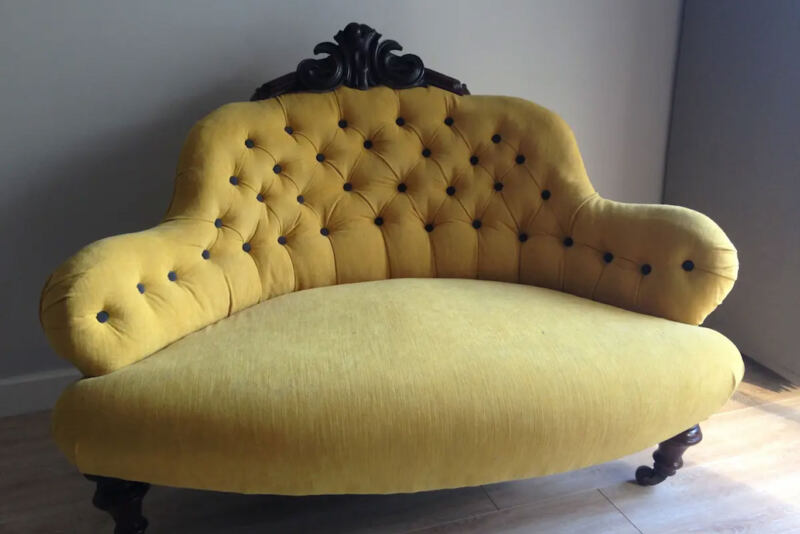
Velvet is a popular choice for homeowners looking for a luxurious, tactile finish.
Its pile reflects light from different directions, creating depth and variation in colour.
Velvet can work equally well on a traditional sofa with decorative detailing or a contemporary sofa with simple lines.
Benefits of Velvet Upholstery
- Soft, tactile appearance.
- Rich colour and visual depth.
- Suitable for traditional and contemporary interiors.
- Available in different fibre compositions and performance grades.
Is Velvet Suitable for Everyday Use?
Yes, provided the specific velvet is suitable for the intended level of use.
The assumption that all velvet is delicate is misleading.
Some upholstery-grade synthetic and blended velvets are designed for frequent domestic use, while more delicate constructions may require greater care.
Velvet can show shading, pressure marks or changes in pile direction. These characteristics aren’t necessarily defects but should be considered before choosing the fabric.
Best for: Homeowners who want a luxurious finish and are comfortable with the chosen material’s maintenance requirements.
Zenn Interiors offers a selection of luxurious velvets as part of its bespoke upholstery fabric range.
4. Wool and Wool-Blend Upholstery
Wool has naturally resilient fibres and can provide warmth, comfort and an attractive textured finish.
Depending on the weave and construction, wool upholstery can work well in both period properties and contemporary interiors.
Wool blends combine wool with other fibres to achieve different characteristics.
Benefits of Wool Upholstery
- Naturally resilient fibre structure.
- Warm, comfortable feel.
- Wide range of textures and woven finishes.
- Suitable for traditional and contemporary furniture.
Things to Consider
Some wool fabrics may feel coarser than cotton or velvet.
Pilling, cleaning requirements and abrasion resistance also vary between products.
Always assess a physical fabric sample and confirm that the material is intended for upholstery.
Best for: Homeowners seeking a textured, comfortable fabric with natural-fibre appeal.
5. Synthetic and Performance Upholstery Fabrics
Synthetic upholstery fabrics include materials made from fibres such as polyester, acrylic and nylon.
They can be designed to provide particular benefits, including abrasion resistance, reduced creasing and easier maintenance.
The term performance fabric describes materials engineered or treated to withstand specific everyday demands.
Benefits of Performance Upholstery
Depending on the product, performance fabrics may offer:
- Strong abrasion resistance.
- Improved stain resistance.
- Reduced creasing.
- Practical cleaning characteristics.
- Resistance to certain types of wear or fading.
These features can make performance upholstery particularly useful for busy households.
However, not every synthetic fabric is stain-resistant or suitable for intensive use.
Always check the fabric’s individual specifications and care instructions.
Best for: Family living rooms, frequently used sofas and homes where practical maintenance is a priority.
6. Leather Sofa Upholstery
Leather is another upholstery material worth considering when comparing sofa finishes.
It offers a distinctive appearance and can develop character as it ages.
Different leather types vary significantly in softness, durability, surface treatment and maintenance requirements.
Some finished leathers may be easier to wipe clean, while more delicate leather finishes require specialist care.
Leather isn’t automatically the most practical option for every household.
Best for: Homeowners who prefer leather’s appearance and are prepared to follow the appropriate care requirements.
If you’re considering leather reupholstery, confirm material suitability and service availability before proceeding.
Which Sofa Upholstery Fabric Is Most Durable?
Durability depends on more than whether a fabric is natural or synthetic.
The quality of the weave, fibre composition, protective finish and intended use all influence how well upholstery performs.
A tightly constructed fabric designed for frequent seating may withstand everyday wear better than a loosely woven decorative fabric, regardless of their fibre types.
Understanding Fabric Rub Tests
Upholstery fabrics are often tested for resistance to abrasion.
In the UK, you may encounter Martindale abrasion results, expressed as a number of rubs or cycles.
Higher results generally indicate greater resistance to repeated rubbing under the test conditions.
However, abrasion resistance isn’t a complete measure of fabric quality.
A fabric may perform well in a rub test but still be vulnerable to snagging, pilling, fading or seam damage.
When choosing material for a frequently used sofa, look for a fabric that is rated for the intended level of domestic use.
Other Durability Factors
Useful specifications to consider include:
- Resistance to pilling.
- Colourfastness to light and rubbing.
- Seam strength and stability.
- Snagging resistance.
- Stretching and recovery.
- Cleaning requirements.
A suitable upholstery fabric should perform well across the characteristics that matter for your household, rather than relying on a single test result.
Best Sofa Upholstery Fabric for Families with Children
Family sofas often experience frequent sitting, food spills and everyday wear.
Practical considerations may include stain resistance, cleaning requirements and how easily the fabric shows marks.
Tightly woven upholstery fabrics, suitable performance materials and some patterned fabrics can be useful options.
Mid-toned colours and subtle patterns may also help disguise minor marks between cleans.
However, no fabric is completely stain-proof or damage-proof.
Check the cleaning guidance and any manufacturer’s claims before relying on a protective treatment.
Best Sofa Upholstery Fabric for Homes with Pets
Pets introduce additional considerations, particularly hair, claws and regular cleaning.
Some fabrics are more vulnerable to snagging than others.
Loosely woven materials and pronounced loop textures may catch on claws, making them less suitable for certain households.
Practical features to consider include:
- A tightly constructed weave.
- Suitable abrasion and snagging resistance.
- Straightforward cleaning instructions.
- A colour or pattern that doesn’t highlight every hair.
- A finish that can tolerate the intended level of use.
Velvet isn’t automatically unsuitable for pets, just as synthetic upholstery isn’t automatically pet-proof.
The individual fabric’s construction and care requirements matter more than broad material labels.
How Does Fabric Colour Affect Your Sofa?
A sofa often occupies a large proportion of the room, so its colour can strongly influence the overall interior.
Neutral Upholstery
Cream, beige, taupe, grey and other neutral colours provide a versatile foundation.
They can complement different furniture styles and allow colour to be introduced through cushions, rugs and accessories.
However, very pale colours may make everyday marks more noticeable.
Dark Upholstery
Charcoal, navy, dark green and other deep colours can create a strong visual statement.
They may conceal certain stains but can make dust, lint and light-coloured pet hair more visible.
Patterned Upholstery
Patterns can add character and visual interest.
They may also disguise some minor marks better than completely plain fabric.
Large repeating patterns can require additional material and careful matching during upholstery, potentially affecting the cost.
Should You Choose Removable or Fixed Sofa Upholstery?
The upholstery construction influences both appearance and maintenance.
Removable Covers
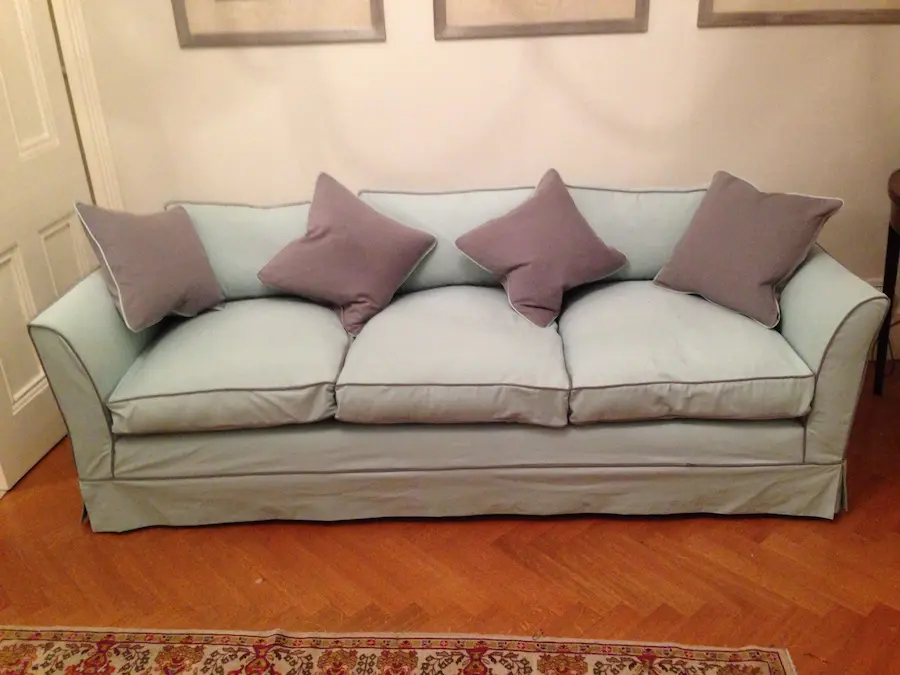
Removable covers can provide flexibility for furniture designed to accommodate them.
Depending on the material and construction, they may be suitable for professional cleaning or replacement.
However, removable doesn’t automatically mean machine washable.
Always follow the fabric’s care instructions.
Fixed Upholstery
Fixed upholstery is secured to the sofa’s frame and can create a more structured, tailored finish.
It is often appropriate for sofas with defined edges, piping or detailed upholstery construction.
Both approaches can produce high-quality results.
The best option depends on the sofa’s design and how you intend to maintain it.
Zenn Interiors also offers bespoke loose covers for suitable furniture.
How Much Does Sofa Upholstery Fabric Cost?
Fabric prices vary according to fibre composition, construction, quality and design.
As a broad UK market guide, upholstery fabric can cost approximately £25–£65 per metre, while premium designer materials may cost considerably more.
The overall fabric cost also depends on the amount required.
For example, a sofa needing 14 metres of material would have the following illustrative fabric costs:
| Fabric price | Cost for 14 metres |
|---|---|
| £25 per metre | £350 |
| £45 per metre | £630 |
| £65 per metre | £910 |
| £100 per metre | £1,400 |
These figures exclude upholstery labour, repairs and other charges.
Actual fabric quantities depend on the sofa’s size, construction and whether patterns need matching.
For more detailed information about reupholstery costs, read our sofa upholstery price guide.
How to Choose the Right Sofa Upholstery Fabric
Before selecting a fabric, consider the following questions.
How Often Is the Sofa Used?
A sofa used daily will place different demands on its fabric than a decorative sofa in a formal sitting room.
Choose a material rated for the appropriate level of use.
How Much Maintenance Is Practical?
Consider whether you’re comfortable with specialist cleaning, regular brushing or additional care.
The most attractive fabric isn’t necessarily the most suitable if its maintenance requirements don’t match your lifestyle.
Does the Room Receive Strong Sunlight?
Direct sunlight can cause some upholstery colours and fibres to deteriorate over time.
If your sofa is positioned near a large window, check the fabric’s lightfastness and any relevant manufacturer guidance.
What Finish Do You Want?
Consider whether you prefer a smooth, structured appearance or a more relaxed, textured finish.
The fabric should complement both the sofa’s shape and the surrounding room.
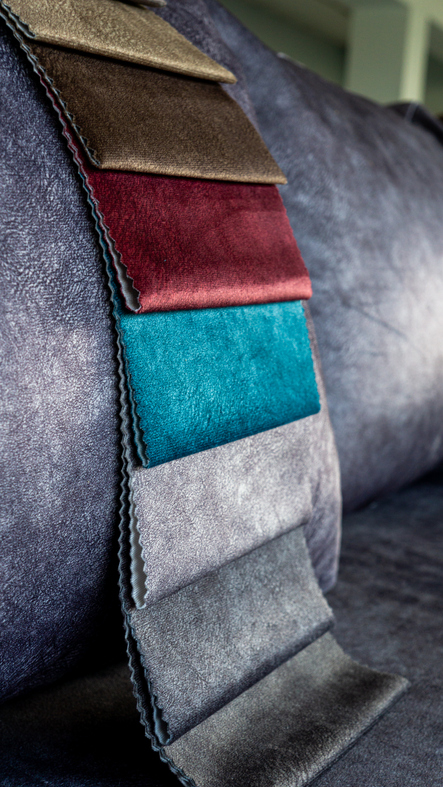
Have You Examined a Fabric Sample?
Always assess fabric samples before making a final decision.
Look at the material in the room’s natural and artificial lighting, and consider how it feels against the skin.
Small swatches can also help you compare colours with existing curtains, flooring and furnishings.
Frequently Asked Questions About Sofa Upholstery Fabric
What is the best fabric for a sofa used every day?
A durable upholstery-grade fabric designed for frequent domestic use is generally the best starting point. Suitable woven and performance materials may offer useful abrasion resistance and practical cleaning characteristics.
Is velvet a good sofa upholstery fabric?
Yes. Velvet can provide a luxurious appearance and is available in constructions suitable for everyday use. Its durability and care requirements depend on the specific fabric.
Is linen practical for sofa upholstery?
Linen can be a good choice for a relaxed, natural finish. Pure linen may crease and require careful maintenance, while some linen blends offer greater practicality.
Which upholstery fabrics are best for pets?
Tightly woven, durable fabrics with suitable snagging resistance are often preferable to loose or heavily looped constructions. The best choice depends on the individual material and your pets.
Is expensive upholstery fabric always better?
No. Price doesn’t automatically indicate suitability or durability. The fabric’s construction, performance specifications and intended use are more important than cost alone.
Can I change the fabric on my existing sofa?
In many cases, yes. A sofa with a suitable frame can be reupholstered in a different material, allowing you to change its appearance while retaining the furniture.
How do I know how much fabric my sofa needs?
An upholsterer can calculate the quantity based on the sofa’s dimensions, cushion arrangement, construction and fabric pattern. It’s best not to order fabric using a general estimate alone.
Bespoke Sofa Upholstery in London
Choosing the right sofa upholstery fabric can refresh your furniture while improving how it fits into your home.
At Zenn Interiors, we provide bespoke sofa upholstery services for traditional and contemporary furniture, with a wide choice of fabrics, textures and finishes.
Our services include fabric selection, re-cushioning, frame repairs and tailored decorative details.
Whether you prefer a rich velvet, a textured weave or a practical fabric for everyday use, selecting the right material is an important part of achieving a beautiful, lasting result.
Explore our sofa upholstery services in London or contact Zenn Interiors to discuss your furniture.
Telephone: 020 7871 3082
Email: zenninteriors@gmail.com