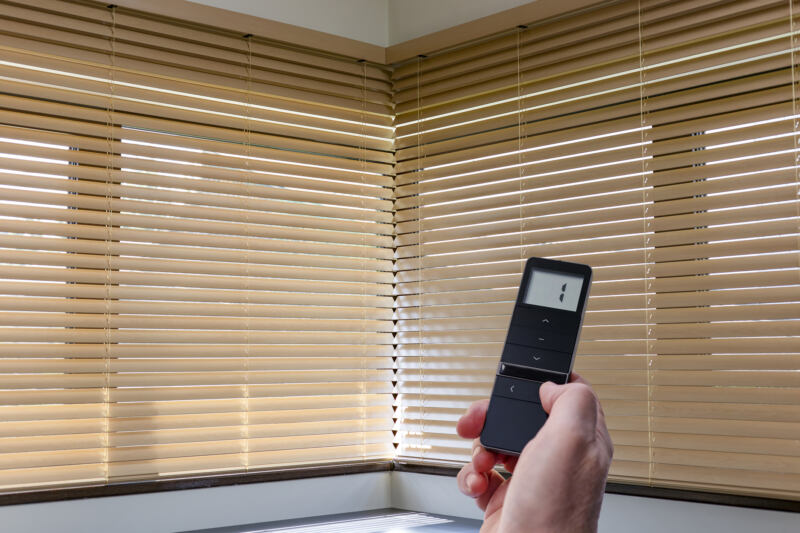
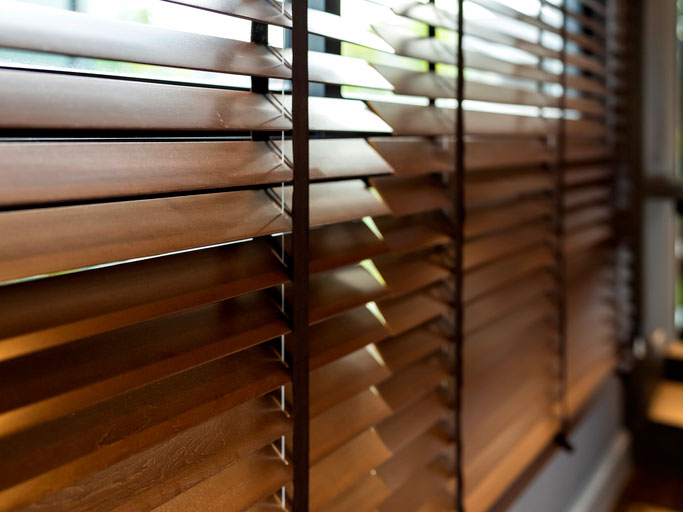
Wooden blinds can bring warmth, structure and adjustable light control to a room, but they are not automatically the best option for every window.
Their main strengths are appearance, privacy and flexibility. Horizontal slats allow daylight to be redirected rather than simply blocked, while the timber finish can introduce natural texture into both traditional and contemporary interiors.
The trade-offs are equally important. Wooden blinds can have more visual weight than fabric blinds, require regular dusting, and may not be the most practical option in areas where moisture is a significant concern.
The right decision therefore depends on what you value most at the window.
Zenn Interiors includes wooden blinds within its made-to-measure blind range, alongside roller, Roman, Duette, sheer, electric and other options. This makes it useful to compare wooden blinds against alternatives rather than viewing them in isolation.
What are the main advantages of wooden blinds?
Wooden blinds offer a combination of decorative character and practical control.
Unlike a roller blind, which generally moves up and down as a single panel of fabric, wooden blinds allow the slats to be tilted.
This means you can adjust how daylight enters the room without necessarily exposing the whole window.
That can be particularly useful in living spaces, home offices and rooms facing neighbouring properties.
Their main advantages include:
- adjustable light control
- flexible privacy
- natural visual warmth
- a structured appearance
- suitability for many interior styles
- the ability to partially obscure the view without completely closing the blind
The material itself also gives the window treatment a stronger presence than many fabric blinds.
For some interiors, that is one of the main reasons to choose them.
How do wooden blinds control light?
Light control is one of their strongest practical advantages.
The horizontal slats can be angled rather than simply opened or closed.
This allows you to change the direction of incoming light throughout the day.
For example, if strong sunlight is entering a living room, the slats can be tilted to reduce direct glare while still allowing some daylight into the space.
In a home office, this can help reduce reflections on computer screens without making the room unnecessarily dark.
The amount of control is more flexible than a conventional roller blind, where the main adjustment is generally how far the fabric is lowered.
This makes wooden blinds useful in rooms where light conditions change frequently.
Do wooden blinds provide good privacy?
Yes, particularly because the slats can be adjusted to alter the view through the window.
You do not always need to close the blind completely.
Tilting the slats can limit views into the room while still allowing some daylight.
This can be helpful for ground-floor windows or rooms facing a road.
However, the angle of the slats matters.
A position that provides reasonable screening from one direction may still allow visibility from another.
You should therefore assess privacy from the actual viewpoint outside the property rather than assuming a partially closed blind provides complete coverage.
Evening conditions also matter.
When the interior is brightly lit and the outside is dark, privacy requirements generally increase.
Why do wooden blinds suit both traditional and contemporary interiors?
Wood has a natural texture that can sit comfortably within a wide range of schemes.
In a traditional room, wooden blinds may complement:
- period furniture
- timber flooring
- painted joinery
- natural fabrics
- classic colour palettes
In a contemporary interior, the repeated horizontal lines can create a cleaner, more architectural effect.
This is particularly effective where other elements of the room already use timber.
For example, wooden blinds can relate visually to:
- dining furniture
- shelving
- cabinetry
- flooring
- timber worktops
- decorative joinery
They do not necessarily need to match those elements exactly.
In fact, trying to match several different woods perfectly can sometimes make a scheme feel forced.
A complementary tone is often enough to create a connection.
Can wooden blinds make a room feel warmer?
Visually, yes.
Natural materials and timber finishes often introduce warmth into interiors dominated by harder or cooler surfaces.
Consider a contemporary room containing pale walls, stone flooring and simple cabinetry.
A wooden blind can add texture without requiring patterned fabric or heavy curtains.
This can be especially effective where the interior is deliberately minimal but risks feeling too stark.
The blind provides structure while still introducing the variation and character associated with wood.
This is a decorative benefit rather than a claim about thermal insulation.
For homeowners specifically prioritising thermal performance, other blind constructions may deserve consideration.
Are wooden blinds easy to coordinate with furniture?
They can be, but exact matching is not always necessary or desirable.
A room might already contain a timber dining table, oak flooring and painted furniture.
Adding another wood tone is perfectly possible provided the overall palette feels balanced.
Trying to make the blind exactly match every piece of timber in the room can be difficult because natural and manufactured finishes vary considerably.
Instead, consider the undertone.
Is the existing timber:
- warm and golden
- pale and neutral
- deep brown
- grey-toned
- painted rather than natural?
Choosing a related tone can help the blind feel connected without pretending all the timber came from the same source.
Painted wooden blinds can also offer another route where a natural wood finish would compete with existing furniture.
What are the disadvantages of wooden blinds?
The same characteristics that make wooden blinds appealing can also create limitations.
They are a more substantial window treatment than many fabric blinds.
The slats and supporting mechanism add weight, and the blind forms a visible stack when fully raised.
They also have multiple horizontal surfaces where dust can settle.
Potential disadvantages include:
- more regular dusting
- greater visual weight
- a larger stack at the top of the window
- limitations around moisture
- increased weight on large blinds
- less softness than fabric treatments
None of these automatically makes wooden blinds a poor choice.
They are simply factors that should be weighed against the benefits.
Do wooden blinds take up more space when raised?
Usually, they can occupy more vertical space than a simple roller blind.
A roller blind winds its fabric around a tube.
Wooden blinds instead lift their individual slats into a stack.
The taller the blind, the more slats need to gather at the top.
This matters if preserving as much visible glass as possible is important.
For example, a small window with limited natural daylight may feel more affected by the stack than a large, bright window.
The proportions should therefore be considered before installation.
Look at the blind not only when it is closed, but also when it is fully raised.
That is the position in which it may spend much of the day.
Are wooden blinds suitable for large windows?
They can be, although size introduces additional considerations.
Wooden blinds become heavier as their width and drop increase.
A very large blind may therefore require a substantial operating mechanism and can be heavier to raise manually.
The visual effect also becomes stronger across a large surface.
On one standard window, horizontal timber slats may provide subtle warmth.
Repeated across several large windows, the effect becomes much more architectural.
That can be desirable, but it should be intentional.
In some cases, dividing a large opening into separate blinds may be more practical than trying to cover the entire width with one unit.
The exact specification should depend on the window proportions and chosen system.
Are wooden blinds suitable for bathrooms?
This requires caution.
Natural wood is sensitive to moisture.
Bathrooms can expose window treatments to:
- humidity
- condensation
- water splashes
- repeated changes in temperature and moisture
Whether a particular wooden blind is suitable will depend on its material and manufacturer guidance.
It should not be assumed that a product described as wooden can be installed safely in a high-moisture room.
Where the window is regularly exposed to damp conditions, a more moisture-resistant blind material may be more appropriate.
The same principle can apply in certain kitchen locations.
Suitability should be based on the actual environment, not simply the desired appearance.
What about wooden blinds in kitchens?
Kitchens vary considerably.
A wooden blind fitted well away from cooking and washing areas may experience relatively normal conditions.
One positioned immediately beside a sink, hob or frequent source of steam may face far more moisture and residue.
Consider:
- distance from the sink
- distance from cooking appliances
- ventilation
- likelihood of condensation
- potential for grease or splashes
- how easily the slats can be cleaned
If the blind will need frequent wiping, the finish and care requirements become particularly important.
A wooden blind may still suit the design of the kitchen, but the location needs to be practical.
Are wooden blinds difficult to clean?
They are not necessarily difficult, but they contain more surfaces than a roller blind.
Every slat can collect dust.
Regular light cleaning is generally easier than allowing a significant build-up.
The appropriate cleaning method should reflect the material and finish of the blind.
Excess water or unsuitable cleaning products can damage certain wood finishes, so manufacturer care instructions should be followed.
This is one area where a roller blind may have a practical advantage.
Its broad flat surface can be simpler to maintain, depending on the fabric.
If low maintenance is one of your highest priorities, the cleaning difference is worth considering before choosing wood.
Do wooden blinds completely block light?
Not usually in the same way as a properly specified opaque or blackout fabric treatment.
Even when the slats are closed, small gaps may remain around the blind or between components.
This means wooden blinds can provide excellent control over light direction without necessarily creating full darkness.
For living rooms and home offices, this flexibility may be ideal.
In a bedroom where strong blackout is the priority, you may prefer another treatment or combine wooden blinds with curtains.
It is therefore important to separate two different goals:
light control and blackout.
Wooden blinds are particularly good at controlling the former.
They should not automatically be selected for the latter.
Can wooden blinds be layered with curtains?
Yes, and this can be a useful way to balance structure with softness.
Wooden blinds provide adjustable privacy and light control close to the window.
Curtains can then frame the opening and create a softer feel.
This may work particularly well in living rooms and bedrooms.
For example, a wooden blind could remain the main daytime control while curtains are drawn in the evening.
The two elements should be coordinated carefully.
Because wooden blinds already contain strong horizontal lines and visible texture, overly elaborate curtains can make the window feel busy.
Simple complementary fabrics can create a more balanced effect.
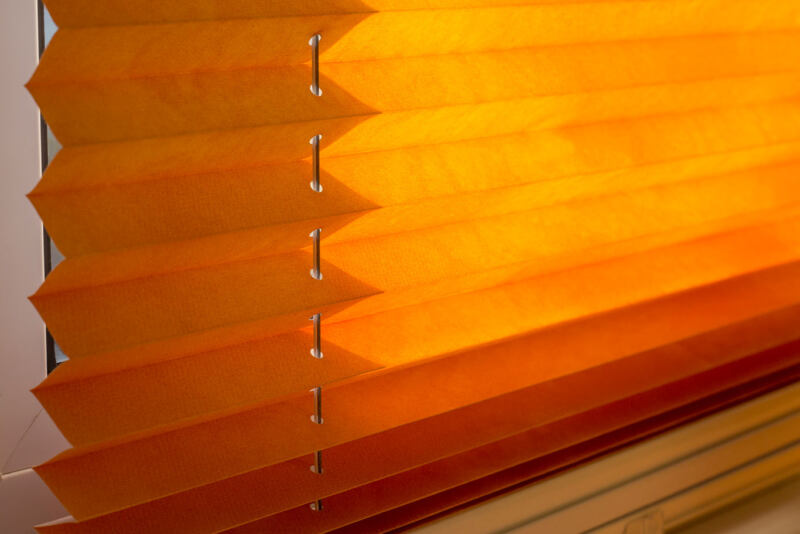
When might roller blinds be a better choice?
Roller blinds may be preferable when visual simplicity, compactness or easier maintenance are priorities.
They can also provide a much broader uninterrupted area of fabric, making them useful when a particular colour or pattern is important.
A roller blind may suit:
- minimalist contemporary glazing
- kitchens where simple maintenance matters
- rooms where a compact headrail is preferred
- windows where a blackout fabric is required
- interiors where the blind should visually recede
The decision therefore comes down to how much you value the adjustability and texture of wooden slats compared with the simplicity of fabric.
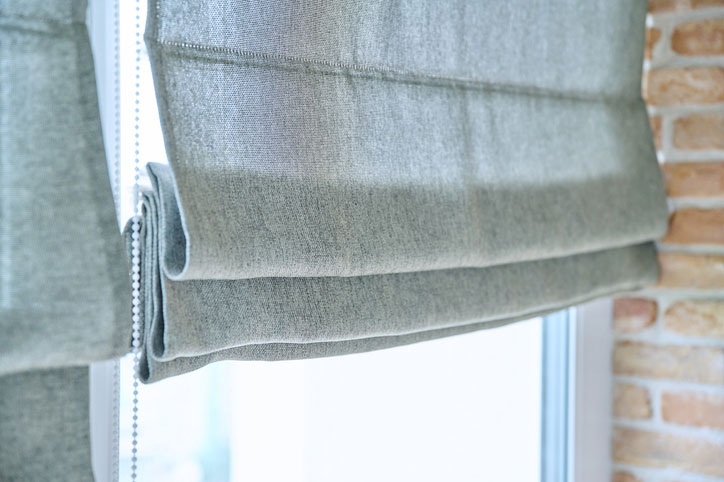
When might Roman blinds be a better choice?
Roman blinds provide a much softer appearance.
They can be particularly effective where the window treatment needs to connect with curtains, upholstery and other textiles.
A Roman blind may therefore suit bedrooms or living rooms where fabric is an important part of the overall scheme.
Wooden blinds create a more structured result.
Roman blinds create a softer one.
Neither is inherently more luxurious.
Luxury in a well-designed interior comes from choosing a treatment appropriate to the room rather than simply selecting the most decorative option.
What happens if wooden blinds are too dominant for the room?
This can occur when the finish is very dark, the window is large or wooden blinds are repeated across several openings.
Because each blind contains numerous horizontal lines, the visual effect can become stronger than expected.
A small sample of timber does not always communicate how prominent a completed blind will appear.
If the room already contains a lot of timber, dark furniture or strong architectural detail, consider whether the blind should add another visible material.
A lighter finish or quieter blind type may allow the other features to remain dominant.
This is particularly worth considering in smaller rooms.
What happens if the slat colour is too close to other wood finishes?
An almost-but-not-quite match can sometimes look less intentional than a deliberate contrast.
Natural wood varies in colour, grain and finish.
Trying to match a wooden blind exactly to existing furniture from a small sample can therefore be difficult.
If an exact match cannot be achieved, consider choosing a complementary tone instead.
For example, a neutral painted blind could sit comfortably alongside natural timber furniture without creating an obvious mismatch.
The entire palette matters more than whether every wooden component is identical.
How do you decide whether wooden blinds are right for your room?
Start by considering both the practical advantages and the compromises.
Wooden blinds may be particularly suitable if you want:
- adjustable daylight
- flexible privacy
- natural texture
- visible structure at the window
- a connection with timber elsewhere in the interior
Think more carefully if:
- the room has high moisture levels
- the blind will need frequent cleaning
- complete blackout is essential
- the window is extremely large
- maximum visible glass is required when the blind is raised
- the interior already contains a large amount of visually dominant timber
A useful test is to decide whether you are choosing wooden blinds primarily for their appearance or because their adjustable slats solve a practical problem.
Ideally, they should do both.
Frequently Asked Questions
Are wooden blinds suitable for bedrooms?
Yes, particularly where adjustable privacy and light control are important. However, they may not provide complete blackout, so additional curtains or another blind type may be preferable where darkness is the main priority.
Do wooden blinds make a small room look smaller?
Not necessarily, but dark or visually heavy slats can make the window more prominent. Lighter finishes and careful proportions can help maintain a more open feeling.
Can wooden blinds be fitted outside a window recess?
Depending on the window and blind system, both recess and face fitting may be possible. The available space, window furniture and desired coverage should be considered before deciding.
Are wooden blinds better than fabric blinds?
Neither is universally better. Wooden blinds offer adjustable slats, structure and natural texture. Fabric blinds may provide greater softness, decorative choice or more compact operation depending on the style.
Should wooden blinds match the flooring?
No. They should coordinate with the wider palette, but an exact match is unnecessary. Complementary timber tones or painted finishes can often create a more natural result.
Wooden blinds offer a distinctive combination of adjustable light, privacy and natural visual warmth.
Their main disadvantages are equally straightforward: they can be heavier, require more regular cleaning, occupy more space when raised and may be unsuitable for certain high-moisture situations.
The best decision depends on the room rather than on whether wooden blinds are fashionable or luxurious.
Consider how much daylight you want to control, how much privacy is required, the size of the window, the surrounding materials and the practical conditions around the blind.
Zenn Interiors provides made-to-measure wooden blinds alongside other bespoke blind styles, allowing the practical and decorative advantages of each option to be compared as part of the wider interior.
Phone: 020 7871 3082
Email: zenninteriors@gmail.com
Find out more: https://zenninteriors.co.uk/