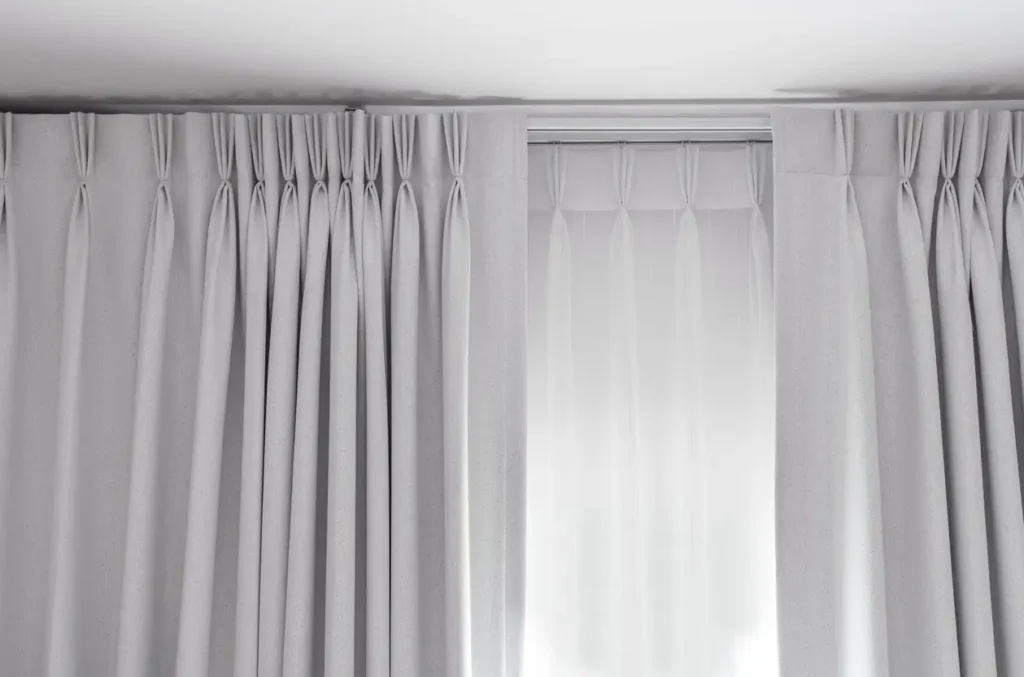

The best luxury blinds for open-plan living spaces are those that respond to the different ways the room is actually used. Roller blinds, Duette blinds, Roman blinds, sheer blinds and motorised systems can all work well, but there is rarely one blind type that is automatically best for every open-plan interior.
That is because an open-plan room may contain a kitchen, dining area and living space within one visual scheme. One elevation may have large sliding doors, another a standard window, while a third faces neighbouring properties and requires greater privacy.
The most successful approach is therefore to think about the room as a whole while treating each window according to its particular job.
You might use discreet roller blinds across large glazing, for example, while introducing a softer Roman blind at a smaller window elsewhere in the room. Alternatively, a consistent blind style may be repeated throughout but with different fabrics or levels of opacity.
Zenn Interiors offers made-to-measure blinds including roller, Roman, Duette, wooden, electric, cassette and sheer options, so the specification can be considered as part of the wider interior rather than treating each window independently.
Why are open-plan spaces more difficult to dress?
In a traditional house with separate rooms, every window treatment can respond to one fairly clear purpose.
Bedroom blinds may prioritise privacy and darkness. Kitchen blinds may need to be practical and unobtrusive. Living-room window treatments can place greater emphasis on softness and atmosphere.
An open-plan room combines several of these demands.
Imagine a kitchen and living extension with rooflights, a large set of glazed doors and a smaller window beside the dining table. During breakfast, you may want as much daylight as possible. In the afternoon, strong sunlight through the glazing could produce uncomfortable glare. In the evening, privacy may become more important.
The blinds therefore need to cope with changes not only between seasons, but sometimes between different parts of the same day.
There is also a visual challenge. Because all of the windows can often be seen simultaneously, unrelated window treatments can make the room feel fragmented.
The aim is to achieve coordination without assuming that every opening needs an identical solution.
Which blinds work best for large areas of glazing?
Large glazing is common in open-plan extensions and contemporary interiors, particularly around sliding doors, bifold doors and garden-facing elevations.
Here, the practical characteristics of the blind become especially important.
Roller blinds create a clean, restrained finish
Roller blinds are often well suited to open-plan interiors because they have a relatively simple visual form.
When raised, they can leave much of the glazing unobstructed. When lowered, the fabric creates a broad, uncluttered surface.
This can be useful where the architecture already contains strong lines, such as:
- large sliding doors
- wide picture windows
- contemporary kitchen cabinetry
- extensive glazing
- minimalist interiors
Fabric choice can then alter the role of the blind considerably. A more transparent material may reduce glare while retaining daylight, whereas a less transparent fabric can provide stronger privacy.
Where several blinds sit beside one another, keeping their proportions, headrails and fabric consistent can also create a calmer result.
The detailed choice of roller-blind fabric deserves separate consideration, because colour, openness, privacy and exposure to sunlight all influence performance.
Duette blinds can be useful where comfort matters
Duette blinds use a cellular or honeycomb construction rather than a single flat piece of fabric. Zenn Interiors describes this construction as providing insulation alongside a neat contemporary appearance.
That can make them worth considering where an open-plan room contains a substantial amount of glazing.
Large windows can have a noticeable effect on how a space feels throughout the year. A room may become very bright or warm in sunshine while also feeling cooler beside extensive glass during colder periods.
A blind should not be treated as a substitute for appropriate glazing or building insulation, but the way a window treatment is constructed can still be relevant when thermal comfort is one of the design priorities.
Duette blinds also have a relatively restrained appearance, which can suit contemporary extensions where a heavily decorative window treatment would compete with the architecture.
The precise differences between Duette and roller blinds are significant enough to consider separately, particularly for homeowners deciding between the two.
Should every blind in an open-plan room be the same?
Not necessarily.
Using the same blind throughout can create strong visual continuity, but repeating one product regardless of how each window is used can lead to compromises.
A better principle is to coordinate the window treatments through a shared design language.
That could mean repeating:
- related colours
- similar fabric tones
- matching hardware finishes
- consistent levels of visual simplicity
- complementary rather than identical textures
Consider an open-plan kitchen, dining and living area.
A broad bank of garden doors could use understated roller blinds so the glazing remains visually clean. A smaller dining-area window could use a Roman blind in a related fabric to introduce softness. If there is a particularly difficult-to-reach window, motorised operation could be incorporated without changing the overall palette.
The treatments are different, but the room can still feel coherent.
This is similar to coordinating upholstery, curtains and other furnishings. Zenn Interiors already approaches interiors using related fabrics, colours and textures rather than assuming every element has to match exactly. Its wider range includes bespoke blinds, curtains and upholstery intended to be considered together as part of the room.
How should the kitchen area affect your blind choice?
Open-plan kitchens create different practical demands from adjoining sitting areas.
A blind positioned close to cooking or food preparation may encounter more moisture, airborne residue and regular cleaning than one installed beside the sofa.
That means a fabric selected primarily because it feels luxurious may not necessarily be the most appropriate option for every kitchen window.
Consider:
- how close the blind is to the hob or sink
- whether the window is frequently opened
- how easily the material can be maintained
- whether the blind will encounter splashes or condensation
- whether there is enough clearance around worktops and handles
A streamlined roller or similar compact blind can often feel appropriate in a kitchen because it does not introduce unnecessary fabric bulk.
However, location matters more than the room label itself. A dining-area Roman blind several metres away from the cooking zone has very different demands from a blind immediately behind a sink.
That is why open-plan window treatments are better specified according to individual positions rather than simply deciding that the entire room needs “kitchen blinds”.
What works best in the living area?
The living part of an open-plan room normally benefits from greater softness.
Large amounts of glass, stone, timber, cabinetry and hard flooring can make contemporary open-plan spaces visually architectural. Window textiles provide an opportunity to soften those surfaces.
Roman blinds can work particularly well on smaller or more conventional windows because the folded fabric introduces texture and depth.
They can also help connect the window with other furnishings such as:
- upholstered seating
- cushions
- rugs
- curtains
- dining-chair fabrics
This does not mean everything should be made from the same material.
A textured neutral Roman blind might relate to the upholstery without matching it exactly. Equally, a patterned blind can introduce interest where sofas and flooring are intentionally restrained.
Roman blinds can also be layered with curtains when greater softness or flexibility is required, although that combination involves its own considerations around proportions, fabric and installation.
When do sheer blinds make sense?
A common open-plan problem is wanting daylight without leaving a room feeling completely exposed.
This is particularly relevant where large windows face a pavement, neighbouring property or frequently used garden.
Sheer or light-filtering blinds can help create a softer relationship between privacy and daylight than simply having the window either completely uncovered or fully blocked.
They can be particularly useful during daytime hours when the aim is to reduce the direct view into the room while retaining a bright atmosphere.
However, privacy requirements change after dark.
Once interior lights are switched on and the exterior becomes darker, a sheer material may provide much less privacy than it appeared to during daylight.
For that reason, consider the room across a full day rather than assessing a fabric only while looking at samples in bright daylight.
Where evening privacy is essential, another layer or a fabric with greater opacity may be necessary.
Are wooden blinds suitable for open-plan spaces?
Wooden blinds can be very effective where warmth, texture and adjustable light control are priorities.
Their horizontal slats also introduce a stronger architectural element than a plain roller blind.
They can work especially well where the interior already contains timber flooring, furniture or cabinetry and the aim is to echo those materials around the windows.
However, their stronger visual presence means they need careful consideration across a large open-plan elevation.
Repeating timber blinds over several wide windows can create considerably more visual weight than using a simple fabric blind. When raised, the stacked slats also occupy space at the top of the window.
There are therefore both advantages and compromises, which is why wooden blinds are better judged on the specific window and desired interior effect rather than simply on appearance.
When are electric blinds worth considering?
Motorisation becomes particularly relevant when open-plan architecture creates a large number of blinds or places them somewhere awkward to reach.
For example, imagine a wide rear extension with four or five individual glazed sections.
Opening every blind manually each morning and lowering them again when the afternoon sun reaches the room can become repetitive. Coordinated motorised operation can make managing the whole elevation more convenient.
Zenn Interiors offers electric blinds with remote or app-based control and also includes motorised window-treatment options within its wider made-to-measure range.
Motorisation may be particularly useful for:
- multiple blinds across one elevation
- tall windows
- difficult-to-reach glazing
- large blinds
- windows that need frequent adjustment
- interiors where visible operating chains are undesirable
It should still be considered during the design stage rather than treated purely as an optional extra at the end.
Power supply, control method, blind size and how different blinds will operate together can all affect the final specification.
Those installation considerations are substantial enough to assess separately before committing to electric blinds.
How should you divide an open-plan room into blind zones?
One of the most useful ways to plan blinds is to stop thinking in terms of individual windows and begin thinking in control zones.
For example:
Zone 1: Large garden glazing
Priorities might include controlling bright sunlight, maintaining views when the blinds are open and keeping the appearance uncluttered.
Roller, Duette or motorised systems may therefore deserve consideration.
Zone 2: Kitchen windows
Practicality, clearance and maintenance may be more important.
A compact treatment is often easier to integrate around work surfaces and cabinetry.
Zone 3: Dining area
Here, the blind can make a greater decorative contribution.
A Roman blind may introduce softness and connect the dining area with the more relaxed living zone.
Zone 4: Living area
Privacy, atmosphere and the relationship with upholstery become more important.
Fabric, texture and possible layering with curtains can therefore influence the decision.
This framework prevents one compromise from being repeated around the entire room.
At the same time, selecting related finishes across each zone maintains the sense that the interior has been designed as one space.
What should you consider before choosing?
Before selecting a particular blind, look at the open-plan room at several different times of day.
A window that seems straightforward during a morning consultation can behave very differently once direct afternoon sunlight reaches it.
Ask:
Where does strong sunlight enter?
Identify which windows cause glare or excessive brightness rather than assuming every elevation behaves alike.
Where is privacy actually needed?
A garden-facing window with little overlooking may have very different requirements from glazing facing neighbouring homes.
Which windows are difficult to reach?
Accessibility can influence whether manual or electric operation makes sense.
Which blinds will be visible together?
If several windows can be seen from one viewpoint, their colours, proportions and hardware should relate visually.
What happens when the blinds are open?
The stack or roll of a blind can affect the amount of visible glass.
What happens when they are closed?
Several large blinds become substantial areas of colour and texture once lowered.
How is each part of the room used?
A kitchen preparation area, dining table and relaxed seating zone may all benefit from different levels of softness and practicality.
Thinking through these questions before focusing on fabric colours usually leads to a more successful scheme.
Is there one best luxury blind for an open-plan room?
No single blind type wins in every open-plan interior.
For large contemporary glazing, a discreet roller blind may offer the cleanest appearance. Duette blinds can deserve consideration where the cellular construction and contemporary finish suit the room. Roman blinds introduce softness around smaller windows. Wooden blinds provide adjustable slats and natural visual warmth. Sheer options can help balance daylight with daytime privacy, while electric operation can make multiple or inaccessible blinds much easier to control.
The more important question is not simply, “Which blind looks best?”
It is:
“What does each part of this open-plan room need its window treatment to do?”
Once those requirements are understood, the different blinds can be coordinated so the room still feels visually consistent.
That is particularly important in open-plan design, where successful window treatments should support the architecture and furnishings rather than divide an otherwise connected space into unrelated sections.
Frequently Asked Questions
Can you use different blinds in the same open-plan room?
Yes. Different blind types can work successfully together when their colours, materials, hardware or general design language are coordinated. Using different solutions can be preferable where individual windows have different practical requirements.
What blinds are best for large patio doors?
Roller, Duette and certain motorised blind systems can all be worth considering for large glazed doors. The appropriate choice depends on the dimensions, how the doors open, desired light control and how much space the blind occupies when raised.
Do all blinds need to be the same colour?
No. Closely related tones can often create a more layered result than identical colours. The important point is that the different treatments feel intentional when viewed together.
Are luxury blinds suitable for kitchens?
They can be, but material and positioning require careful thought. A blind close to cooking or washing areas may require easier maintenance than one elsewhere in the open-plan room.
Should blinds be chosen before the rest of the furnishings?
Ideally, window treatments should be considered alongside the wider scheme. Their colour, texture and scale can influence upholstery, curtains, flooring and other finishes, particularly where large blinds occupy a substantial visual area when closed.
Choosing blinds for an open-plan interior is less about finding one universally superior style and more about balancing the different demands created by the room. Large glazing, privacy, glare, ease of operation, kitchen practicality and the softer requirements of a living area can all point towards different solutions.
Zenn Interiors creates made-to-measure blinds alongside bespoke curtains and upholstery, allowing the window treatments to be considered as part of the wider interior scheme. To discuss suitable options for your space:
Phone: 020 7871 3082
Email: zenninteriors@gmail.com
Find out more: https://zenninteriors.co.uk/