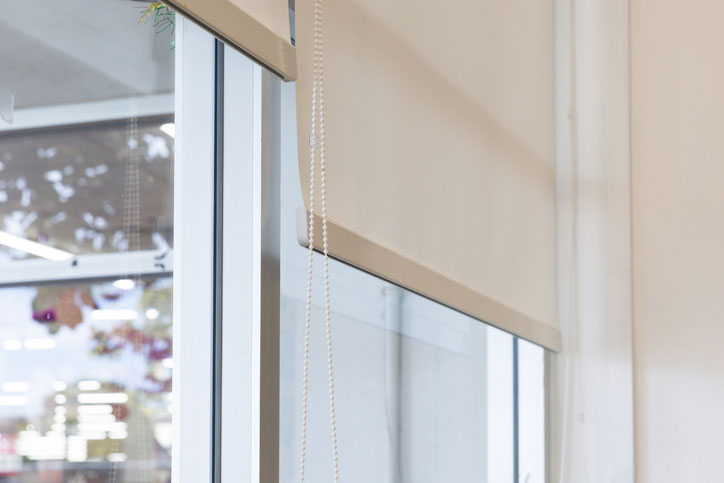
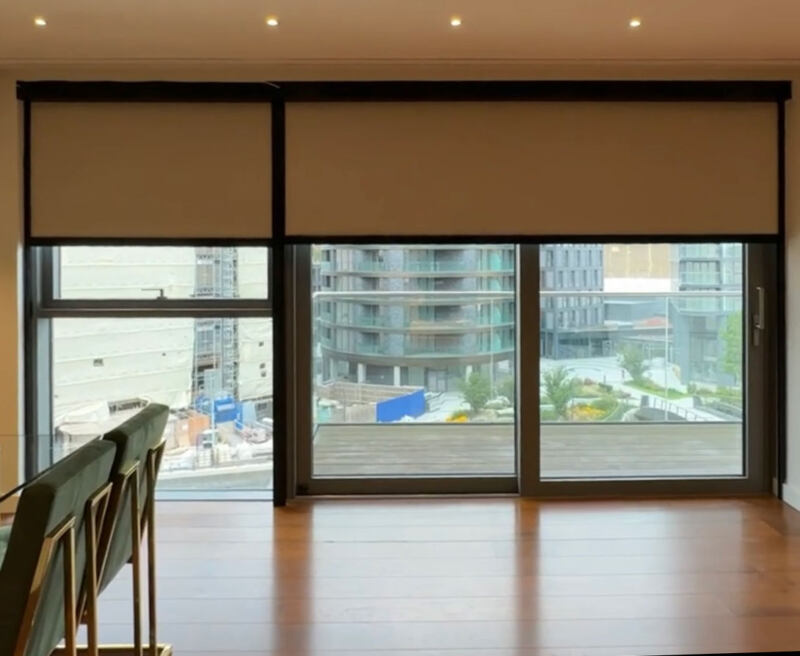
Cassette blinds are blinds where the fabric and mechanism are housed inside a neat casing, known as a cassette, at the top of the window. This cassette helps conceal the roller, brackets and operating parts, creating a cleaner and more finished appearance. Depending on the design, cassette blinds may also include side channels to help guide the fabric and reduce light gaps around the edges.
For many homeowners, cassette blinds are appealing because they combine practicality with a refined look. They can be especially useful in bedrooms, media rooms, home offices, kitchens and modern living spaces where a tidy finish and reliable light control are important. Rather than seeing an exposed roll of fabric and visible fixings, the blind appears more integrated with the window.
Although cassette blinds are often associated with roller blinds, the term mainly refers to the housing system rather than the fabric itself. The cassette can work with different fabrics and operating methods, including blackout, dim-out, light-filtering and electric options. This makes cassette blinds a flexible choice for both decorative and functional interior design.
What Is the Cassette on a Blind?
The cassette is the casing that sits at the top of the blind. It covers the rolled-up fabric and the mechanism used to raise or lower the blind. This casing can be compact and discreet or more substantial, depending on the blind size, fabric type and design requirements.
On a standard roller blind, the roll of fabric is usually visible when the blind is open. You may also see the brackets and operating chain. This can be perfectly acceptable in many settings, but it does create a more exposed, functional look. A cassette blind hides these parts, giving the window a more polished finish.
The cassette may be colour-matched to the window frame, the wall, the blind fabric or the wider interior scheme. In a minimal room, a white or neutral cassette can disappear visually into the window area. In a more design-led space, a darker or contrasting cassette may be used deliberately to frame the window.
The cassette can also help protect the blind fabric when it is rolled away. By keeping the fabric covered when not in use, it may be less exposed to dust, marks and general wear. This can be useful in busy homes, kitchens, children’s rooms or rooms where the blind is used every day.
How Do Cassette Blinds Work?
Cassette blinds work in a similar way to standard roller blinds, but with the roll and mechanism housed inside the top casing. When the blind is raised, the fabric rolls into the cassette. When it is lowered, the fabric comes down from the cassette to cover the window.
The blind may be operated manually or electrically. Manual cassette blinds often use a chain, cord or spring mechanism. Electric cassette blinds can be operated by remote control, wall switch, app control or smart home integration, depending on the chosen system.
Some cassette blinds include side channels. These are slim tracks positioned down the sides of the window. The fabric moves within or close to these channels, helping to keep it aligned. Side channels can also reduce light leakage, particularly when used with blackout fabric.
The basic process is simple:
- The fabric is held on a roller inside the cassette
- The operating mechanism turns the roller
- The fabric rises into or lowers from the cassette
- Side channels, if included, help guide the fabric
- The cassette keeps the top section neat and concealed
The result is a blind that looks more contained than a standard roller blind. This can be particularly useful where the window treatment needs to feel carefully integrated rather than purely practical.
What Are the Main Benefits of Cassette Blinds?
Cassette blinds offer several benefits, and not all of them are purely decorative. They can improve the way a blind looks, operates and performs within the room.
One of the main benefits is visual neatness. The cassette hides the working parts of the blind, creating a cleaner finish at the top of the window. This is valuable in contemporary interiors, where visible brackets and rolls can sometimes look too busy.
Cassette blinds can also support better light control. When paired with blackout fabric and side channels, they can help reduce gaps around the blind. This does not always create complete darkness in every installation, because window shape and fitting details matter, but it can provide a more effective finish than a basic blind with exposed edges.
Another benefit is fabric protection. When the blind is raised, the fabric sits inside the cassette rather than being fully exposed. This can help keep the blind looking tidier over time.
Cassette blinds may also feel more robust. Because the blind is contained within a designed system, it can appear more stable and purposeful. This is especially helpful on larger windows, bi-fold doors, patio doors or rooms where several blinds sit side by side.
Where Are Cassette Blinds Most Useful?
Cassette blinds can be used in many rooms, but they are particularly useful where appearance, privacy and light control all matter.
In bedrooms, cassette blackout blinds can help create a darker, more restful environment. The cassette gives the blind a tidy look during the day, while the fabric and side channels can help reduce light at night or in the early morning.
In home offices, cassette blinds can help manage glare on screens. A light-filtering fabric can soften daylight without making the room feel closed in. The neat cassette also works well in rooms where a professional, uncluttered feel is desirable.
In living rooms, cassette blinds can offer a clean alternative to curtains, especially in modern homes or spaces with large windows. They can also be layered with curtains for a softer, more decorative finish.
In kitchens and dining spaces, cassette blinds can provide a practical, compact window treatment. The protected fabric and neat finish may suit busy areas where heavier curtains are less practical.
In media rooms, snug rooms or cinema-style spaces, cassette blinds with blackout fabric can support improved light control. This helps reduce glare and create a more comfortable viewing environment.
Are Cassette Blinds the Same as Roller Blinds?
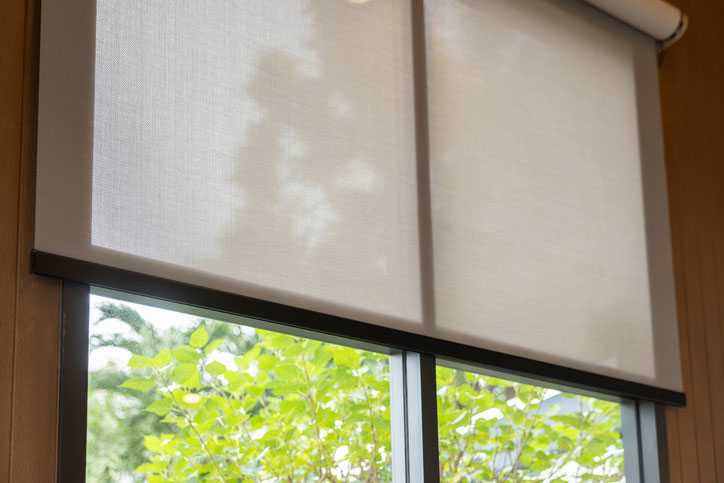
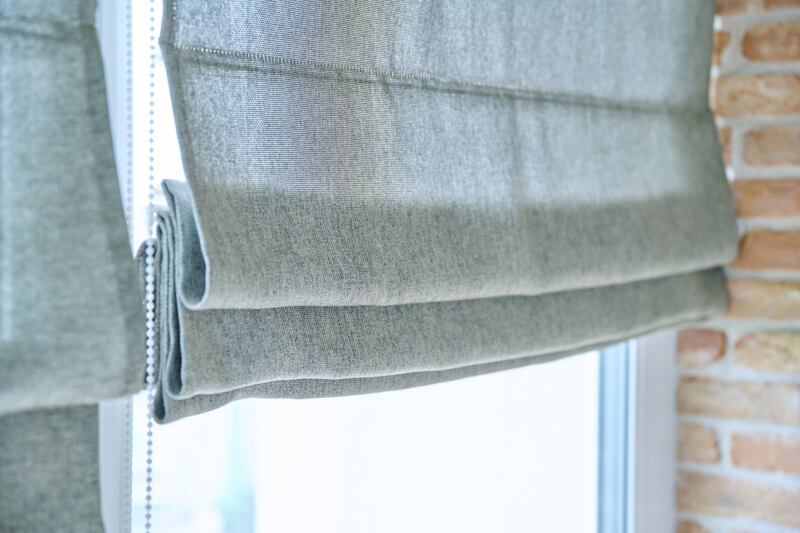
Cassette blinds are often roller blinds, but not all roller blinds are cassette blinds. A standard roller blind has fabric rolled around a tube, usually with exposed brackets and a visible roll. A cassette roller blind uses a casing to hide that roll and mechanism.
The difference is mainly in the finish and performance. A standard roller blind can be simple, affordable and effective. A cassette blind generally looks more refined and can offer improved light control when designed with the right fabric and side channels.
For example, a standard roller blind may be suitable for a utility room, spare room or simple kitchen window where appearance is less critical. A cassette blind may be more appropriate for a main bedroom, living room, home office or high-spec interior where the blind needs to look more finished.
The right choice depends on the room, the window and the level of finish required. Standard roller blinds can still look good when measured and fitted well, but cassette blinds offer a more integrated appearance.
How Do Cassette Blinds Compare With Curtains?
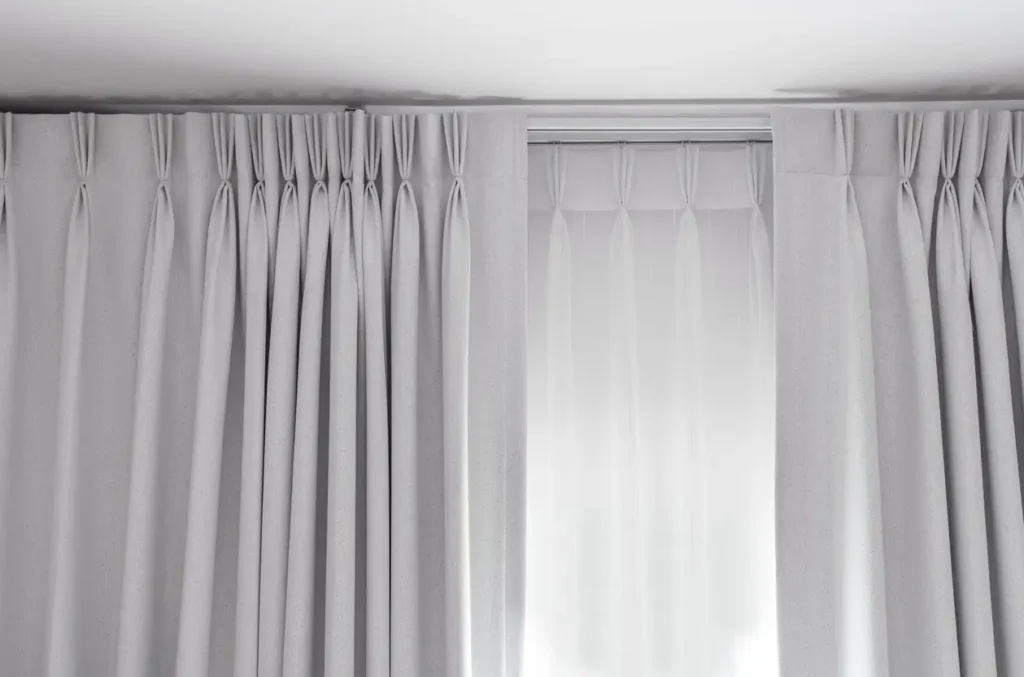
Cassette blinds and curtains serve different purposes, although they can also work together. Cassette blinds are compact, precise and practical. Curtains are softer, more decorative and often provide a stronger sense of warmth.
A cassette blind is usually better when you want a clean, minimal look or when there is limited space around the window. It can be a good option for windows above desks, kitchen worktops, radiators or fitted furniture where curtains would be awkward.
Curtains may be better when you want softness, acoustic comfort and a more traditional or layered interior. They can frame a window beautifully, add texture and make a room feel more furnished.
Many interiors benefit from using both. A cassette blind can provide privacy and light control, while curtains add softness and visual depth. This is particularly effective in bedrooms and living rooms, where practical performance and atmosphere both matter.
Do Cassette Blinds Block Out More Light?
Cassette blinds can help block out more light than a standard blind, especially when used with blackout fabric and side channels. The cassette reduces light leakage at the top of the blind, while side channels can reduce gaps at the sides.
However, the level of darkness depends on several factors. The fit of the blind, the depth of the window recess, the type of fabric, the colour of the fabric and the presence of side channels all make a difference. A cassette alone will not necessarily create full blackout conditions if the rest of the blind is not designed for that purpose.
For bedrooms, nurseries or rooms used for shift work, it is worth considering a blackout cassette system rather than simply choosing a dark fabric. Dark fabric is not always the same as blackout fabric. A properly selected lining or specialist blackout material is usually required for stronger performance.
It is also worth noting that complete darkness can be difficult to achieve in some windows, particularly where frames are uneven, there are vents, or the window shape is unusual. A professional approach to measuring and specification can help manage expectations and improve the result.
Are Cassette Blinds Suitable for Large Windows?
Cassette blinds can be suitable for large windows, but the design needs to be chosen carefully. Larger blinds require the correct fabric weight, mechanism and cassette size. If the blind is too wide or heavy for the system, it may not operate smoothly or sit neatly.
For very wide windows, it may be better to use multiple blinds rather than one large blind. This can make operation easier and allow more flexible light control. For example, in a large bay or wide glazed area, separate blinds can be adjusted individually depending on the direction of sunlight.
Electric operation can also be useful for large cassette blinds. It reduces the need for manual pulling and can help several blinds move together in a controlled way. This is especially practical for tall windows, glazed doors, open-plan spaces and hard-to-reach areas.
The key is to match the blind system to the scale of the window. Cassette blinds can look very elegant on large glazing, but only when properly specified.
What Fabrics Work Well With Cassette Blinds?
Cassette blinds can work with several fabric types. The best choice depends on the room and the level of privacy or light control required.
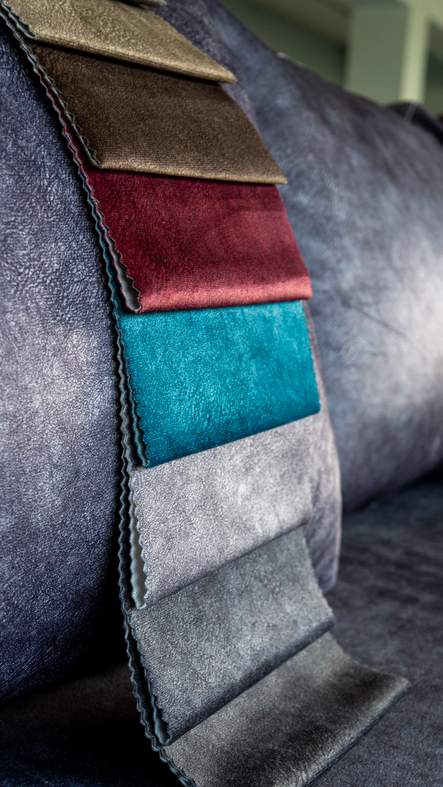
Blackout fabrics are popular for bedrooms, nurseries and media rooms. They help reduce light and can support a more restful environment. Light-filtering fabrics are useful in living spaces and home offices because they soften daylight without blocking it completely. Screen fabrics can help reduce glare while preserving some outward view, depending on the fabric openness and room conditions.
Decorative fabrics can also be used when the blind needs to contribute more visibly to the room scheme. A subtle texture, soft neutral or carefully chosen colour can make the cassette blind feel less clinical and more connected to the interior.
Fabric choice should consider:
- How much light the room receives
- Whether privacy is needed during the day or evening
- The colour palette of the room
- How often the blind will be used
- Whether moisture, heat or glare are concerns
- Whether the blind will be layered with curtains
A cassette system gives the blind a clean structure, but the fabric determines much of the room’s final mood.
Can Cassette Blinds Be Electric?
Yes, cassette blinds can often be electric, depending on the chosen system. Electric cassette blinds are a popular option for modern interiors because they combine a clean finish with convenient operation.
Electric operation is particularly helpful when blinds are large, high up or used frequently. It can also be useful where several blinds need to be adjusted at once, such as in open-plan living areas or rooms with wide glazing.
Electric cassette blinds can help create a more streamlined look because they may reduce the need for visible chains or cords. This can be an advantage in a refined interior scheme where every detail matters.
For comfort, electric blinds can also make it easier to manage changing daylight throughout the day. Instead of manually adjusting several blinds, the user can control them quickly from one place. Depending on the system, scheduling and smart home control may also be possible.
What Should You Consider Before Choosing Cassette Blinds?
Before choosing cassette blinds, it is important to think about both appearance and performance. The cassette style should suit the window and the room, but the fabric and operation method are equally important.
Start by considering the purpose of the blind. Is it mainly for privacy, blackout, glare control, insulation, decoration or a combination of these? A bedroom may need a very different solution from a kitchen or home office.
Next, think about the window itself. Deep recesses, shallow frames, handles, vents, tiles and surrounding furniture can all affect the fitting options. Some windows may suit a recess-fitted cassette, while others may need the blind positioned outside the frame.
It is also worth considering how visible the cassette will be. In some rooms, you may want it to blend in with the window frame. In others, it may form part of a more defined design feature.
The most successful cassette blinds are those that are planned around the room as a whole, rather than chosen as a separate product.
Frequently Asked Questions
Are cassette blinds worth it?
Cassette blinds can be worth it if you want a neater finish, better fabric protection and improved light control compared with a standard exposed blind. They are particularly useful in bedrooms, home offices, media rooms and modern interiors where a clean appearance matters.
Do cassette blinds need side channels?
Not always. Side channels are useful when stronger light control or fabric guidance is required, especially for blackout blinds. However, some cassette blinds are designed without side channels where the main goal is a tidy top finish.
Can cassette blinds be fitted inside a recess?
Yes, cassette blinds can often be fitted inside a recess, provided there is enough depth and no obstructions. The exact fitting depends on the window frame, handles, vents and the size of the cassette.
Are cassette blinds suitable for bedrooms?
Cassette blinds are a good option for bedrooms, particularly when paired with blackout fabric. They can help reduce light, improve privacy and create a neat daytime appearance.
Are cassette blinds easy to maintain?
Cassette blinds are generally straightforward to maintain. The cassette helps protect the fabric when it is raised, and most fabrics can be kept clean with gentle dusting or careful spot cleaning, depending on the material.
Summary
Cassette blinds are a refined blind system where the fabric roll and mechanism are concealed within a neat top casing. This gives the window a cleaner, more complete look while also helping protect the fabric and improve light control.
They are especially useful in rooms where appearance and practicality need to work together. Bedrooms, home offices, living rooms and media spaces can all benefit from the neat finish and functional performance of cassette blinds.
The right cassette blind depends on the room, window size, fabric choice and desired level of light control. When specified carefully, cassette blinds can feel discreet, elegant and highly practical, making them a strong choice for modern and design-led interiors.
For tailored advice on cassette blinds, luxury blinds, curtains and bespoke window treatments, Zenn Interiors can help you choose a solution that works beautifully with your room and the way you use it.
Phone: 020 7871 3082
Email: zenninteriors@gmail.com
Find out more: https://zenninteriors.co.uk/