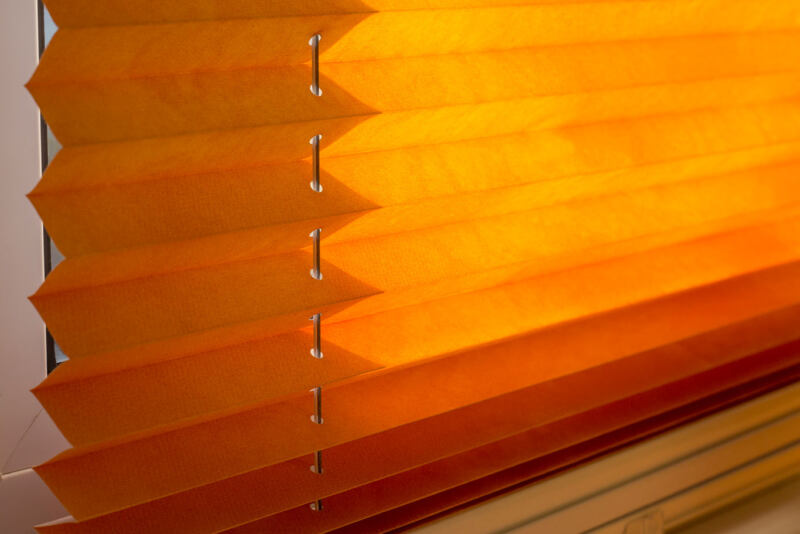
Duette window blinds are designed to help reduce heat loss through windows, improve indoor comfort and provide flexible light control. Their distinctive honeycomb structure traps air within the fabric, creating an insulating layer between the window and the room.
For UK homeowners looking to improve comfort without replacing their windows, thermal Duette blinds can be an attractive option.
They’re particularly useful in rooms with large windows, overlooked glazing or changing levels of sunlight throughout the day.
But how much difference can Duette blinds make, and what should you consider when choosing them?
What Are Duette Window Blinds?
Duette window blinds are a type of made-to-measure cellular blind, commonly known as honeycomb blinds.
Unlike conventional pleated blinds, which are typically made from a single folded layer of fabric, Duette blinds have a cellular construction containing pockets of air.
These pockets act as an additional insulating layer at the window.
The design combines several practical benefits:
- Reduced heat transfer through windows.
- Improved comfort near glazing.
- Flexible privacy and light control.
- A neat, contemporary appearance.
- A choice of fabrics and operating mechanisms.
Duette blinds can suit both modern homes and traditional interiors, with fabric and colour options to complement different room designs.
How Do Duette Window Blinds Improve Energy Efficiency?
Windows can be a significant source of heat loss in a home, particularly where glazing has limited insulating performance.
Duette blinds help by introducing an additional layer between the window and the indoor environment.
Honeycomb Insulation
The cellular structure contains air pockets that slow heat transfer across the window covering.
When a thermal Duette blind is correctly fitted and closed, these pockets help reduce the movement of heat between the glass and the room.
This can make the area near the window feel more comfortable during colder weather.
Heat Retention During Winter
During winter, warmth can escape through windows even when the rest of a room is well insulated.
Closing suitable Duette blinds can help limit this heat loss, particularly overnight and during colder periods.
The result may be a more comfortable room and reduced demand on the heating system.
The degree of improvement depends on the blind’s construction, the existing glazing and the fitting arrangement.
Summer Temperature Control
Duette blinds can also help manage solar heat entering a room.
Closing suitable blinds during periods of strong sunlight can reduce the amount of solar energy reaching the interior.
This can be particularly useful for south-facing rooms, glazed extensions and home offices that become uncomfortable during sunny weather.
However, the effectiveness of solar heat control depends on the fabric, colour, window orientation and how the blinds are used.
How Much Heat Can Thermal Duette Blinds Save?
Some high-performance thermal Duette blinds can reduce heat loss through windows by up to 55% under tested conditions.
This demonstrates the insulation potential of advanced honeycomb blind constructions.
However, the percentage reduction in heat loss through a window isn’t the same as the percentage reduction in household heating bills.
Actual performance depends on several factors:
- The thermal construction of the blind.
- The type and condition of the window glazing.
- How closely the blind fits the window.
- The size and orientation of the window.
- When the blind is opened and closed.
- The property’s wider insulation and heating requirements.
The main benefit is improved thermal performance at the window, which can contribute to better comfort and potentially lower heating demand.
Do Duette Blinds Reduce Energy Bills?
Duette blinds can help reduce heating demand by improving insulation at windows.
Whether this translates into noticeable savings depends on the home.
For example, insulating blinds may have a greater impact where windows are relatively inefficient or where large areas of glazing contribute to heat loss.
Homes with modern, highly insulated windows may experience a smaller additional improvement.
Duette blinds should therefore be considered one part of a wider approach to energy efficiency, rather than a replacement for appropriate glazing, draught-proofing or property insulation.
Duette Blinds for Different Rooms
The benefits of Duette blinds vary depending on how a room is used.
Living Rooms
Light-filtering Duette blinds can soften daylight and improve privacy while maintaining a bright, welcoming space.
Their discreet pleated appearance works particularly well in contemporary living rooms where heavy window treatments aren’t desired.
Bedrooms
Room-darkening and blackout fabric options can help reduce unwanted daylight.
The cellular structure also adds insulation at the window, potentially improving comfort on colder nights.
For bedrooms where darkness is especially important, the fitting system matters as well as the fabric, because light can enter around the edges.
Home Offices
Duette blinds can help manage glare on screens and create more comfortable working conditions.
Adjustable blinds are particularly useful where sunlight changes throughout the day.
Conservatories and Glazed Extensions
Rooms with extensive glazing can experience significant temperature changes.
Thermal blinds can help moderate heat transfer at the windows, making Duette blinds worth considering for suitable conservatory and glazed-extension installations.
Zenn Interiors offers made-to-measure Duette blind solutions for conservatories and specialist window arrangements.
Skylights and Unusually Shaped Windows
Certain Duette systems can accommodate specialist glazing, including skylights and shaped windows.
Zenn Interiors provides bespoke solutions for skylights, gables and other non-standard window arrangements.
Privacy and Light Control
Energy efficiency is only one reason to choose Duette window blinds.
Different fabric opacities allow homeowners to balance daylight, privacy and room darkening.
Light-filtering fabrics are useful for living spaces where natural light is welcome but direct glare needs controlling.
Room-darkening fabrics are more suitable where limiting daylight is a priority.
The right choice depends on the room’s purpose, the direction the windows face and the level of privacy required.
Top-Down/Bottom-Up Duette Blinds
Top-down/bottom-up operation allows a blind to be adjusted from either the top or bottom.
For example, the lower section can remain covered for privacy while daylight enters through the upper part of the window.
This is particularly useful for street-facing London homes and rooms overlooked by neighbouring properties.
Zenn Interiors offers top-down/bottom-up Duette blinds as part of its bespoke range.
Are Motorised Duette Blinds Worth Considering?
Motorised blinds can make it easier to control large, high-level or difficult-to-reach windows.
Depending on the system, motorisation may also support compatible smart-home controls.
This can be useful when several blinds need adjusting regularly or where accessibility is important.
Zenn Interiors offers motorised Duette blinds with smart-home integration options.
The most suitable system depends on the window arrangement and your preferred method of operation.
Duette Blinds vs Conventional Pleated Blinds
Duette and conventional pleated blinds can look similar, but their construction differs.
| Feature | Duette blinds | Conventional pleated blinds |
|---|---|---|
| Fabric construction | Cellular honeycomb pockets | Usually a single pleated layer |
| Thermal insulation | Air pockets provide an insulating layer | Performance depends on fabric and fitting |
| Light control | Choice of fabric opacities | Choice of fabric opacities |
| Appearance | Structured, pleated finish | Slim, pleated finish |
| Specialist systems | Options vary by product | Options vary by product |
If thermal performance is a major priority, comparing the actual fabric construction and installation specification is more useful than choosing on appearance alone.
What Affects the Thermal Performance of Duette Blinds?
To get the most from insulating blinds, consider their construction and how they’re installed.
Fabric Construction
Different honeycomb fabrics can provide different levels of thermal performance.
More advanced cellular constructions may offer greater insulation than simpler designs.
Window Fit
Gaps around the blind can allow air movement and reduce the effectiveness of the insulating layer.
Accurate measuring and an appropriate fitting arrangement are therefore important.
Window Type
The same blind can provide different improvements on single glazing, older double glazing and modern high-performance windows.
Everyday Use
Insulating blinds provide their greatest benefit when used appropriately.
Closing them during cold evenings can help retain warmth, while managing strong sunlight during warmer weather can help control unwanted heat gain.
How Much Do Duette Window Blinds Cost?
Duette blinds are available at different price points depending on their size, fabric and operating system.
Manual options are generally more affordable than motorised systems, while specialist window shapes can require more complex fittings.
For indicative UK market prices and a detailed breakdown of what affects the cost, read our Duette Blinds Cost Guide.
For an accurate price, it’s best to obtain a quotation based on your window dimensions and preferred specification.
Frequently Asked Questions
Are Duette window blinds energy efficient?
Yes. Their honeycomb construction creates an insulating layer at the window that can help reduce heat transfer and improve indoor comfort.
Can Duette blinds reduce heat loss by 55%?
Certain high-performance thermal Duette blinds have demonstrated reductions in window heat loss of up to 55% under tested conditions. Actual results vary according to the blind, glazing and installation.
Do Duette blinds keep rooms cooler in summer?
Suitable Duette blinds can help reduce unwanted solar heat entering through windows, particularly when closed during strong sunlight.
Are Duette blinds suitable for bedrooms?
Yes. Room-darkening and blackout fabric options can provide useful light control, while the honeycomb construction adds insulation at the window.
Are Duette blinds suitable for conservatories?
They can be. Their insulating design makes them useful for considering in rooms with extensive glazing, provided the blind system is appropriate for the windows.
Can Duette blinds be motorised?
Yes. Motorised systems are available, and Zenn Interiors offers motorised Duette blinds with compatible smart-home integration options.
Are Duette blinds better than ordinary blinds?
They offer particular advantages for thermal insulation because of their honeycomb construction. However, the best choice depends on your budget, window type, preferred appearance and light-control requirements.
Made-to-Measure Duette Blinds in London
At Zenn Interiors, we provide bespoke Duette blinds designed to complement homes across London.
Our range includes a choice of fabrics and colours, light-control options, top-down/bottom-up operation and motorised systems.
We also provide made-to-measure solutions for specialist window arrangements, including skylights, gables and conservatories.
Whether you’re looking to improve comfort near large windows, manage sunlight or achieve greater privacy, choosing the right fabric and operating system can make a substantial difference.
Explore our made-to-measure Duette blinds or contact Zenn Interiors to discuss your requirements.
Telephone: 020 7871 3082
Email: zenninteriors@gmail.com