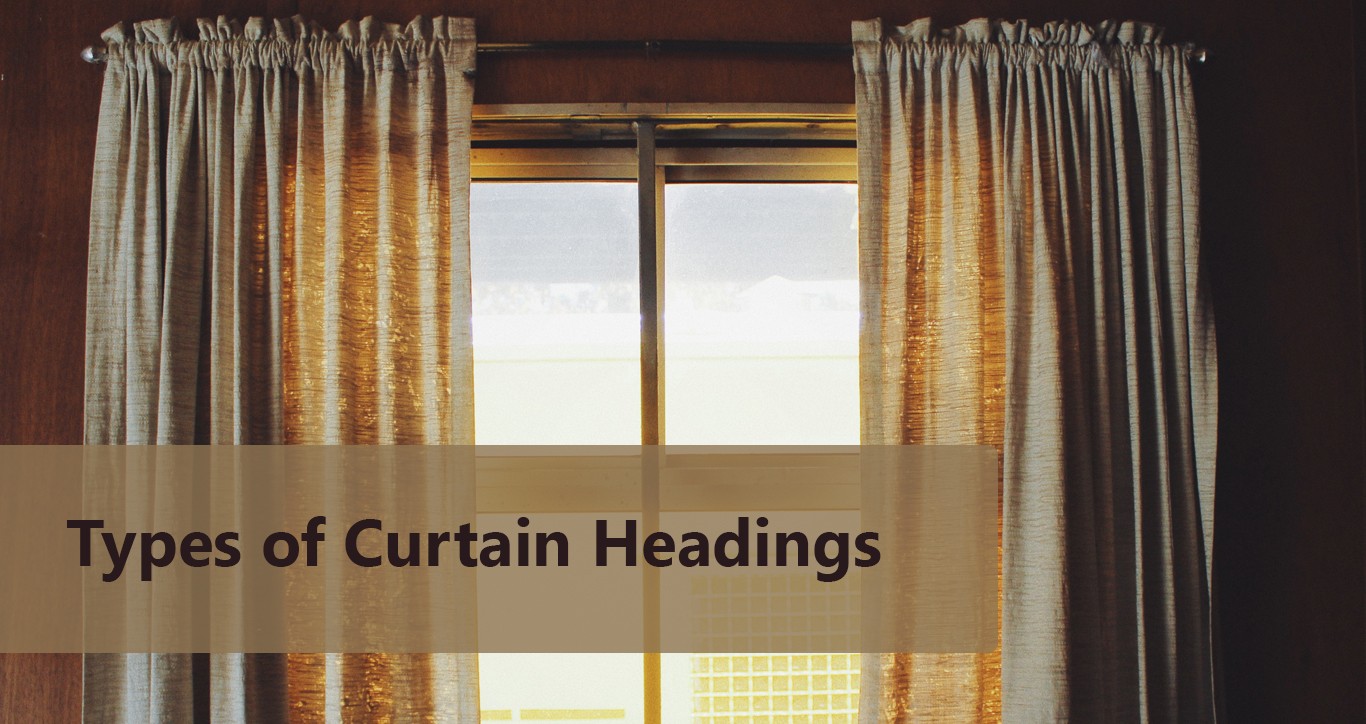
Choosing the right curtain heading can completely change the appearance of your windows.
The seven popular types of curtain headings are pencil pleat, triple pleat, double pleat, gathered, eyelet, tab top and wave. Each creates a different finish, from soft, informal folds to structured, tailored pleats.
But appearance isn’t the only consideration. Your choice of heading also affects how curtains hang, which poles or tracks they need and how much space they occupy when open.
Whether you’re choosing traditional made-to-measure curtains for a period property or sleek window treatments for a contemporary home, understanding the differences will help you make the right decision.
What Is a Curtain Heading?
A curtain heading is the finished section at the top of a curtain that determines how the fabric gathers or folds.
It also influences how the curtain attaches to its pole or track.
Some headings, such as pencil pleats, create gathers using adjustable heading tape. Others, including double and triple pinch pleats, use permanently stitched folds.
Eyelet and tab top headings attach directly to a curtain pole, while wave curtains use a specialist hanging system to create their characteristic flowing shape.
The right heading should complement your interior while working with your window dimensions, fabric and chosen hardware.
7 Types of Curtain Headings Compared
| Curtain heading | Appearance | Suitable hanging system |
|---|---|---|
| Pencil pleat | Narrow, gathered folds | Compatible poles or tracks |
| Triple pleat | Formal groups of three stitched folds | Compatible poles or tracks |
| Double pleat | Tailored groups of two stitched folds | Compatible poles or tracks |
| Gathered heading | Soft, informal gathers | Depends on heading construction |
| Eyelet | Broad, regular folds | Curtain pole |
| Tab top | Relaxed fabric loops | Curtain pole |
| Wave | Smooth, continuous S-shaped folds | Specialist wave pole or track |
Each heading offers a different balance of appearance, practicality and fabric requirements.

1. Pencil Pleat Curtains
Pencil pleat curtains are one of the most versatile heading styles.
They feature tightly gathered folds that resemble a row of pencils. The heading is usually created using sewn-in tape with cords that are pulled to gather the fabric.
This allows the curtains to achieve a soft, decorative appearance without permanently stitched pleats.
Benefits of Pencil Pleat Curtains
- Suitable for both traditional and contemporary interiors.
- Compatible with many curtain poles and tracks.
- Available with different fabrics and linings.
- Adjustable gathers allow the heading fullness to be set during fitting.
- Can work well with suitable bay-window tracks.
Pencil pleats are particularly useful when you want a classic curtain style that doesn’t appear excessively formal.
They work beautifully in bedrooms, living rooms, dining rooms and home offices.
Best for: Homeowners looking for a versatile, timeless curtain heading.
Zenn Interiors offers made-to-measure pencil pleat curtains, with a choice of fabrics and lining options.
2. Triple Pleat Curtains
Triple pleat curtains, also called triple pinch pleat curtains, feature groups of three folds stitched together near the top of the fabric.
The permanently formed pleats create a structured appearance, while the fabric beneath falls into elegant vertical folds.
Triple pleats are particularly associated with traditional and luxurious interiors.
Benefits of Triple Pleat Curtains
- Create a formal, tailored appearance.
- Maintain a consistent pleat arrangement.
- Work particularly well with full-length curtains.
- Can complement both decorative poles and discreet tracks.
- Highlight the drape and texture of premium fabrics.
Because triple pleat headings are carefully constructed, they generally require more specialist workmanship than standard gathered headings.
They may also require additional fabric to achieve the desired fullness.
Best for: Formal sitting rooms, period properties, elegant bedrooms and sophisticated interiors.
Zenn Interiors offers bespoke pinch pleat curtains, including triple pleat styles.
3. Double Pleat Curtains
Double pleat curtains are similar to triple pleats but use groups of two stitched folds instead of three.
They create a neat, tailored finish that can feel slightly more understated than a triple pinch pleat heading.
The pleats are secured in position, allowing the fabric to fall in consistent folds.
Benefits of Double Pleat Curtains
- Provide a smart, structured appearance.
- Suit both classic and contemporary rooms.
- Create a tailored finish without excessive visual detail.
- Work with suitable poles or curtain tracks.
- Allow the fabric’s texture and design to remain prominent.
Double pleat curtains can be particularly effective where you want the elegance of traditional upholstery and soft furnishings without an overly formal finish.
Best for: Contemporary living rooms, elegant bedrooms and interiors combining modern and traditional features.
Explore Zenn Interiors’ pinch pleat curtain collection for bespoke heading options.
4. Gathered Curtain Headings
Gathered headings create a soft, informal appearance by drawing the fabric together across the top of the curtain.
The term can describe several heading constructions, so the exact method of hanging depends on how the curtain has been made.
Unlike precisely formed pinch pleats, gathered headings often have a more relaxed arrangement of folds.
Benefits of Gathered Headings
- Create a soft, casual appearance.
- Work well with lightweight fabrics.
- Suit relaxed and traditional interior schemes.
- Can be used for decorative or frequently drawn curtains, depending on the construction.
Gathered curtains can be particularly attractive in bedrooms, cottages and informal living spaces.
However, the finished appearance depends on the amount of fabric used and how the heading is constructed.
Best for: Relaxed interiors where a soft, understated curtain finish is preferred.
For a gathered appearance with adjustable heading tape, pencil pleat curtains are another option worth considering.
5. Eyelet Curtains
Eyelet curtains feature reinforced metal rings positioned along the top of the fabric.
A curtain pole passes directly through these eyelets, creating broad, regular folds.
The rings remain visible and can form part of the overall design.
Eyelet curtains are popular in contemporary interiors because they provide a simple finish without conventional curtain hooks.
Benefits of Eyelet Curtains
- Create large, even folds.
- Provide a clean, modern appearance.
- Hang directly from a compatible pole.
- Do not normally require separate curtain hooks or rings.
- Can be straightforward to remove for cleaning.
Eyelet curtains are particularly suited to straight curtain poles.
However, they aren’t usually suitable for conventional curtain tracks, and the pole diameter must be compatible with the eyelets.
It’s also important to allow sufficient space between the pole and ceiling or surrounding fittings.
Best for: Modern bedrooms and living rooms with a visible decorative curtain pole.
6. Tab Top Curtains
Tab top curtains have fabric loops sewn along the upper edge.
The curtain pole passes through these loops, allowing the fabric to hang directly from the pole.
The exposed fabric tabs create a relaxed, informal appearance.
Benefits of Tab Top Curtains
- Offer a simple, decorative heading.
- Work well with lightweight and medium-weight fabrics.
- Create a casual, contemporary feel.
- Do not require conventional curtain hooks.
- Can complement natural and relaxed interior schemes.
Tab top curtains are commonly used in casual living spaces, bedrooms and decorative window arrangements.
However, they’re not always the most practical option for curtains that need to be opened and closed frequently.
Fabric tabs may create more friction against the pole than a curtain running on rings or gliders.
The exposed space around the tabs can also allow light to enter above the curtain.
Best for: Informal interiors and decorative curtains that aren’t drawn frequently.
7. Wave Pleat Curtains
Wave pleat curtains create a smooth, continuous series of S-shaped folds across the window.
Unlike traditional gathered headings, their regular shape is maintained by a specialist track or compatible pole system with coordinated carriers.
The result is a clean, flowing appearance particularly suited to modern interiors.
Benefits of Wave Pleat Curtains
- Create consistent, evenly spaced folds.
- Offer a sleek, contemporary finish.
- Work particularly well across wide windows.
- Suit floor-to-ceiling curtains.
- Can provide smooth movement when used with a compatible track system.
Wave curtains are particularly effective in modern London flats, open-plan living spaces and rooms with large glazed doors.
However, their distinctive shape depends on the correct hanging system.
They generally cannot be installed on an ordinary curtain pole or track without compatible wave fittings.
Best for: Contemporary interiors, large windows and full-height curtain designs.
Zenn Interiors offers bespoke wave pleat curtains designed for a smooth, flowing finish.
Other Curtain Heading Styles Worth Considering
The seven headings above cover the styles in our infographic, but they aren’t the only options available.
Two further styles offered by Zenn Interiors are particularly worth exploring.
Cartridge Pleat Curtains
Cartridge pleats form rounded, cylindrical folds along the top of the curtain.
They create a structured appearance with a distinctive architectural quality.
This heading can be particularly effective where you want a contemporary design that still has a sense of volume and luxury.
Explore our cartridge pleat curtains.
Tailored Pleat Curtains
Tailored pleat curtains feature carefully stitched folds that create a neat, controlled appearance.
They provide a balance between formal pleated styles and softer curtain designs.
Their understated finish makes them suitable for interiors where clean lines and traditional craftsmanship are equally important.
Explore our tailored pleat curtains.
Which Curtain Heading Is Best for Your Room?
Different rooms may benefit from different heading styles.
| Room or setting | Heading styles worth considering | Why |
|---|---|---|
| Traditional living room | Double or triple pinch pleat | Creates a tailored, elegant finish |
| Contemporary living room | Wave or eyelet | Produces clean, regular folds |
| Bedroom | Pencil pleat or pinch pleat | Offers versatile fabric and lining options |
| Large glazed doors | Wave | Provides a continuous contemporary appearance |
| Relaxed cottage interior | Pencil pleat, gathered or tab top | Creates a softer, informal look |
| Formal dining room | Triple pleat or cartridge pleat | Adds structure and decorative detail |
| Bay window | Pencil pleat, pinch pleat or compatible wave system | Can work with appropriately designed shaped tracks |
These are general recommendations rather than strict rules. Fabric selection, window dimensions and the surrounding interior are equally important.
How Do Curtain Headings Affect the Price?
The heading style can influence how much made-to-measure curtains cost.
This is because different headings require different amounts of fabric, construction time and fittings.
Fabric Fullness
Fullness describes how much fabric is used compared with the width of the pole or track.
For example, a curtain made with twice fullness generally uses fabric equivalent to approximately twice the finished width, before allowing for hems, seams and other construction requirements.
Some structured pleat styles need additional fabric to achieve their appearance.
The required fullness depends on the specific heading, fabric and desired finish, so it should be calculated for the chosen curtain design.
Workmanship
Pencil pleat headings are generally created using gathered heading tape.
Double and triple pinch pleats involve individually formed and secured folds, which can require more specialist work.
More detailed construction can influence the final price of bespoke curtains.
Poles, Tracks and Fittings
The heading must be compatible with the hanging system.
For example:
- Pencil pleat curtains can work with suitable poles or tracks.
- Pinch pleat curtains usually attach using hooks to compatible rings or gliders.
- Eyelet curtains require a suitable pole.
- Wave curtains require specialist wave-compatible hardware.
- Tab top curtains hang directly from a pole.
If you’re replacing existing curtains, checking your current pole or track before choosing a new heading may help avoid unnecessary changes.
Zenn Interiors offers a range of curtain poles and tracks to complement its bespoke curtains.
Which Curtain Heading Is Best for Blackout Curtains?
The heading itself doesn’t determine whether a curtain fabric is blackout.
Blackout performance depends primarily on the lining, fabric and overall installation.
However, the heading and hanging system can influence how much light enters around the top and sides of the curtains.
For example, tab top curtains can allow light through the gaps above the fabric loops.
A suitably installed track with appropriate curtain coverage may help reduce light gaps.
For bedrooms where light control is particularly important, consider the complete window treatment rather than choosing the heading alone.
Zenn Interiors offers made-to-measure blackout curtains for customers prioritising privacy and room darkening.
Curtain Headings for Bay Windows
Bay windows need careful consideration because the curtain hanging system must follow the shape of the window.
Pencil pleat and pinch pleat curtains can work well with suitable curved or angled tracks.
Wave curtains may also be appropriate where a compatible specialist system is available.
Eyelet and tab top curtains are generally less convenient for shaped tracks because they hang directly from poles.
The best option depends on the bay’s dimensions, the available fitting space and how the curtains need to operate.
Professional measuring is particularly useful for unusual window shapes.
Frequently Asked Questions About Curtain Headings
What is the most popular type of curtain heading?
Pencil pleat, pinch pleat, eyelet and wave are among the most familiar curtain heading styles. The most suitable option depends on the interior, fabric and hanging system rather than popularity alone.
Which curtain heading looks the most luxurious?
Double and triple pinch pleats create a structured, tailored appearance often associated with luxury interiors. Cartridge and tailored pleats can also provide an elegant bespoke finish.
What is the difference between pencil pleat and pinch pleat curtains?
Pencil pleats are formed by gathering heading tape with cords, creating narrow folds that can be adjusted during fitting. Pinch pleats are permanently stitched into structured groups, producing a more tailored appearance.
Which curtain heading is best for a modern home?
Wave headings are particularly well suited to contemporary interiors because of their smooth, regular folds. Eyelet curtains are another popular option for a modern appearance with a visible pole.
Can all curtain headings be used with tracks?
No. Pencil pleat and pinch pleat curtains can generally work with suitable tracks, while wave headings require specialist compatible systems. Eyelet and tab top curtains normally hang directly from a pole.
Are pinch pleat curtains more expensive than pencil pleats?
They can be, because the permanently formed pleats often require more detailed construction and may use additional fabric. The final price depends on the design, fabric and specifications.
What curtain heading is best for heavy curtains?
Structured headings such as pinch pleats can work well with heavier fabrics, provided the heading, hooks, track or pole and fixings are designed to support the finished weight.
Do curtain headings affect how curtains hang?
Yes. The heading influences the shape, spacing and movement of the folds. It also determines which hanging system is suitable and how the curtains gather when opened.
Choosing Made-to-Measure Curtains in London
The right curtain heading brings together the fabric, window proportions and overall interior design.
From the soft gathers of pencil pleats to the structured elegance of pinch pleats and contemporary flow of wave curtains, each style offers a different finish.
At Zenn Interiors, we specialise in bespoke made-to-measure curtains for homes across London, with a choice of heading styles, fabrics, linings and hanging systems.
Whether you’re designing curtains for a traditional bay window, a contemporary living room or a bedroom requiring greater light control, the right combination of heading and fittings helps achieve a beautiful result.
Explore our luxury made-to-measure curtains or contact Zenn Interiors to discuss your requirements.
Telephone: 020 7871 3082
Email: zenninteriors@gmail.com