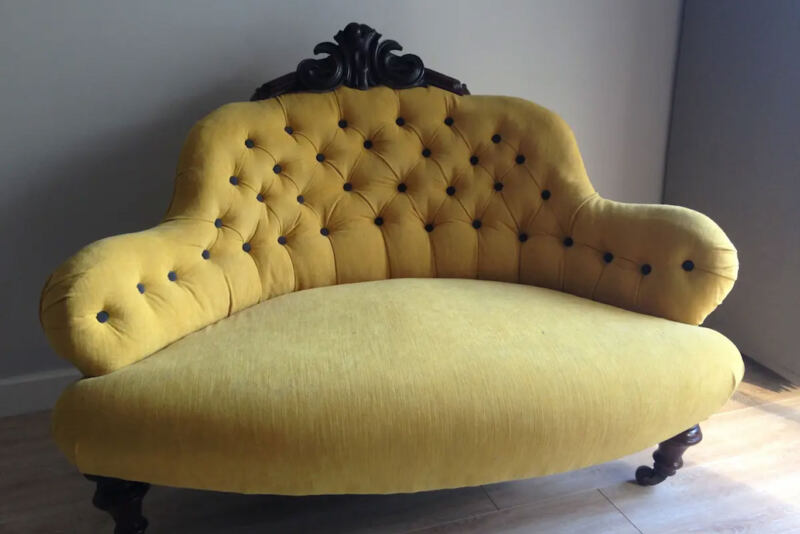

Your windows have a major influence on how a room looks and feels. The right curtains, blinds and finishing details can make a small window appear larger, soften natural light, improve privacy and bring an entire interior scheme together.
Some of the most effective window dressing ideas include choosing a coordinated colour palette, positioning curtain tracks higher, layering fabrics, selecting the right curtains or blinds, and paying attention to the finishing details.
You don’t necessarily need to replace your windows or redecorate the whole room to make a noticeable difference.
Here are five practical ideas to help you transform the windows in your home.
1. Use Colour and Texture to Create the Right Atmosphere
Window treatments occupy a prominent position in a room, so their colour and texture can make a significant difference to the overall design.
The best choice depends on the atmosphere you want to create and how your curtains or blinds will work with the walls, flooring and furniture.
Create a Calm Space with Neutral Colours
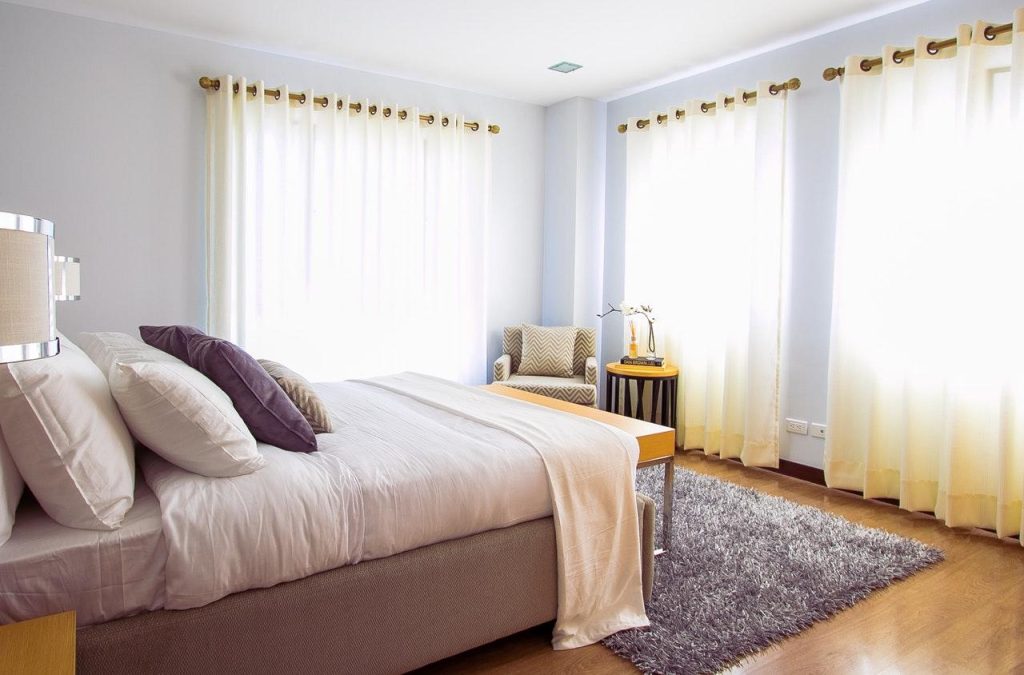
Neutral curtains can make a room feel relaxed, elegant and cohesive.
Colours such as ivory, warm white, beige, taupe and soft grey work particularly well in bedrooms and living rooms where a calm atmosphere is the priority.
However, neutral doesn’t have to mean plain.
A textured linen-blend fabric or softly woven curtain can add depth without introducing a strong pattern.
For a more layered appearance, consider combining neutral curtains with cushions or upholstery in complementary tones.
Add Character with Bold Colours
Deep green, navy, terracotta and rich burgundy can create a striking focal point.
Bold curtains are particularly effective when the surrounding walls and furniture provide enough visual balance.
For example, dark green velvet curtains against warm neutral walls can introduce contrast and texture without requiring major changes to the room.
Use Patterns Carefully
Patterned curtains can introduce colour and movement into a simple interior.
Large-scale patterns can create a bold statement, while smaller repeating designs may feel more understated.
If your room already contains patterned wallpaper, rugs or upholstery, consider choosing a curtain fabric that complements rather than competes with those elements.
Design tip: View fabric samples in the room at different times of day. Natural and artificial lighting can change how colours and textures appear.
2. Make Windows Look Bigger with Clever Curtain Positioning
You can often make a window appear taller or wider without changing the glazing itself.
One of the most effective techniques is to reconsider where the curtain pole or track is installed.
Position the Curtain Pole Higher
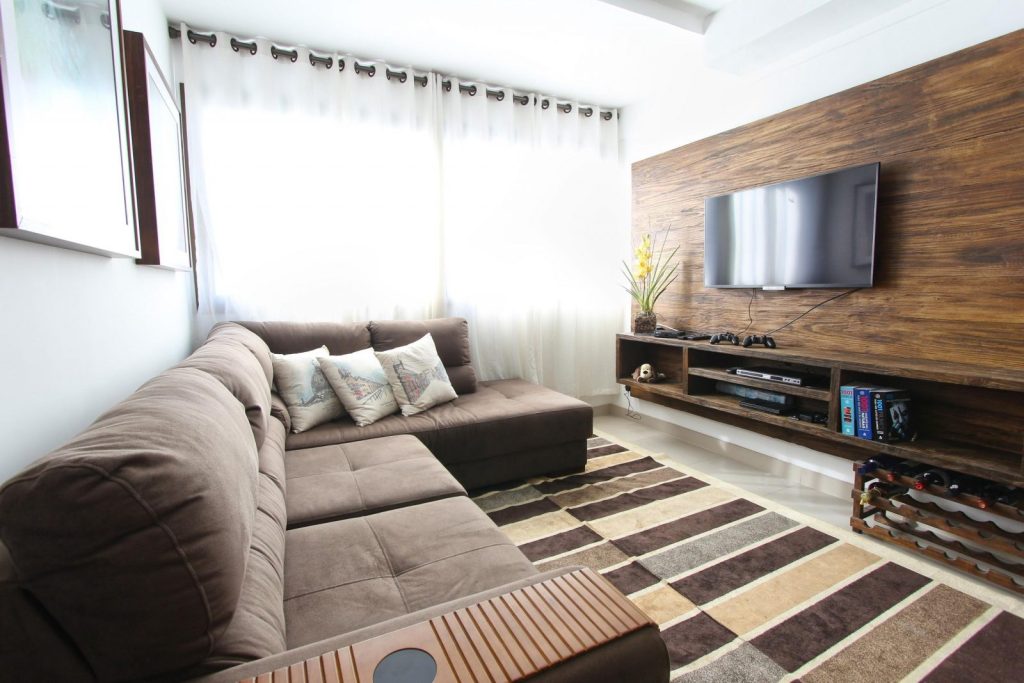
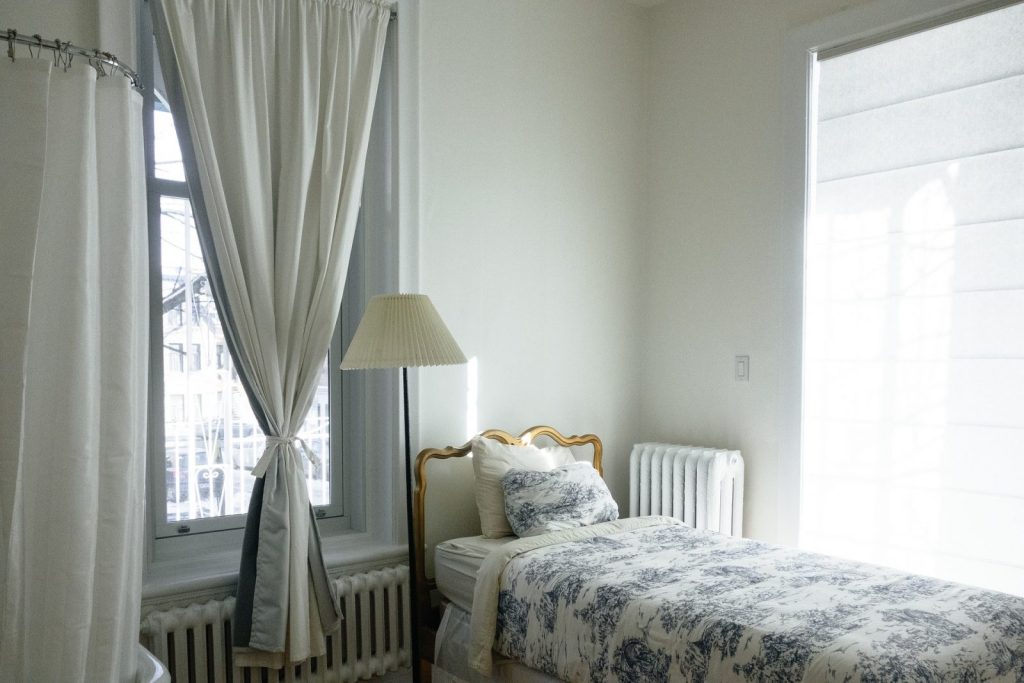
Installing a curtain pole or track above the window opening can help draw the eye upwards.
This creates the impression of greater height, particularly when the curtains extend down towards the floor.
The exact position will depend on the ceiling height, available wall space, heading style and installation requirements.
A higher fitting position won’t work for every room, especially where there are ceiling obstructions or limited space above the window.
Extend the Pole Beyond the Window
Allowing a curtain pole or track to extend beyond the sides of the window can create space for the open curtains.
This is sometimes called stacking space.
When the curtains gather beside the glazing rather than directly in front of it, more daylight can enter the room.
It may also make the window appear wider.
The amount of space required depends on the fabric, curtain heading and fullness.
Consider Floor-Length Curtains
Full-length curtains can help create a continuous vertical line from the pole or track towards the floor.
This is particularly effective in living rooms and bedrooms where you want a tailored appearance.
A floor-skimming finish can provide a neat look while remaining practical for everyday use.
Longer, puddled curtains can create a softer decorative effect, but may be less convenient in busy rooms.
Choose the Right Hanging System
Different curtain headings need different fittings.
For example, wave curtains require a compatible wave system, while pencil pleat and pinch pleat curtains can work with suitable poles or tracks.
For unusual windows, including bays, a shaped track may provide a more suitable solution than a straight pole.
Explore Zenn Interiors’ curtain poles and tracks for different window arrangements.
Design tip: Before moving a pole or track, consider where the curtains will sit when open, not just how they look when closed.
3. Layer Your Window Treatments for Privacy, Light and Comfort
Window dressing should be practical as well as attractive.
A bedroom may need stronger light control, while a street-facing living room might benefit from privacy without sacrificing too much daylight.
Layering different window treatments can help you balance these requirements.
Combine Sheer and Lined Curtains
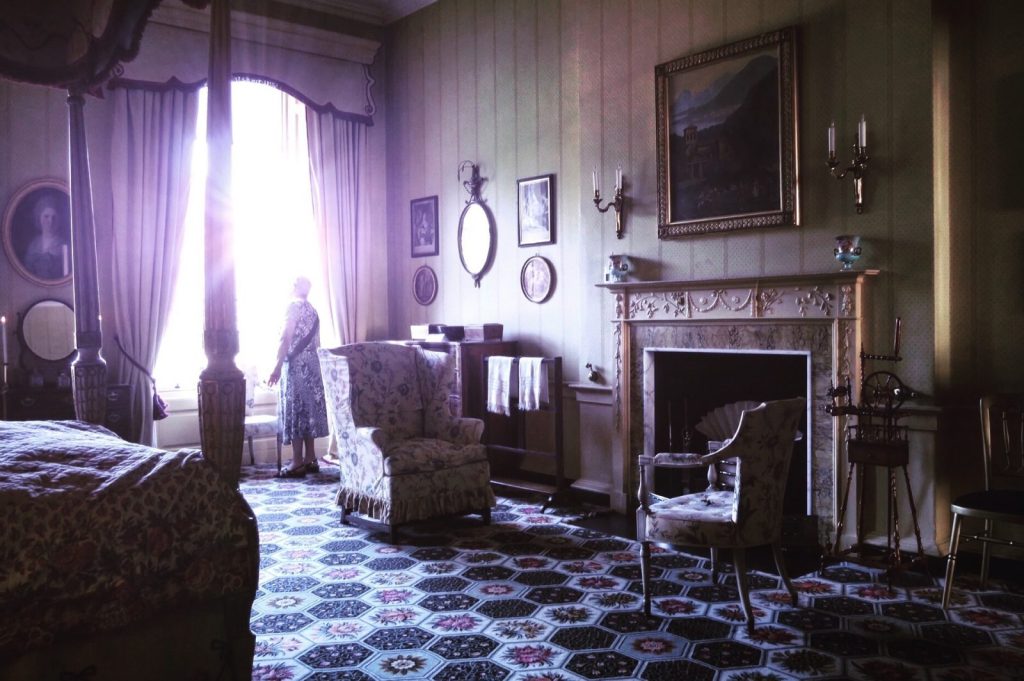
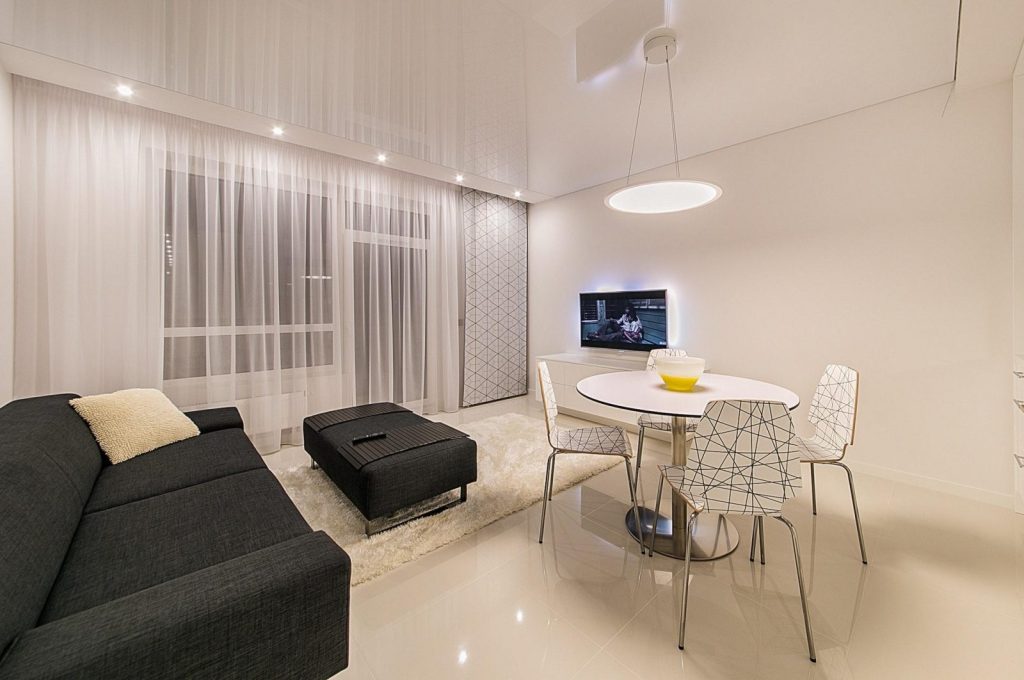
Sheer curtains can soften incoming daylight and provide a degree of daytime privacy.
They can be particularly useful for rooms overlooked by neighbouring properties or facing a busy street.
However, sheer curtains generally provide less privacy at night when lights are switched on indoors.
Pairing sheers with lined curtains allows you to adjust the room’s privacy and light levels throughout the day.
During daylight hours, the sheers can help reduce direct views into the room.
In the evening, the lined curtains can provide greater coverage.
Zenn Interiors offers both sheer curtains and lined curtains as part of its made-to-measure range.
Use Blackout Curtains for Bedrooms
If reducing daylight is a priority, consider a suitable blackout lining or blackout window treatment.
Blackout fabrics are designed to block light passing through the material.
However, light may still enter around the top, sides or bottom of the installation.
For better room darkening, consider the curtain or blind fabric together with the overall fitting arrangement.
Discover Zenn Interiors’ blackout curtains.
Improve Comfort with Thermal Window Treatments
Curtains and blinds can also help reduce heat transfer at windows.
Thick or thermally lined curtains may improve comfort during colder weather, particularly when closed in the evening.
In summer, closing suitable curtains or blinds when strong sunlight reaches the window can help reduce unwanted solar heat gain.
The actual benefit depends on the glazing, fabric, installation and how the window treatment is used.
For example, Zenn Interiors offers Duette blinds with a honeycomb construction designed to provide an insulating layer at the window.
Practical tip: Avoid positioning long curtains in a way that traps heat behind them when they’re covering an active radiator. The window-treatment design should take the room’s heating arrangement into account.

4. Decide Whether Curtains, Blinds or Both Suit Your Windows
Curtains and blinds provide different visual and practical benefits.
Neither is automatically better for every window, and the right choice depends on the room, the available space and your priorities.
When Curtains Work Well
Curtains can be particularly effective when you want:
- A soft, decorative finish.
- Full-length fabric that complements the room.
- A choice of tailored heading styles.
- Layered privacy and light control.
- A window treatment that adds texture and visual warmth.
Made-to-measure curtains can also be adapted to different window proportions and design preferences.
Zenn Interiors offers a selection of bespoke luxury curtains, including pencil pleat, pinch pleat, wave and other tailored headings.
When Blinds Work Well
Blinds may be particularly suitable when you want:
- A compact window covering.
- Adjustable light control.
- A discreet, contemporary appearance.
- A practical solution for smaller windows.
- An alternative to full-length fabric.
Different blind styles offer different benefits.
For example, Venetian blinds allow you to adjust the angle of the slats, while roller blinds provide a simple fabric covering.
Roman blinds offer a softer, folded appearance, and cellular blinds can provide additional insulation at the window.
Explore Zenn Interiors’ made-to-measure blinds to compare the available styles.
Can You Combine Curtains and Blinds?
Yes. Using both can provide a balance of appearance and practicality.
For example, a discreet roller blind can offer daytime light control, while full-length curtains add texture and greater coverage in the evening.
A layered arrangement can be particularly effective in bedrooms, living rooms and rooms with large windows.
However, combining treatments requires enough space for the fittings and fabric to operate properly.
Curtains vs Blinds: Quick Comparison
| Consideration | Curtains | Blinds |
|---|---|---|
| Appearance | Soft, flowing and decorative | Can be minimal, structured or fabric-based |
| Light control | Depends on fabric, lining and fitting | Depends on blind type, fabric and fitting |
| Privacy | Suitable options for daytime and evening coverage | Adjustable privacy in many styles |
| Space required | Need room for fabric and stacking | Some types fit neatly within a recess |
| Thermal performance | Lined and interlined options can help | Insulating cellular and other suitable blinds can help |
| Price | Varies by size, fabric and workmanship | Varies by type, size and operating system |
| Maintenance | Depends on fabric and care instructions | Depends on material and mechanism |
The most useful comparison is between the specific curtain and blind systems you’re considering, rather than broad categories.
Don’t Overlook Blind Cord Safety
If you’re choosing blinds for a family home, child safety should be part of the decision.
New blinds supplied in the UK must meet applicable child-safety requirements. Where operating cords or chains are present, appropriate safety measures are required.
Cord-free and suitably designed motorised options may be worth considering, especially where young children live or visit.
Older blinds may also need safety devices fitted or checked.
Never leave hazardous blind cords or loops within a child’s reach.

5. Bring Everything Together with the Right Finishing Touches
The final details can make the difference between an ordinary window covering and a carefully considered design.
Match the Curtain Heading to Your Interior
A traditional room may suit a tailored double or triple pinch pleat.
For a contemporary space, wave curtains can create smooth, evenly spaced folds.
Pencil pleats provide a versatile option for many different room styles.
The heading should suit the fabric and the overall appearance you’re trying to achieve.
Consider the Pole or Track Finish
A decorative curtain pole can become a visible part of the design.
Metal poles may complement contemporary fittings, while timber poles can suit a more traditional interior.
A discreet track can be useful where you want the fabric itself to take centre stage.
Coordinate with Furniture and Accessories
Your curtains don’t need to match your sofa, rug or cushions exactly.
Instead, look for complementary colours and textures that connect different elements of the room.
For example, textured neutral curtains can work well with a richly coloured sofa, while patterned curtains might pick up a subtle colour from nearby upholstery.
Check the Proportions
Before finalising your window treatment, consider how it will look both open and closed.
Ask yourself:
- Will the curtains cover too much glazing when open?
- Does the heading suit the room’s ceiling height?
- Is there sufficient space around the window?
- Will the fabric hang neatly over the full drop?
- Are any radiators, handles or furniture likely to interfere with operation?
These practical details can have just as much impact on the finished result as the fabric itself.

Window Dressing Ideas for Different Rooms
The right approach often depends on how the room is used.
| Room | Window dressing idea | Main benefit |
|---|---|---|
| Living room | Full-length curtains with a tailored heading | Adds texture and creates a considered finish |
| Bedroom | Blackout curtains or blinds with suitable fitting | Helps reduce unwanted daylight |
| Street-facing room | Sheers layered with lined curtains | Balances daytime privacy and evening coverage |
| Small room | Carefully positioned pole or compact blind | Helps preserve daylight and visual space |
| Home office | Adjustable blinds | Allows more control over glare |
| Bay window | Made-to-measure curtains with a suitable shaped track | Follows the window’s proportions |
| Conservatory or glazed extension | Suitable cellular or specialist blinds | Helps manage light and heat transfer |
Common Window Dressing Mistakes to Avoid
Even attractive materials can produce disappointing results when they’re poorly matched to the window.
Fitting the pole too narrowly: Curtains may cover too much of the glass when open, reducing available daylight.
Choosing fabric without checking it in the room: Colours and textures may appear different under natural and artificial lighting.
Ignoring the heading system: Not every curtain style works with every pole or track.
Assuming blackout fabric guarantees complete darkness: Light can still enter through fitting gaps.
Choosing treatments based on price alone: Fabric, mechanism, workmanship and fitting requirements all affect value.
Overlooking safety: Blind cords and chains must be managed according to applicable child-safety requirements.
Considering these details early can help avoid unnecessary changes after installation.
Frequently Asked Questions About Window Dressing
How can I make a small window look bigger?
Positioning a suitable curtain pole or track above and beyond the window opening can help create the impression of greater height and width. Full-length curtains and appropriate stacking space may also improve the effect.
What window treatments make a room look more luxurious?
Made-to-measure curtains with carefully selected fabric, tailored headings and suitable hanging hardware can create a refined finish. The proportions and workmanship matter as much as the fabric price.
Should curtains match the wall colour?
Not necessarily. Similar colours can create a coordinated appearance, while contrasting curtains can become a decorative focal point. The best choice depends on the overall interior scheme.
Are curtains or blinds better for privacy?
Both can provide privacy, depending on the material and installation. Adjustable blinds offer flexible coverage, while layered sheer and lined curtains can help balance daytime light with evening privacy.
Can curtains help keep a room warmer?
Suitable lined or interlined curtains can reduce heat loss through windows when closed. The benefit varies according to the window, material and fitting arrangement.
Are blinds cheaper than curtains?
Not always. Prices vary according to size, fabric, mechanisms, workmanship and installation. A premium motorised blind may cost more than a simpler curtain arrangement, while some basic blinds may be more affordable than bespoke curtains.

Transform Your Windows with Zenn Interiors
Enhancing your windows doesn’t always require major changes.
The right colour palette, carefully positioned curtains, practical light control and thoughtfully chosen finishing details can transform the character of a room.
At Zenn Interiors, we specialise in bespoke window treatments for London homes, including made-to-measure curtains, blinds, curtain poles and tracks.
Whether you’re updating a bedroom, dressing a bay window or creating a new living-room scheme, selecting the right combination of fabric, heading and hardware can help achieve a beautiful and practical result.
Explore our luxury curtains and bespoke blinds, or contact Zenn Interiors to discuss your window dressing requirements.
Telephone: 020 7871 3082
Email: zenninteriors@gmail.com